If you're weighing a Mexico plant-medicine retreat against a legal US psilocybin session, here's an honest look at what each actually offers, not marketing, just the real differences. The short version: the US now has genuine legal, clinical, single-substance psilocybin programs, while Mexico offers multi-medicine ceremonial retreats in a grey area that the US framework can't legally accommodate. Neither is "better", they fit different needs. (New to the medicine? Start with what psilocybin mushrooms are.)
What do Oregon and Colorado actually offer?
Oregon's Measure 109 launched licensed psilocybin service centers in 2023; Colorado's Proposition 122 program opened on January 1, 2025, the first healing center license was issued in March 2025, and the first regulated session took place in June 2025. These are real legal frameworks, not loopholes. A licensed US session looks like: a preparation meeting, a supervised psilocybin session (5 to 8 hours) in a licensed center with lab-tested, precisely dosed psilocybin, and integration afterward, typically $1,500, $5,000. What you don't get: multi-night ceremony, other medicines, Indigenous ceremonial context, or a jungle setting.
What a Mexico retreat actually offers
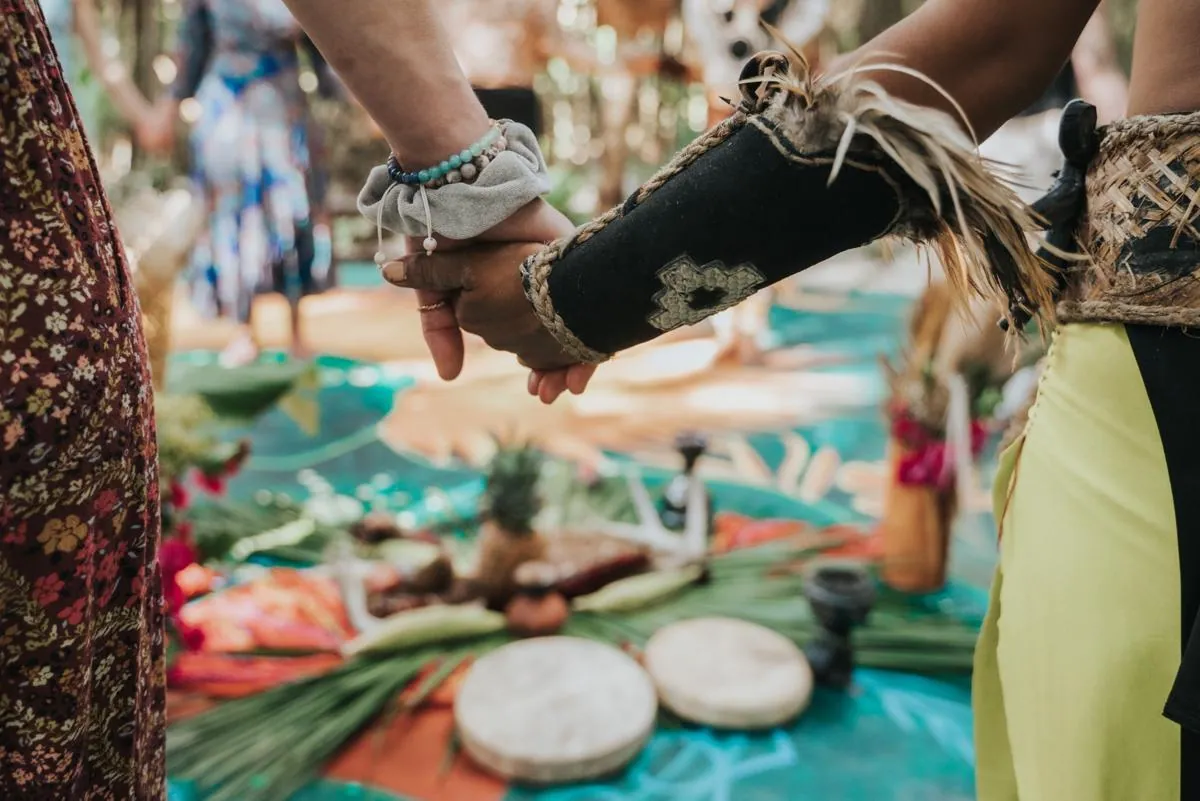
Mexico has no licensed-center system; instead it has a long-standing ceremonial tradition operating in a tolerated grey area (the plants aren't scheduled in natural form). The practical result is immersive, multi-ceremony programs on private jungle properties that wouldn't be legally possible in the US at any price. At Lunita, a week might weave together ayahuasca, bufo, sacred mushroom, temazcal, cacao, and sound healing, the traditional view being that different medicines open different doors.
Ceremonial vs. clinical
US programs use a clinical model, standardized protocols, documented outcomes, licensed practitioners, appropriate for a structured, evidence-based intervention, and the research behind it is solid. Mexican ceremonial retreats work from a different premise: the medicine as a living intelligence within a traditional framework, with songs, fire circles, dietas, and a direct facilitator relationship before and after. Someone seeking a documented intervention for treatment-resistant depression may be better served clinically; someone drawn to ceremonial depth or a multi-medicine arc is looking at Mexico.
Setting and cost
Setting is one of the most influential variables in outcome quality, and Lunita's open maloca in the Puerto Morelos jungle is a different container than a permitted US wellness office. On cost: a Lunita program includes accommodation, all meals, multiple ceremonies, preparation, and integration, often starting below comparable US pricing, and flights from major US cities to Cancún typically run $250, $500 roundtrip. For many US participants, the all-in cost is comparable to or less than a single domestic session, with far more program content.
Which is right for you?
Choose a US licensed program if you want a fully regulated, single-substance, treatment-oriented experience, or can't travel internationally. Choose a Mexico retreat if you're drawn to ceremonial depth, multiple medicines, a natural setting, or a tradition the US framework doesn't accommodate. Lunita has hosted 120+ retreats with a 4.9-star verified rating; full details are on the personal retreats page. If the ceremonial path calls, a free discovery call is the no-pressure next step.
Ayahuasca night vs a sacred-mushroom ceremony: how the two feel
If you're trying to sense which of these two calls to you, it helps less to compare them on paper and more to picture the two nights side by side. Both are ceremony, both ask you to arrive open, but the container around each one has a different pace, a different kind of holding, and a different feel in the room. Reading how each night tends to unfold is usually how people find their answer.
An ayahuasca ceremony at Lunita is held by Edgar, who carries a Zapotec lineage and has sat with this medicine for more than 20 years. The night moves slowly and deliberately: you settle in as darkness falls, the songs begin, and the arc tends to be long, inward, and deeply held from beginning to end. It asks for surrender and rewards patience, and Edgar's steady presence across the hours is a large part of what people remember. If you want to understand the shape of that night before you feel it, our ayahuasca guide walks through what to expect.
A sacred-mushroom ceremony lives in a different rhythm. Rooted in a long ceremonial tradition, it often feels softer at the edges and more woven into the land around you, the jungle sounds, the night air, the quiet. Where an ayahuasca night can feel like a single deep dive, a mushroom ceremony can feel more like a gradual opening you move through at your own pace. Many who sit with it describe it as gentle and personal, a night that meets you where you are.
So how do you sense which is yours? Often it's a matter of tone: some people feel drawn to the depth and structure of the ayahuasca container, others to the softer, more open feel of the mushrooms, and plenty end up curious about experiencing both across a longer stay in the jungle 40 minutes from Cancún. If you're not sure, that's the most natural place to start a conversation. Reach out to us and we can talk through what you're seeking and which night might hold it. If you are still weighing the two medicines rather than the two countries, reading ayahuasca and psilocybin side by side helps you sense which is calling.