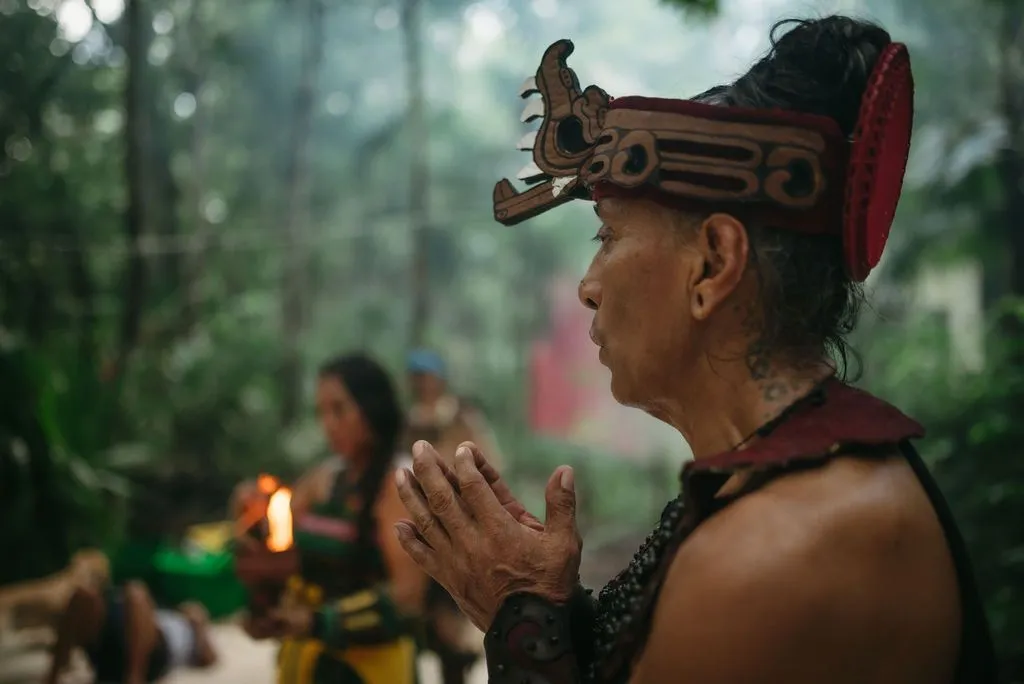
Temazcal Ceremony: What It Is, What to Expect, and How to Prepare
- Nico

- Apr 11
- 11 min read
Updated: Apr 13

The door is low. You crawl in on your hands and knees, touch the earth, and ask permission to enter. The guide seals the entrance behind you. Darkness settles. The only light comes from the faint glow of volcanic stones at the center of the dome — stones that have been heating in the fire for hours.
Then the water comes. Herb-infused, poured over the stones. Steam rises thick and medicinal. The guide begins to sing.
This is temazcal ceremony, one of the oldest healing traditions in Mesoamerica, practiced continuously for more than 5,000 years.
If you are considering attending one in Mexico, this guide covers everything: what it is, what happens during each of the four doors, how to prepare, who should not attend, and what the integration period actually looks like.
What Is a Temazcal Ceremony?
The word temazcal comes from the Nahuatl language spoken by the Aztec peoples. Temazcalli translates literally as house of heat — from teme (to bathe) and calli (house). That etymology is still accurate as a physical description, but it misses everything that makes temazcal a ceremony rather than a sauna.
Ancient Mesoamerican cultures — the Aztec, Maya, Zapotec, Mixtec, Olmec — used the temazcal for healing the sick, purifying warriors after battle, supporting women during childbirth, and marking rites of passage. The earliest archaeological evidence of temazcal structures dates to around 800 BCE in Maya settlements. Some traditions trace the practice back 5,000 years.
The dome-shaped structure is built with intention: aligned to the four cardinal directions, representing earth, water, air, and fire. Inside, the low ceiling and circular shape symbolize the womb. Entering means returning to the beginning. Exiting means being born again.
This symbolism is not decorative. It shapes the entire psychological experience of the ceremony.
The Four Doors: What Happens During a Temazcal Ceremony
A traditional temazcal is structured around four rounds, called doors or puertas. Each door corresponds to a cardinal direction, an element, and a phase of transformation. The guide — called a temazcalero (male) or temazcalera (female) — controls the sequence, the heat, and the ritual.
Entering the Lodge
Before the ceremony begins, participants gather outside around the fire that has been heating the volcanic stones for hours. The guide performs a copal blessing — burning aromatic plant resin that has been sacred in Mesoamerican traditions since pre-Hispanic times. Each person is blessed with the smoke before entering.
Entry is intentional. You kneel, touch the earth, and ask permission to be in this space. Then you crawl inside and sit in a circle around the stone pit at the center.
Inside: Heat, Herbs, and the Group Field
Once the door is sealed, the guide brings in volcanic stones — typically 13 per round — using deer antlers or another natural tool. Water infused with medicinal herbs is poured over the stones. The temperature rises. Steam fills the dome.
The herbs change the character of the steam. Sage and cedar for cleansing. Copal resin for purification. Rosemary, lavender, and chamomile for the nervous system. Yerba buena (mint family) to open the respiratory tract. Each guide chooses differently. No two ceremonies smell the same.
The guide leads the group through chanting, prayer, and guided meditation. In some traditions, honey is passed around for participants to rub on their skin. Orange wedges offer sustenance between rounds. The group holds space together in darkness, sensing each other through sound and breath.
The Four Doors
The door opens four times — to release energy, allow brief air circulation, and bring in fresh stones. Each door lasts 15 minutes to over an hour, depending on the group's energy and the guide's read of the room.
Evening temazcal ceremonies typically run about 2 hours total. Longer daytime ceremonies can extend to 4-5 hours. The intensity builds across the doors, then softens toward the final one.
The fourth door often brings the deepest stillness. Many participants describe a release — emotional, physical, or something harder to name.
Exiting: The Rebirth
The exit is symbolic and intentional. You crawl out as you crawled in. Fresh air hits immediately. Many ceremonies follow the exit with cold water — a bucket or shower — to close the energetic circle and bring the body back to neutral.
The group gathers, shares fruit and water, and each person has space to speak about what arose. The guide closes the ceremony with gratitude to the land.
What Temazcal Ceremony Does for the Body and Mind
Physical Effects
The body responds to temazcal heat the way it responds to any elevated temperature: heart rate increases, circulation accelerates, and perspiration begins. Participants can lose up to one liter of sweat per hour. The herbal steam opens respiratory passages, which some people find helpful for congestion, sinus issues, or chest tightness.
Skin response is also significant — pores open, surface impurities are released, and many people notice their skin feels different in the days after.
Several published studies (including work in the Journal of Alternative and Complementary Medicine and via PubMed) have found that sweat lodge participation is associated with decreased chronic pain, improved sense of social support, and increased spiritual and emotional well-being. The research base is still small. These are documented associations, not clinical guarantees.
Emotional and Mental Effects
The darkness, enclosed space, heat, and guided ceremony create unusual psychological conditions. External distractions disappear. Physical sensation becomes very loud. The group field — breathing together, sweating together, holding space together — creates a kind of shared vulnerability that most people rarely experience.
Emotional release is common. People cry. People process grief they have not touched in years. Some experience a quality of clarity that arrives in the heat and stays after. Others simply feel wrung out and deeply rested.
No two experiences are alike. The ceremony creates the conditions. What surfaces depends on what you carry in.
Who Should Not Attend a Temazcal Ceremony
The heat and enclosed space are not suitable for everyone. Do not attend if you have:
Heart disease or any cardiac condition
High blood pressure or hypertension
Pregnancy (current)
Severe claustrophobia
Recent serious illness or major surgery recovery
Conditions requiring advance medical clearance include diabetes, asthma (heat can trigger attacks in some people), and low blood pressure. Alcohol before the ceremony is also contraindicated — it raises the risk of heat exhaustion.
A responsible guide will ask about health conditions before the ceremony begins. Be honest. If you are uncertain whether temazcal is appropriate for your situation, consult your doctor first.
How to Prepare for a Temazcal Ceremony
In the Days Before
Drink extra water the day before and morning of the ceremony
Avoid heavy meals in the 2-4 hours before; fruit and vegetables are fine
No alcohol in the 24 hours prior; limit caffeine
If you take medications, check with your doctor about heat-related interactions
What to Wear
Light, loose clothing in natural fibers — linen or organic cotton. Avoid synthetics, which trap heat and do not breathe. Most women wear a light skirt or dress over a bathing suit; most men wear swim shorts with a light shirt. Remove all jewelry before entering the dome. Metal gets scorching hot.
Bring a change of warm clothes for after. You will be wet with sweat and the cool air outside will feel significant.
Setting an Intention
You do not need to arrive with a specific intention, but it helps to arrive with some openness about what you are there for. The heat does not let you stay in your head for long. The question is whether you will resist that or let it happen.
Integration: The Hours and Days After
The ceremony does not end when you exit the dome.
Many participants feel deeply calm immediately afterward. The nervous system has been through something and often responds with a kind of settledness that is hard to manufacture any other way. Some people sleep very deeply that night.
In the days after, emotions that surfaced during the ceremony may continue to move. This is normal. The heat and the darkness can loosen things that do not finish processing in the 2-hour ceremony — they complete later, in dreams, in conversations, in quiet moments.
Support the integration period:
Continue drinking water for the next 24-48 hours
Give yourself space to rest before filling your schedule
Journal if something came up that you want to hold on to
If intense emotions arise in the days after, reach out to someone you trust or to the facilitator
Temazcal Ceremony at Lunita Jungle Retreat
Lunita sits in the jungle outside Puerto Morelos, about 40 minutes from Cancun airport. The temazcal dome is surrounded by trees.
The contrast between the enclosed, dark interior of the dome and the wide-open canopy when you emerge is part of the experience. There is no traffic noise. No hotel lobby. You exit into forest.
Temazcal at Lunita is available as a standalone ceremony and as part of multi-day personal retreat programs. It is often offered alongside cacao ceremony, sound healing, breathwork, or yoga — not because ceremony should be stacked, but because these practices can support and deepen each other when sequenced with intention.
Curious whether this experience is right for you? Lunita's team offers a free, no-pressure discovery call to answer your questions before you commit to anything.
If you are designing a personal healing retreat, you can explore how temazcal fits into a personal retreat at Lunita — whether that is 3 nights or a longer immersion.
FAQ: Temazcal Ceremony
How long does a temazcal ceremony last?
Evening ceremonies typically last about 2 hours. Daytime ceremonies can run 4-5 hours. The experience is structured around four rounds (doors), each lasting 15 minutes to over an hour depending on the guide and the group.
Is temazcal the same as a sweat lodge?
Similar in structure but different in purpose. A sweat lodge is primarily a physical practice. Temazcal is a ceremony — it incorporates prayer, chanting, medicinal herbs, guided meditation, and group emotional processing. The heat is the container; the ceremony is the content.
Who should not attend a temazcal ceremony?
Anyone with heart conditions, high blood pressure, pregnancy, severe claustrophobia, or recent serious illness should not participate. If you have any medical concerns, check with your doctor before attending and always disclose your full health situation to the guide.
What do you wear to a temazcal ceremony?
Light, loose, breathable natural fabrics — linen or organic cotton. Women typically wear a skirt or dress over a bathing suit; men wear shorts with a light shirt. Remove all jewelry before entering. Bring a change of warm clothes for after.
Can I combine temazcal with other ceremonies?
Yes. Temazcal pairs well with cacao ceremony, sound healing, yoga, breathwork, and shamanic practices. At Lunita, it is available as a standalone session or integrated into a multi-day personal retreat designed around your specific intentions.
When You Are Ready
Temazcal has been practiced for 5,000 years without interruption. That is not sentiment — it is information about the experience's staying power.
People come out different than they went in. Quieter, usually. Often clearer about something they had been avoiding. Sometimes just grateful for the clean feeling of having sweated and survived and stepped back into daylight.
If you want to know whether this is the right experience for you, book a free discovery call with the Lunita team. No pressure. Just a conversation.
For more on ceremonies and healing at Lunita, read the Lunita blog.
Temazcal Ceremony at Lunita Jungle Retreat
Lunita's temazcal dome sits on 2.5 acres of jungle in Puerto Morelos, Riviera Maya, 40 minutes south of Cancun International Airport. The ceremony space is dome-shaped adobe with volcanic stones from the highlands, surrounded by actual jungle, not manicured resort landscaping.
The temazcal at Lunita is guided by facilitators who have worked with this ceremony for years and treat it with respect for its Mesoamerican origins. Sessions are offered as part of multi-day retreat programs and as standalone ceremony experiences for individuals and small groups.
What the Lunita Temazcal Ceremony Includes
Opening prayer and intention-setting circle outside the dome
Four doors ceremony inside the temazcal, each with distinct herbs, songs, and intention
Medicinal herb infusions poured over the volcanic stones: copal, rosemary, lavender, eucalyptus, and locally foraged plants
Cold water rinse between doors for temperature regulation
Post-ceremony grounding: fresh fruit, coconut water, and integration sharing circle
Group sizes typically 4-12 participants
Temazcal at Lunita is available as a standalone ceremony or integrated into multi-day programs alongside cacao ceremony, sound healing, breathwork, and plant medicine retreats. For retreat leaders hosting groups, temazcal can be incorporated into your program design. Explore venue options for retreat leaders.
How Temazcal Integrates with Other Ceremonies
Temazcal pairs well with other ceremony work precisely because of its physical nature. The heat, breathwork, and grounding in earth prepare the body and nervous system for subtler ceremonial experiences.
Temazcal and Cacao Ceremony
Cacao opens the heart and supports emotional processing. Many participants find that the physical release of temazcal clears holding patterns in the body, making cacao work more accessible afterward. At Lunita, this combination is offered as a half-day ceremony sequence.
Temazcal and Plant Medicine Retreats
For participants attending multi-ceremony plant medicine retreats at Lunita, temazcal is typically offered on an integration day. The physical grounding it provides supports the integration of what emerged in ceremony the night before. Many facilitators regard post-ceremony temazcal as the most effective grounding practice available in a retreat context.
Temazcal and Sound Healing
The body, opened and cleansed by heat, receives vibration differently than in ordinary conditions. Some participants describe post-temazcal sound healing as the deepest restorative experience of their retreat. At Lunita, this pairing is available as an afternoon sequence following a morning temazcal.
Cultural Context: Where Temazcal Comes From
Temazcal is not a wellness trend. It is a continuous living tradition practiced by indigenous communities across Mexico, Central America, and the American Southwest without interruption for thousands of years. The ceremony survives because it works, and because the communities that hold it have protected it.
The four doors correspond to the four cardinal directions recognized in Mesoamerican cosmology. Each door has its own prayers, songs, and herbal medicine. The songs draw from lineages that have held this knowledge across generations. This is not symbolic language layered onto a hot room. It is a working system that has held people through transformation for a very long time.
At Lunita, facilitators operate from a position of genuine respect for this lineage. If you attend ceremony here, you are not entering a luxury experience with indigenous aesthetics. You are entering a living practice. Approach it accordingly.
Is Temazcal Ceremony Right for You?
Temazcal is one of the more physically accessible ceremonies in a retreat context. It does not involve altered states from substances, does not require meditative experience, and does not carry the preparation demands of plant medicine work. Most people who want to try it are ready for it.
Who benefits most
First-time ceremony participants often find temazcal an excellent entry point. It is physical and grounded, requires no prior experience, and produces tangible, visible effects. For someone curious about ceremony but uncertain about plant medicine, temazcal frequently opens that door.
People also come to temazcal when they are carrying physical tension, when they have completed a difficult period and want to mark its end, or when they are preparing for a more intensive retreat. The ceremony holds all of these intentions.
Who should not attend
The heat contraindications are real. Do not enter a temazcal if you have heart disease, uncontrolled high blood pressure, severe respiratory conditions, or if you are pregnant. Claustrophobia that cannot be managed with breathing should not be pushed through in a sealed ceremony space. If you have had recent surgery, serious illness, or take medications affecting heat regulation, consult your doctor first.
Inform the guide of any health conditions before ceremony begins. A responsible facilitator will discuss your situation and make an honest recommendation, which may include sitting outside certain doors or not entering at all. Declining to participate in a round is always an option.
Book a Temazcal Ceremony at Lunita
Temazcal ceremony at Lunita is available as a standalone experience and as part of multi-day personal retreat programs. Book a free discovery call to discuss ceremony options, program design, or any questions you have before committing to a date.
For retreat leaders interested in adding temazcal to a hosted group retreat, visit the retreat leader venue page for details on Lunita's ceremony spaces and program coordination.
Explore all personal retreat options at lunitajungleretreat.com/personal-retreat, or read more ceremony and healing guides on the Lunita blog.


Comments