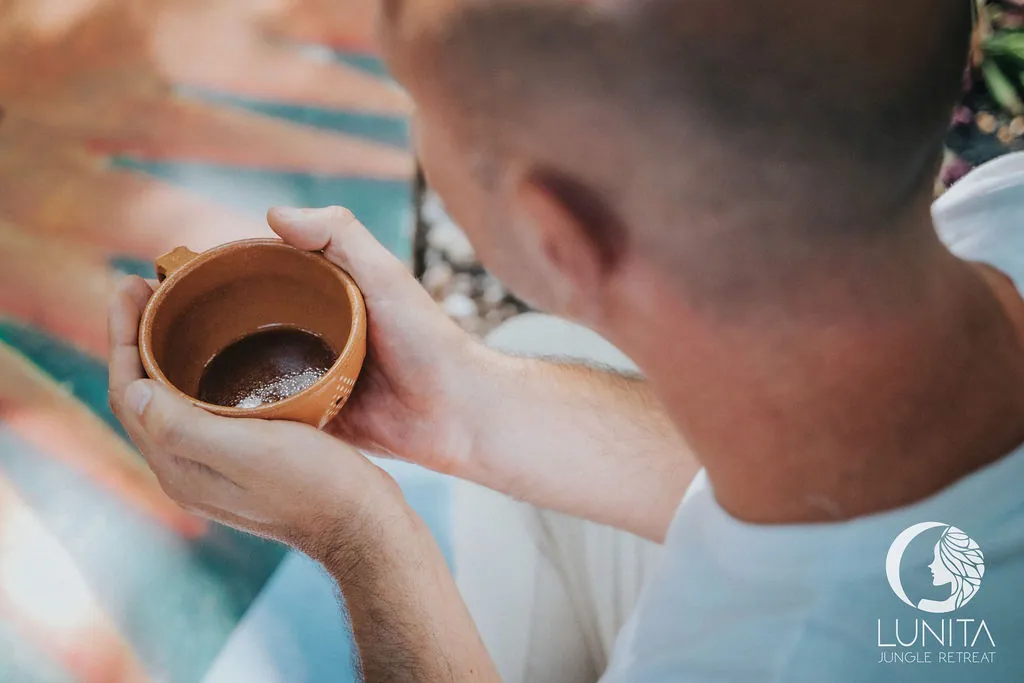
The cacao ceremony is one of Lunita's most beloved offerings, a gentle, heart-opening ritual held in the Mayan jungle of Puerto Morelos. Used for thousands of years by Mesoamerican cultures, ceremonial cacao brings clarity, emotional release, and connection without altering your state the way stronger medicines do. This is what a cacao ceremony is, what happens in one, and who it's for. It can be woven into a personal retreat or a hosted program.
The ancient roots of ceremonial cacao
For over 3,000 years the Maya and Aztecs treated cacao as a plant of reverence, not indulgence, a divine bridge and an offering to the gods. The Mayan ka'kau (from kakaw, "bitter water") was consumed in rituals, marriage ceremonies, and rites of passage to open spiritual pathways and strengthen community bonds.
What happens during a cacao ceremony
Each ceremony is crafted with intention and held in sacred spaces, the open-air meditation area or beside the fire under the stars. A typical ceremony may include ceremonial-grade cacao (ethically sourced, prepared with water and gentle spices), intention-setting, guided meditation or breathwork, sound healing or live music, optional intuitive movement, and a sharing circle. Each is adapted to the group's energy. A ceremony runs about two hours from the first pour to the closing circle, and most people want a slow hour afterwards rather than a next thing.
Why cacao is "the medicine of the heart"
Cacao contains theobromine, which, unlike caffeine, stimulates the cardiovascular system gently, increasing blood flow and creating a calm, alert state ideal for meditation. Beyond the chemistry, many Indigenous cultures regard cacao as a plant spirit who helps us soften, listen, and connect. Common, honestly-held experiences include emotional release, clarity and focus, joy and gratitude, and a stronger sense of connection, to yourself and to the circle around you. That same settled, listening state is what a singing bowl and vibrational massage session works from, with Tibetan bowls and therapeutic touch in place of the cup.
Ceremony and community
At Lunita, the cacao ceremony is never only about the individual. As each person drinks from the same brew, a sense of unity arises, the circle becomes a container where vulnerability is honored and truth is spoken without judgment. That's often where healing deepens: through witnessing and being witnessed. The temazcal's purifying heat pairs beautifully with cacao's heart-opening warmth.
Cacao ceremony in Mexico: the tradition behind the cup
Cacao was sacred in Mesoamerica long before it was a sweet: a drink of the Maya and the Mexica, used in ritual and offered in ceremony, prepared bitter and spiced rather than sugared. A cacao ceremony in Mexico is done on that ground. The cacao is ceremonial grade, minimally processed, prepared warm; the circle opens with intention; and what follows, sharing, song, meditation or movement, is shaped by the facilitator's lineage and the group in front of them. Held here, in the region where the tradition lives, the ceremony carries a weight it cannot carry in a studio elsewhere.