Ayahuasca: The Complete Guide to the Ceremony, the Dieta, and What to Expect
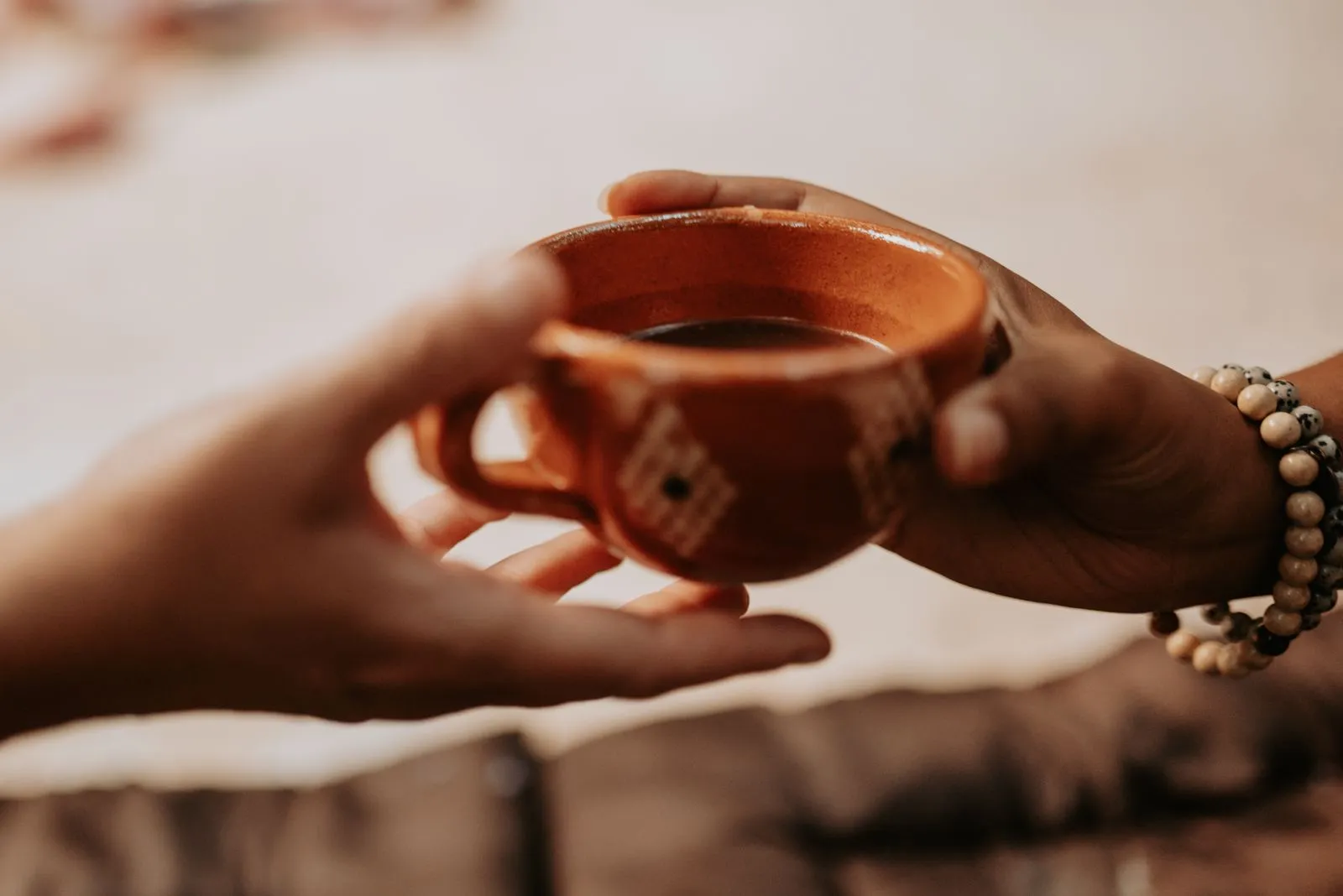
Ayahuasca is the most demanding of the widely practiced plant medicines: in preparation, in the ceremony itself, and in what comes after. This guide covers what the brew actually is, where it comes from, what a ceremony looks like hour by hour, how to prepare, the medication interaction that genuinely matters, legality, and how to choose a retreat that will hold you properly.
Quick facts
| What it is | A brew of the Banisteriopsis caapi vine and the leaves of Psychotria viridis |
|---|---|
| Name | Quechua: aya (spirit, soul) + waska (vine, rope), "the vine of the soul" |
| Origin | The Amazon basin, many distinct Indigenous traditions, not one |
| Duration | Six to eight hours, usually through the night |
| Character | Long visionary and emotional journey; memory, purging, song |
| Preparation | The dieta: dietary, lifestyle, and medication restrictions before ceremony |
| Primary safety concern | Interaction between the brew’s natural MAOIs and antidepressants (serotonin syndrome) |
| Legal status | Unregulated gray space in Mexico; Schedule I in the US with narrow religious exemptions |
| At Lunita | Held by Edgar, a Zapotec medicine man, with a support team; groups up to sixteen, private one to ten |
What is ayahuasca?
Ayahuasca is a brew, not a single plant: the Banisteriopsis caapi vine cooked together, over hours or days, with prayer, with the leaves of Psychotria viridis. The leaves carry DMT; the vine carries harmala alkaloids that allow it to work when drunk. Indigenous peoples of the Amazon have worked with the brew for centuries as medicine, teacher, and a way of seeing what waking life keeps hidden.
The chemistry explains two of the most important facts about ayahuasca. First, why it's a brew at all: DMT on its own isn't orally active; the vine's alkaloids, natural MAO inhibitors, are what make the combination work, which is its own kind of remarkable, given that two specific plants among tens of thousands were found and joined. Second, why the medication warnings later in this guide are not fine print: those same natural MAOIs interact dangerously with a long list of modern medications.
The name comes from Quechua: aya, spirit, soul, the dead, and waska, vine, rope. The vine of the soul.
Where does ayahuasca come from?
Ayahuasca comes from the Amazon basin, Peru, Brazil, Colombia, Ecuador, and beyond, where it has been worked with across more cultures and languages than anyone can fully count. It is not one tradition. It is many, each with its own songs, protocols, and understanding of what the medicine is and does.
What the traditions share is the brew itself and the reverence. Ayahuasca is not taken casually anywhere it is taken traditionally. It is served in ceremony, almost always with song, the icaros, the medicine songs that guide the night, call in what's needed, and protect the space.
In Mexico, ayahuasca arrived through the broader continental exchange of sacred plant traditions. At serious Mexican centers, the framing is honest about this: the medicine is Amazonian; the ceremonial hands holding it are Mexican: the altar, the prayers to the directions, the copal, the mapacho. A center that instead claims a direct unbroken Shipibo or Peruvian lineage it doesn't have is showing you something about its honesty.
What happens at an ayahuasca ceremony?
An ayahuasca ceremony is a guided, all-night (occasionally daytime) ritual in which participants drink the brew in a prepared ceremonial space and are held through a six-to-eight-hour experience by an experienced facilitator, traditionally with song, an altar, and a support team. It is preceded by medical screening and a preparation diet, and followed by structured integration.
Here is the arc, as it runs at Lunita and at serious centers generally:
- The intake, before anything. Ayahuasca asks more of this conversation than any other ceremony: full medical history, every medication and supplement, psychological history, intention. This is where safety is established, and where a serious center will tell you no, or not yet, if that's the honest answer.
- The dieta. A preparation period covered in detail in the next section.
- The opening. The altar is raised. At Lunita, Edgar shares the meaning of each element as he builds it. Thanks are given to the seven cardinal directions. The space is cleansed with copal. Mapacho, sacred Amazonian tobacco, is present throughout, as it is in every ayahuasca ceremony; agua de florida may be used during the night.
- The medicine is served in cups. How many a person takes across the ceremony depends on their own journey, always following the facilitator's guidance. A good facilitator reads where each person is and offers accordingly. Nobody should be pushing a number.
- The long middle. Six to eight hours, guided with song and prayer. Visions, sometimes gentle, sometimes overwhelming. Old memory and emotion surfacing. Often a physical release, which the tradition understands not as a side effect but as part of the cleansing.
- The closing and integration. Integration begins that night and continues the next day. What the medicine surfaces only becomes useful when it's brought back, understood, and woven into how you live.
How long does ayahuasca last?
The ayahuasca experience typically lasts six to eight hours from drinking the first cup, with effects beginning within twenty minutes to an hour. Ceremonies are usually held through the night. Plan the surrounding days too: the day before for final preparation, the day after for rest and integration.
What does ayahuasca feel like?
No honest answer fits everyone, but the consistent elements are these: visions, ranging from gentle to overwhelming; the surfacing of old memory and emotion, things long buried arriving with unusual clarity; a heightened emotional and physical sensitivity; and, often, purging. Many people describe passages of real difficulty inside the ceremony and a sense of clarity or release after it.
Two honest notes. First, the purge: vomiting or other physical release is common, expected, and understood within the traditions as part of the work, the body letting go of what it has held. Centers that market a purge-free, comfortable ayahuasca are marketing something other than ayahuasca. Second, difficulty: the medicine is not gentle and not predictable, and a hard night is not a failed night. What makes the difference is the container: the facilitator, the songs, the team, the integration.
How do you prepare for an ayahuasca retreat?
Preparation has three layers: medical, dietary, and personal. Medically: complete the intake honestly, disclose every medication and supplement, and never stop a prescribed medication on your own. Timing changes only happen with the prescribing doctor involved. Dietarily: follow the dieta your center sends. Personally: arrive rested, with a clear intention, and with space held in your life for what comes after.
The medical layer is the one people most underestimate, and it's covered in its own section below, because one category of medication deserves more than a bullet point.
What is the ayahuasca dieta?
The dieta is the traditional preparation period before ayahuasca, a set of dietary and lifestyle restrictions that readies the body and clears the ground for the work. At minimum, at most serious centers: no pork, no alcohol, and no sexual activity for at least a week before the ceremony, alongside further dietary guidelines sent in detail before arrival.
Different lineages carry stricter or longer versions. Some traditional dietas run weeks and exclude salt, sugar, oil, and most seasoning. What matters for a retreat guest is simpler: the dieta your center sends you is not a suggestion. It exists partly for safety, some foods interact with the brew's MAOIs, and partly as preparation. Coming unprepared is coming unsafe.
Ayahuasca and antidepressants: the interaction to take seriously
This is the most important safety fact in this guide. Ayahuasca contains natural MAOIs. Combined with SSRIs, SNRIs, certain other antidepressants, and a range of other medications, this can cause serotonin syndrome, a serious, sometimes life-threatening reaction. This is not a "take it easy" caution; some combinations are genuinely dangerous.
Two rules follow. First: disclose everything in intake, every prescription, every supplement, including the ones that feel irrelevant. A center that doesn't ask is a center to walk away from. Second: never stop an antidepressant on your own to qualify for a ceremony. Discontinuation has its own serious risks, and any timing decision belongs with the prescribing doctor. A responsible center will often tell a person on these medications that the timing isn't right, and that answer, frustrating as it is, is the center protecting you.
Who should not drink ayahuasca?
Beyond the medication interactions: people with schizophrenia, bipolar disorder, psychosis, or certain other psychiatric conditions: ayahuasca can destabilize these in ways that cause lasting harm, and family history counts in the conversation. People with significant heart conditions, because the brew affects heart rate and blood pressure. Pregnant and breastfeeding women. And people in acute crisis or profound instability: the ground needs to be steady enough to hold what the medicine brings up. Sometimes the honest answer is not yet.
Is ayahuasca legal?
It depends on the country. In Mexico, the ayahuasca plants are not specifically scheduled and ceremonies operate in a regulatory gray space, openly held, not specifically prohibited. In the United States, DMT is Schedule I and ayahuasca is illegal outside specific religious exemptions won in court (the UDV and Santo Daime churches). In Peru, traditional use is recognized as cultural patrimony; Brazil permits religious use. Laws change. Verify the current status of any destination before committing.
This legal geography, plus proximity for North Americans, is much of why the Riviera Maya has become one of the most active ayahuasca regions outside the Amazon itself.
Ayahuasca vs bufo vs mushrooms: which medicine, which work?
The comparison most people actually face, ayahuasca or bufo, comes down to character, not strength: hours of narrative versus minutes of totality. Some retreats hold both, bufo in the morning and ayahuasca at night, with rest between. The full bufo side of this table is in our 5-MeO-DMT & bufo guide.
| Ayahuasca | Bufo (5-MeO-DMT) | Sacred mushrooms (psilocybin) | |
|---|---|---|---|
| Duration | 6 to 8 hours | Minutes; back within ~half an hour | 4 to 6 hours |
| Character | Visionary, emotional, narrative; purging; song | Total dissolution; little or no imagery | Visionary and emotional; gentler arc for many |
| Preparation | The strictest: dieta + deep medical screening | Less dietary, equally deep screening | Moderate |
| Documented lineage | Centuries, Amazonian | Debated; recent decades | Centuries, Mazatec and other Mesoamerican traditions |
| Primary safety flag | MAOI-antidepressant interaction | Cardiovascular load | Psychiatric contraindications |
| Often chosen for | Deep narrative work: trauma, grief, long-buried material | Totality: ego dissolution, a reset | A first serious ceremony; emotional work with a softer container |
How to choose an ayahuasca retreat
The single most reliable signal is the depth of the screening. A center that asks you nothing is telling you everything.
Green flags: an intake that covers medical history, every medication, psychological history, and intention, before any money talk. A named facilitator with a verifiable history, who works with a support team rather than alone. Small groups, with a real person-to-team ratio. The dieta sent in detail, and treated as required. Integration built into the structure: that night, the next day, and guidance for after. Honesty about lineage. A willingness to say no or not yet.
Red flags: screening that's a checkbox. Anonymous or rotating facilitators. Large-volume operations stacking ceremonies. Lineage claims that don't hold up. Promises of healing outcomes. Pressure: on cups during ceremony, on booking before screening, on anything.
Size matters more than marketing admits. In a forty-person ceremony, nobody is reading you. At Lunita, group ceremonies hold up to sixteen participants with Edgar and a support team present through every hour; private ceremonies on personal retreats run one to ten.
What separates the best ayahuasca retreats in Mexico?
If you are comparing the best ayahuasca retreats in Mexico, the search results will not sort them honestly for you. Ranking lists reward marketing budgets, not the depth of care. The signals that actually matter are quieter: who holds the ceremony and how long they have held it, how small the group is, whether integration is built into the days around it, and whether the center is honest with you about whether this is even the right time. A retreat can look beautiful in photos and still put forty strangers in one room with a facilitator nobody can name.
None of this makes Lunita the only good choice in Mexico, and we would not pretend otherwise. It makes it one strong, specific choice: a genuine lineage carrier rather than an anonymous hire, real small groups, integration that starts the same night, and a team willing to say not yet when that is the honest answer. Since opening in November 2022 we have held more than 120 retreats. If you want to see what one of these nights actually looks like, read an ayahuasca retreat near Cancún, and if the fit feels right, the clearest next step is a call where we talk it through with no pressure.
What is an ayahuasca retreat in Mexico like?
For travelers from North America, Mexico, and the Riviera Maya in particular, has become the most accessible serious ayahuasca region: direct flights into Cancún, the legal gray space described above, and a deep local ceremonial culture for the medicine to live inside. The honest trade-off versus the Amazon: you're not drinking in the brew's homeland, so the integrity of the center carries everything. The Riviera Maya adds something of its own, the jungle, and the cenote system, the underground rivers the Maya understood as sacred, which give the region's ceremonial setting a character nowhere else has.
What to look for is identical everywhere: the screening, the facilitator, the container, the integration.
Ayahuasca at Lunita
At Lunita Jungle Retreat, twenty acres of jungle on the Ruta de los Cenotes in Puerto Morelos, roughly forty minutes from Cancún airport, ayahuasca is the deepest work we hold. The ceremony is led by Edgar, a Zapotec medicine man local to Puerto Morelos who carries the Amazonian medicine within his own Mexican ceremonial tradition, always with a support team. Six to eight hours, usually through the night: the altar explained as it's raised, the seven directions, copal, mapacho, the cups offered to each person's own journey. It is held within hosted retreats and personal retreats, never sold standalone.
The full ceremony page covers the structure, the dieta, and the contraindications in detail: The Ayahuasca Ceremony at Lunita
An ayahuasca retreat in the Riviera Maya, at Lunita
If you are looking for an ayahuasca retreat in the Riviera Maya, or an ayahuasca retreat near Cancún, this is where we hold it. Lunita sits in the jungle at Puerto Morelos, Quintana Roo, on the Ruta de los Cenotes, roughly forty minutes from Cancún airport and a world away from Tulum, Playa del Carmen, or the city itself. The property is around 5,000 square meters of built space, surrounded by more than 80,000 square meters of preserved jungle, so the forest wraps the whole site rather than bordering it.
It runs 100 percent on solar power, fully off-grid, with cenote water on site, and ceremonies are held in the octagonal glass Crystal Shala, which opens to the trees. Guests can also visit a private cenote about ten minutes away, which is not on the property but is part of the wider experience. Since opening in November 2022 we have hosted more than 120 retreats, and guests have left us 4.9 stars across 140+ Google reviews and 4.9 stars across 40+ TripAdvisor reviews.
Frequently asked questions
How many ceremonies are in an ayahuasca retreat?
Can a beginner drink ayahuasca?
What is purging, and does everyone purge?
Is ayahuasca addictive?
What are icaros?
Can I do ayahuasca and bufo in the same retreat?
How much does an ayahuasca retreat cost?
Where is Lunita's ayahuasca retreat in the Riviera Maya?
Who facilitates the ayahuasca ceremony at Lunita, and what is their lineage?
How much is an ayahuasca retreat at Lunita, and how do I book?
Where to go next
The Ayahuasca Ceremony Read how this ceremony is actually held
The Complete 5-MeO-DMT & Bufo Guide The short-and-total counterpart
Ceremonies All seven ceremonies at Lunita
Personal retreats Designing a retreat around this work
Book a call calendly.com/lunita-jungle/connect-with-us