The voice of the land
“They measured me before they built, and then they built around what they measured. The trees voted on where the paths would go. I have never once been asked to move.”
Lunita
A jungle that came first
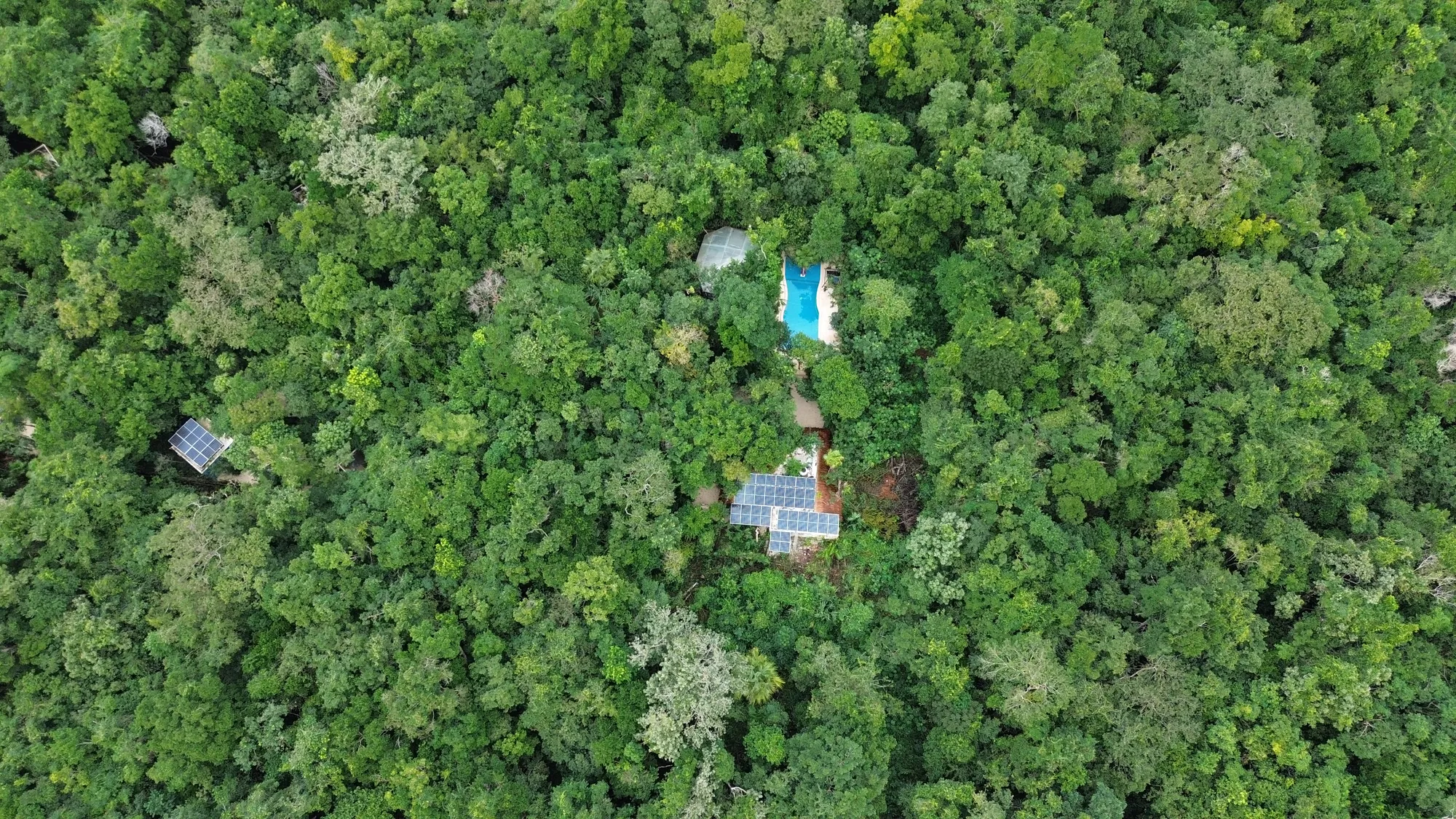
Lunita is five thousand square meters of clearings inside more than eighty thousand square meters of jungle, and the order of those numbers is the whole philosophy. This page is the land's side of the story: what was here, what was promised, how the place actually runs, and why the jungle keeps getting bigger.
The promise, and the day it was made
One promise was made during construction and kept: not a single tree was cut. Every cabana, every path, every shared space sits in a gap the trees had already left, which is why no two cabanas are identical, why the paths run narrow, and why the property feels discovered rather than developed.
The promise has a date. On May 1, 2021, before anything was built, a ceremony asked the jungle's permission, and on the same day the kahtal alux was raised, the small Maya spirit house consecrated to the Aluxes, the guardian spirits of this land. It still stands near the meditation area. We pass it daily; we live alongside it more than we point at it.
And as Lunita built, it planted: more than five thousand new trees, a living return on what the land was lending. The planting never stopped. These days it's often cacao going into the ground, much of it placed by guests' own hands in the Tree Planting that closes personal retreats.
The land under the land
Lunita sits on the Ruta de los Cenotes, the cenote road, named for what runs beneath it: the Yucatán's underground river system, the network of limestone-filtered water the Maya understood as sacred. One branch of it runs directly under the property.
That's not scenery; it's infrastructure. The water that fills the pool, the showers, the kitchen, and the gardens is drawn from the cenote below, filtered by the limestone the peninsula is made of. It comes up clean and it goes back treated. The property's wastewater runs through a biodigester rather than out into the ground. The pool holds the same water with no chlorine and no tank: just the river, surfacing.
How the place runs
Power. The whole property runs on solar, panels across the roofs charging five batteries that carry the lights, the fans, the kitchen, and the pool pumps through the night and through the rains. Off the grid since opening day; never needed it.
Water. From the cenote below, as above: drawn, used, treated, returned.
Waste. The biodigester handles what plumbing produces; the kitchen leans on local sourcing; what can be composted or replanted is.
Cooling. Ceiling fans and tree shade instead of air conditioning. The cabanas were placed where the jungle keeps them cool, which is the cheapest, oldest climate technology there is.
None of this is hardship engineering. Guests mostly notice it as quiet: no generator hum, no chlorine smell, no grid to fail.
The living jungle
Eighty thousand square meters of jungle is not a garden. It's a neighborhood. Birds own the mornings (you'll hear them at breakfast in the open dining pavilion), crickets own the dinners, butterflies work the day shift, and the canopy runs its own weather: shade, birdsong, the afternoon light arriving in pieces. The oldest resident is the Grandfather tree, the elder the meditation pavilion was built beside, and the quiet center the rest of the property arranges itself around.
Seasonally the jungle has two characters: the dry months (roughly November to April) are bright and reliable; the green season is lusher, louder, and an experience of its own. The honest calendar lives in our guide to retreating in Mexico.
Why it matters for your retreat
A retreat works by subtraction: fewer inputs, fewer demands, fewer machines between you and the week. A property that runs on sun and cenote water, holds twenty people maximum, and was built around its trees isn't an aesthetic; it's the container doing its job. The jungle came first here. For a few days, you get to come second, and that turns out to be the rest you were looking for.