Ceremony: One of Seven
The Temazcal.
One of the seven ceremonies offered at Lunita. The oldest ceremony of the Americas still practiced today.
The temazcal, from the Nahuatl temazcalli, “house of heat,” is the Mesoamerican sweat lodge. Pre-Hispanic, pre-Conquest, older than the Maya and the Aztec, held continuously somewhere in Mexico for thousands of years. The ceremony has survived through every century the continent has been through.
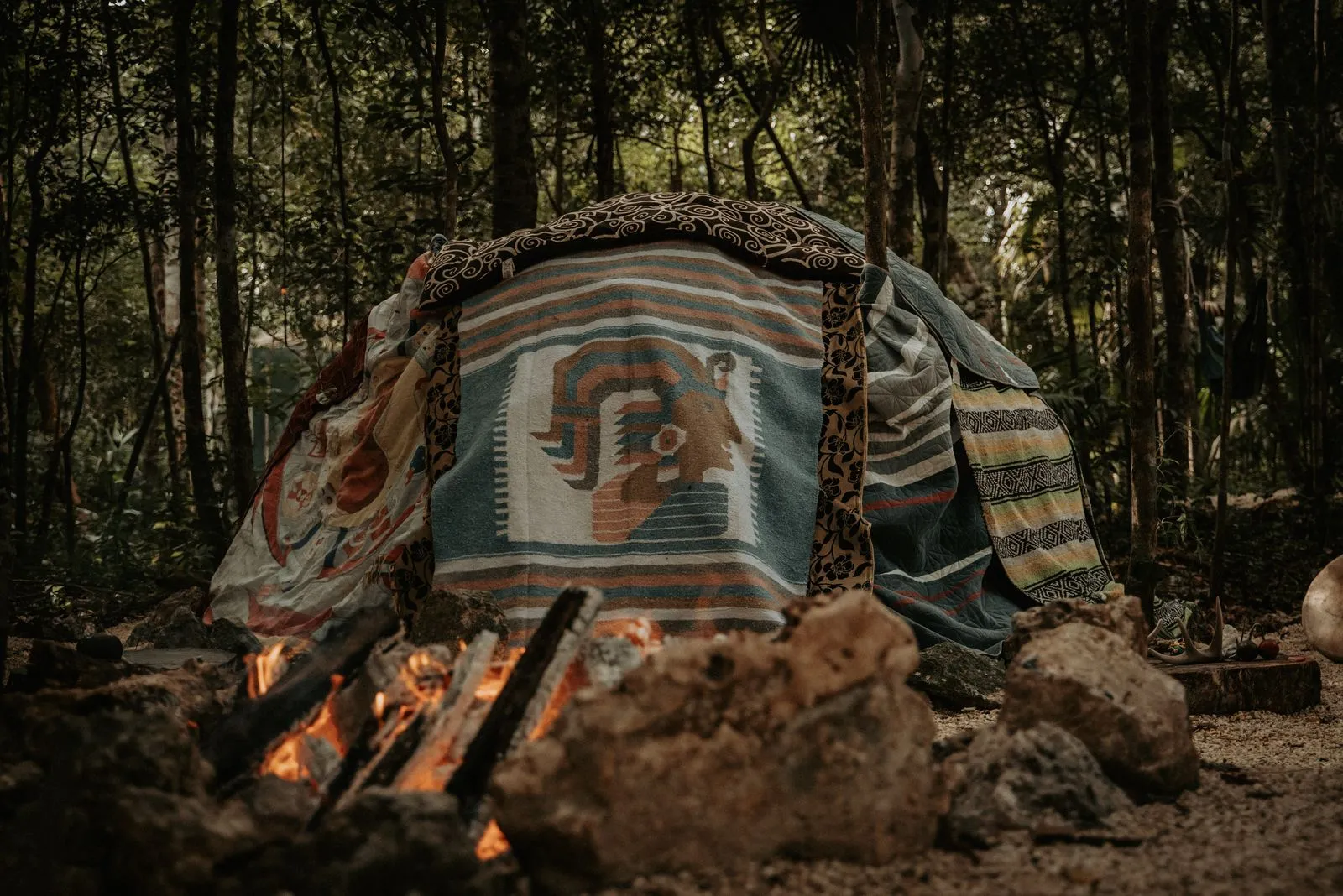
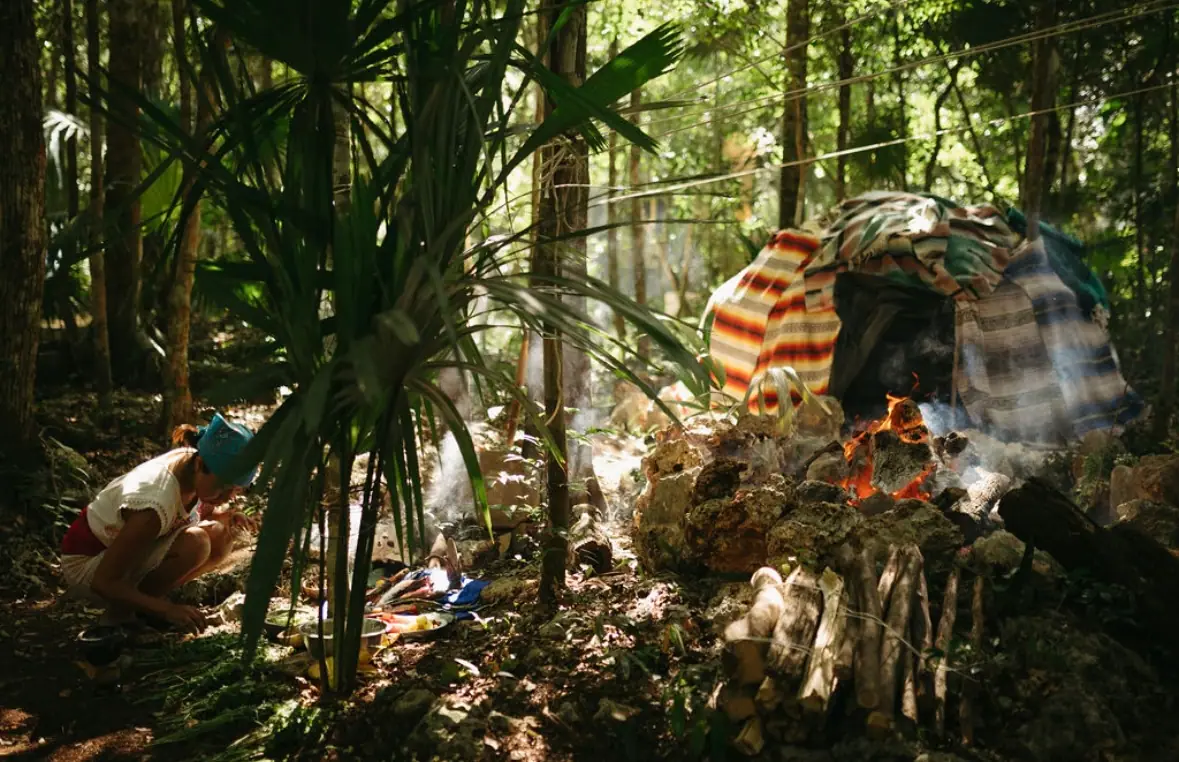
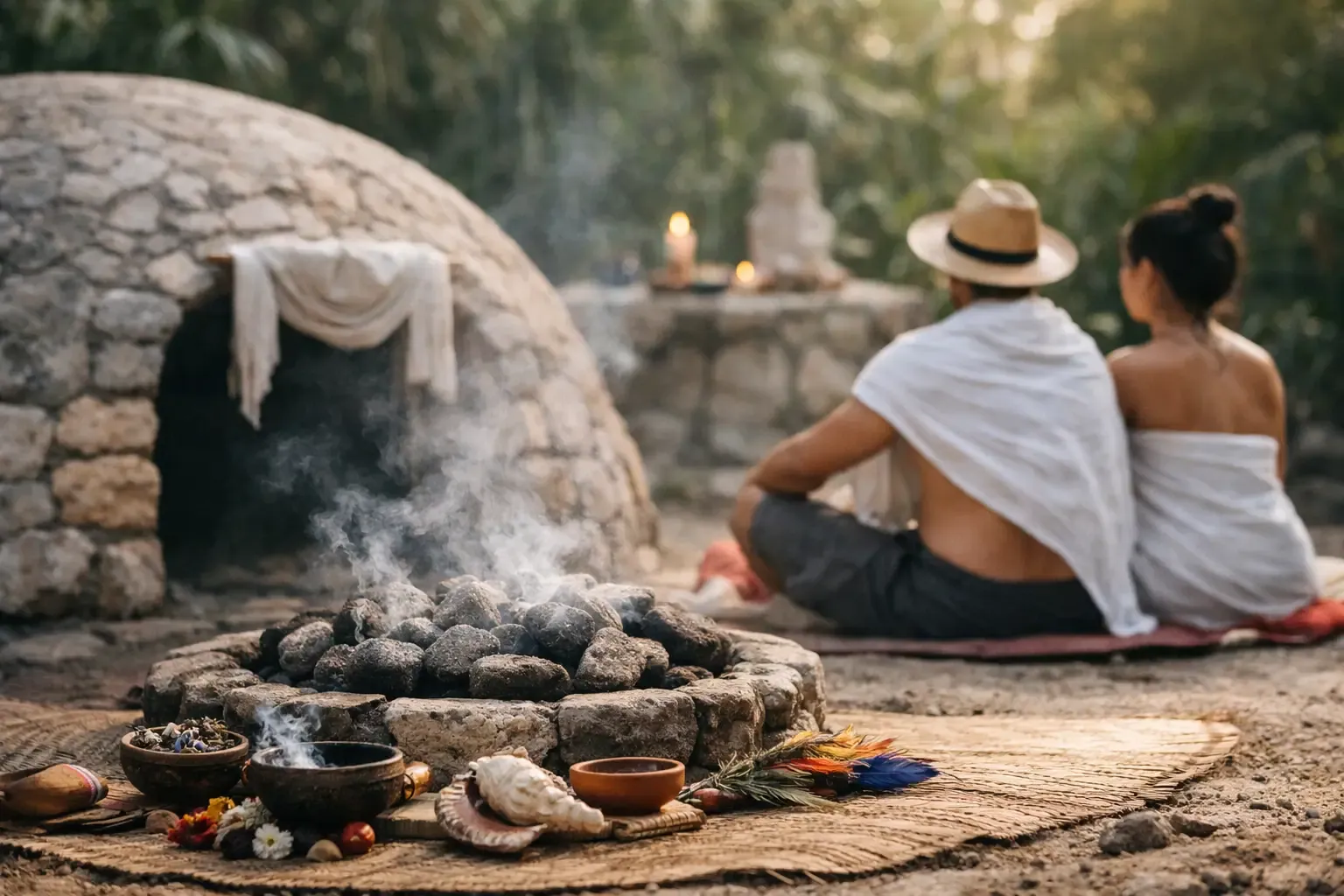
At Lunita, the temazcal is a domed lodge built from a wooden frame and covered with blankets, heated by volcanic stones and held in the Mexican tradition by traveling temazcaleros from across the country.
One to two hours. The structure varies, sometimes two doors, sometimes four, depending on what the temazcalero builds for the group that day. Mixed groups by default; women-only groups can be held by a temazcalera if the container calls for it.
What the temazcal offers, the way it's been offered for as long as anyone remembers, is the chance to be returned to the womb of Mother Earth. To go in carrying something, sit with the heat and the dark, and come out lighter.
For the deeper explainer, what a temazcal is, the four doors, what to expect, and how to prepare, see the full temazcal guide.
A ceremony older
than the Maya.
The temazcal predates everything most people think of when they think of “Mexican spiritual tradition.” It is older than Tenochtitlán, older than Chichén Itzá, older than the names we use for the cultures that built those places. Archaeological evidence places temazcal structures across Mesoamerica thousands of years before the Spanish arrived, and the ceremony itself is likely older still.
What survived the Conquest is what's still done today. When Spanish chroniclers in the 1500s wrote about the temazcalli, they described essentially the same ceremony Mexican temazcaleros hold now: the small domed structure, the heated stones, the medicinal herbs, the songs and prayers, the symbolic return to the womb of the earth.
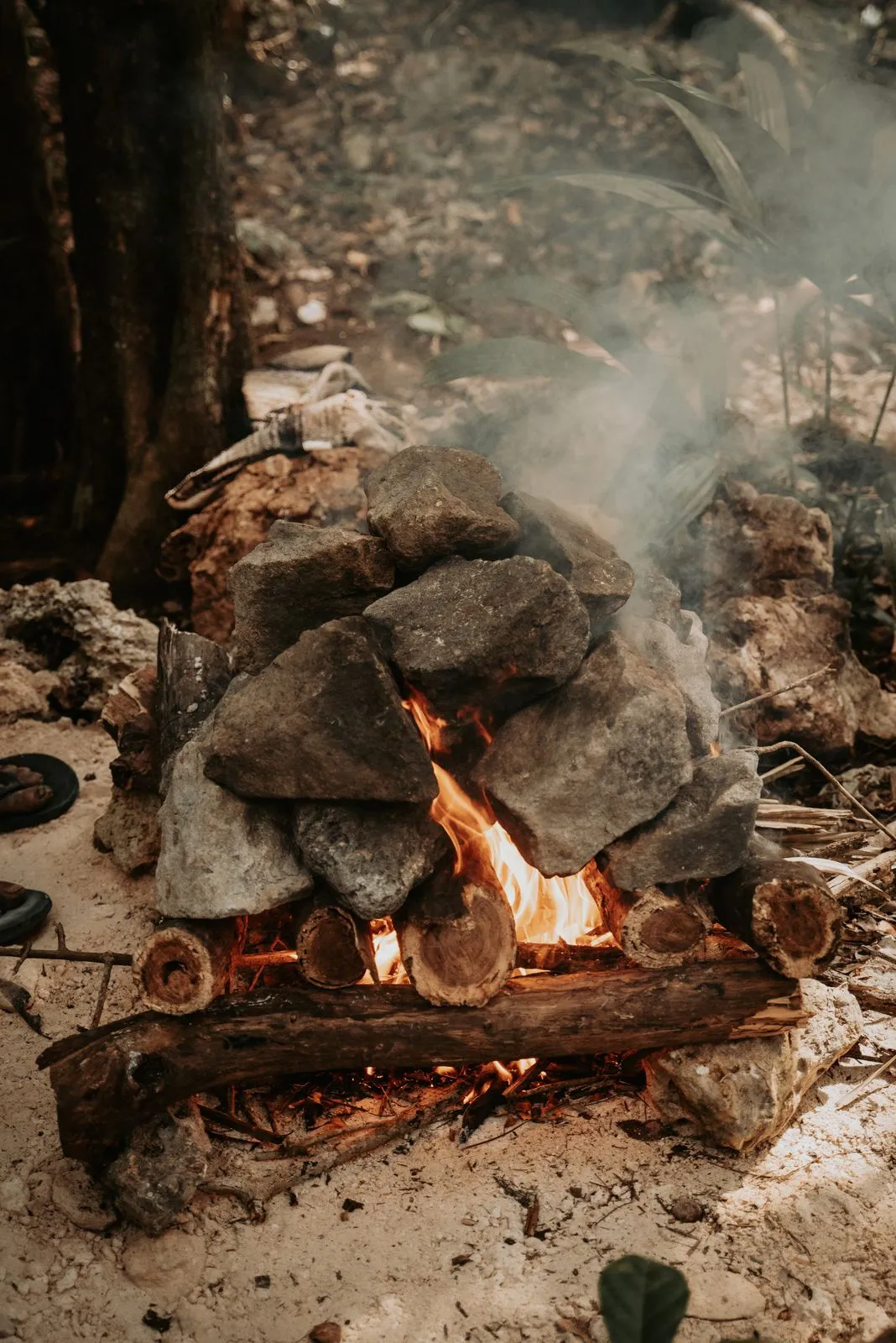
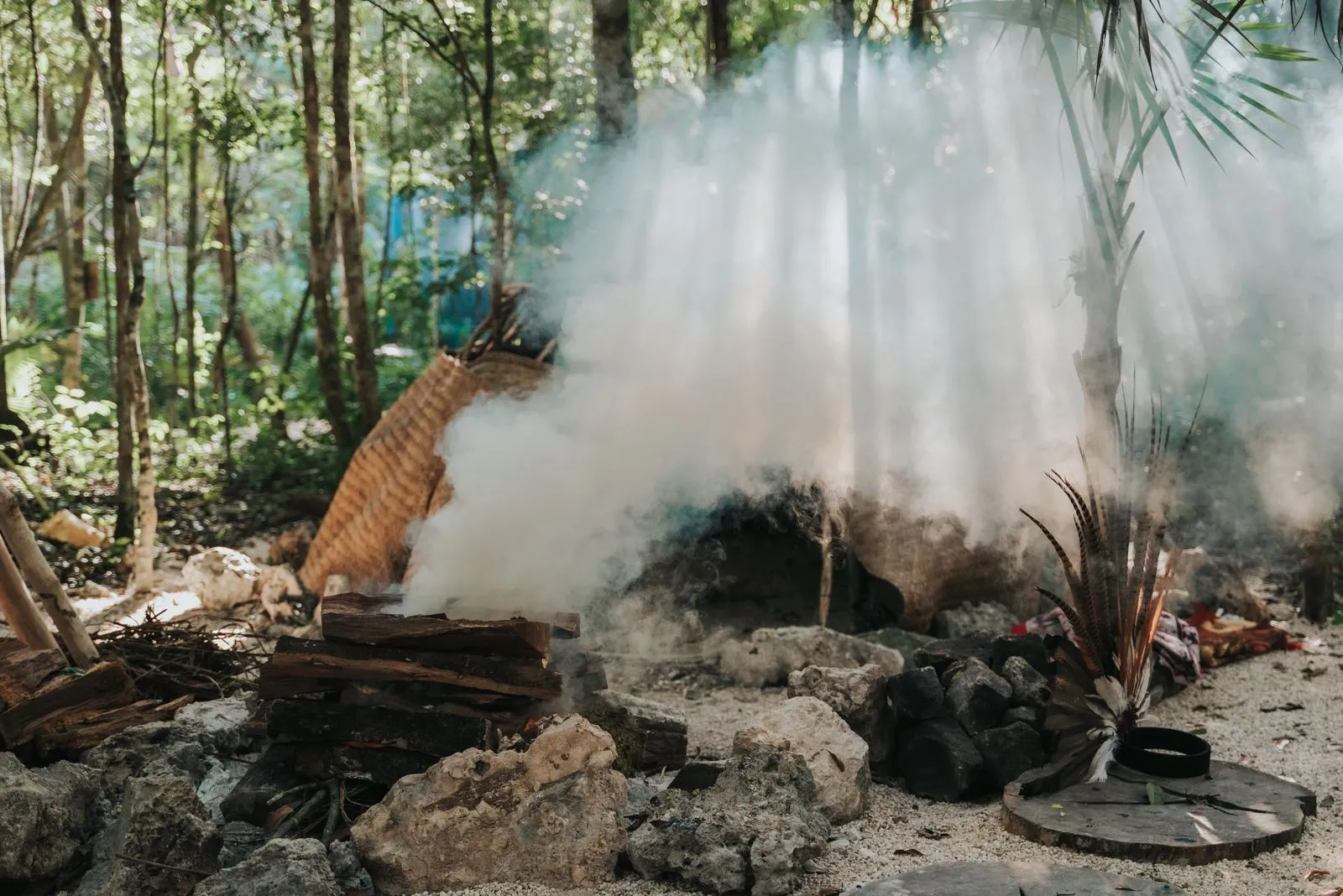
The temazcal at Lunita stands in this lineage. The wood frame is modern; the blankets are modern; but the ceremony is not. The stones are heated outside the lodge, the abuelitas (“little grandmothers”), and brought in glowing. The herbs are placed on the stones. The water is poured. The lodge fills with steam, with the scent of copal and sage, with song. The doors open and close.
The work of the temazcal is the same now as it was three thousand years ago.
What happens during
the ceremony.
The temazcal at Lunita is held outdoors, in the lodge built behind the property's gathering spaces.
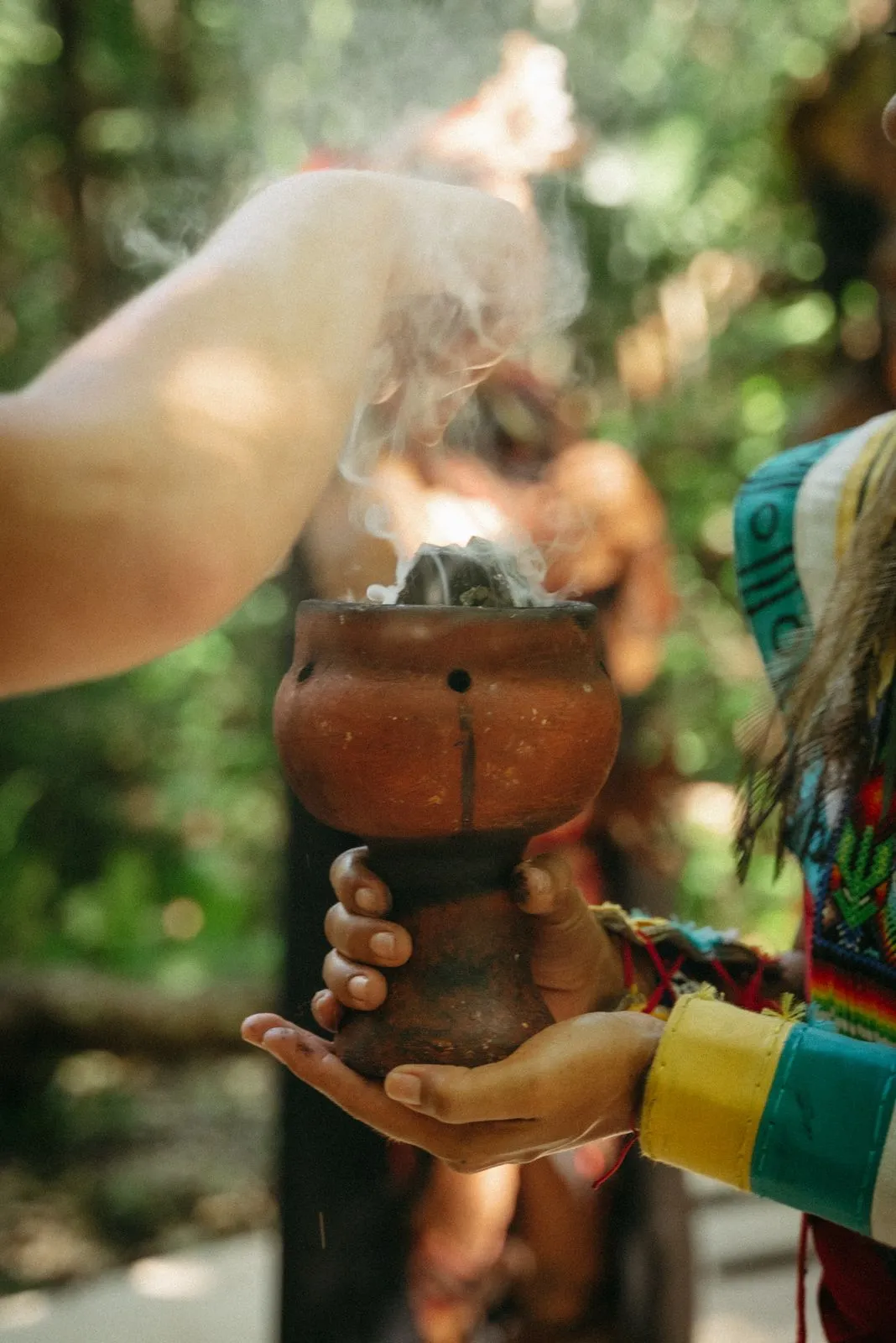
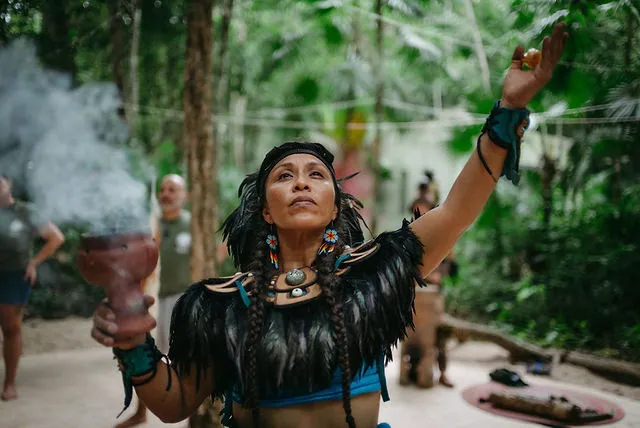
Before the ceremony begins, the abuelitas, the stones, are heated in a fire outside the lodge for an hour or more. While the stones heat, the group gathers. The temazcalero may speak about the ceremony, offer copal smoke for purification, and invite each person to set an intention they're bringing in.
The lodge holds the group seated on the earth, in a circle. The first hot stone is brought in. It glows. The temazcalero places it in the center pit, sprinkles it with copal, and the lodge fills with the smell of ancient resin. More stones follow. Herbs (rosemary, sage, ruda, basil, and others depending on what the temazcalero is working with) are placed on the stones. Water is poured. Steam rises.
Then the door closes.
What happens inside follows a structure that depends on the ceremony. Some temazcales at Lunita are held with four doors: four rounds of heat and song and prayer, with the door opening between each one for fresh air and another round of stones. Each round honors a direction, an element, or an aspect of the work: gratitude, the ancestors, healing, transformation. Some temazcales are held with two doors, a gentler version, with the same structure compressed.
You sweat. You sing if you know the songs; you stay silent if you don't. You sit with the heat. You sit with whatever rises. Between doors, you breathe. At the end, you crawl out into the air, and the temazcalero pours water over you, and you sit for a moment letting the world come back.
Most people are quiet for a while afterward. The temazcal asks for the rest of the day to be slow.
Who leads
the ceremony.
The temazcal at Lunita is held by traveling temazcaleros from across Mexico, practitioners who carry the ceremony in the Mexican tradition, who have trained for years, and who travel between communities to offer it. Different temazcaleros come for different retreats. Which one is on-site during your dates depends on the calendar and on what the retreat is asking for.
What stays consistent across all of them is the lineage: Mexican, ancestral, with the temazcalero's specific teachings shaped by the elders they trained under and the community they belong to. The temazcaleros who come to Lunita are not workshop-certified; they were taught, slowly, the way the tradition has been taught for centuries.
For women-only retreats, we arrange a temazcalera, a woman temazcalero, to hold the ceremony. This honors the part of the temazcal tradition that has always been a women's ceremony, and gives the container the integrity it deserves.
What people come
to work with.
For some people, it's a purification: physical and spiritual. The heat and the sweat carry out what's been sitting in the body too long. People come out feeling cleaner in a way that's hard to describe and unmistakable when it happens.
For others, it's a letting go. The dark of the lodge is a held kind of dark. The temazcalero is there, the group is there, but you can't see anything. Things you couldn't cry about in the daylight sometimes come out in that dark. The ceremony makes room for what's been hard to make room for elsewhere.
For others still, it's a return: to the earth, to the body, to a sense of being part of something older than the day's worries. The temazcal asks you, the way few things ask you in modern life, to remember that you are an animal made of water and dirt, sitting in a small dark space, alive.
For everyone, it's a chance to connect with Mother Earth in the way the tradition has held that connection for thousands of years. Nothing about the temazcal requires belief, training, or prior ceremony experience. It is open to everyone who can physically be inside it.
Things to know
before you sit.
The temazcal is physically demanding. Not in the way of long exertion, but in the way of intense heat in a small enclosed space. A few things to be honest about before you arrive.
Heat tolerance. The inside of the lodge gets hot: humid hot, the kind that wraps around you. If you've never spent time in a sweat lodge, sauna, or steam room, you may want to ease in. The temazcalero will check on the group between doors, and you can crawl out if you need to. Nothing about the ceremony requires you to push past what your body can handle.
Cardiovascular conditions. Heat affects the heart. If you have any significant cardiovascular condition, including high blood pressure that isn't well-controlled, please mention it during the intake call. We'll talk through your specific situation.
Pregnancy. The temazcal has a long tradition of being held for pregnant women as a Blessingway ceremony, but only with appropriate adjustment. If you're pregnant, tell us in advance. We'll often suggest a shorter, cooler version, or arrange a Blessingway with Esperanza instead of a standard temazcal.
Claustrophobia. The lodge is small and the doors close. If enclosed spaces are difficult for you, the temazcal may not be the right ceremony. We can talk through what to expect during the intake call.
Recent surgery or major medical events. If you've had a recent surgery or medical procedure, please mention it. Healing tissue and intense heat don't always agree.
Outside of these considerations, the temazcal is open to everyone. Most people who arrive at Lunita can sit in it without difficulty.
Practical.
Duration
One to two hours, depending on whether the ceremony is held with two or four doors.
When in the retreat
Often held mid-retreat, after the group has settled in but before any closing ceremony work. The day before or after a temazcal is usually quiet.
Where
The temazcal lodge, built between the trees behind the property's gathering spaces. The fire pit for heating the stones is just outside the lodge.
What to wear
Light, loose clothing, what you would wear in a sauna, but a little more modest. Many people wear a cotton sarong, a loose dress, or shorts and a t-shirt. The clothes will be soaked through; bring something to change into for after.
What to bring
A towel for after. Water for drinking before and after; water inside the lodge is provided by the temazcalero. That's it.
Group or one-on-one
The temazcal is a group ceremony, typically held for the full retreat group, mixed by default. For women-only retreats, a temazcalera holds it.
Included with full hosting
Available within hosted retreats. The cost is included in the custom retreat proposal.
Available within personal retreats
Included in the custom proposal, typically requires a small group for the ceremony to make sense, since the lodge is built to hold a circle.
Common questions
Where is the temazcal at Lunita?
Is the temazcal part of a retreat, or can I book it on its own?
Who leads the temazcal at Lunita?
Is the temazcal at Lunita mixed or women-only?
From the Journal
Whenever you're ready.
We're not in a hurry. And neither is the work.