Ceremony: One of Seven
The Sacred Mushroom
Ceremony.
One of the seven ceremonies offered at Lunita. The medicine the Mazatec call Niños Santos, the Holy Children.
This is the medicine María Sabina carried. A Mazatec curandera from the mountains of Oaxaca, she held the mushroom velada in the old way through the twentieth century, and the lineage she protected is the lineage Lunita's ceremonies still draw from today.
At Lunita, the sacred mushroom ceremony is held in three forms, by three facilitators, each respecting the same tradition and the same careful process: intake, intention, ceremony, integration.
With Edgar, the ceremony is closest to the Mexican root: prayers and songs carried in the tradition of María Sabina. With Alberto, a private ceremony held with live music. With Savannah, a ceremony that weaves the María Sabina tradition together with breathwork.
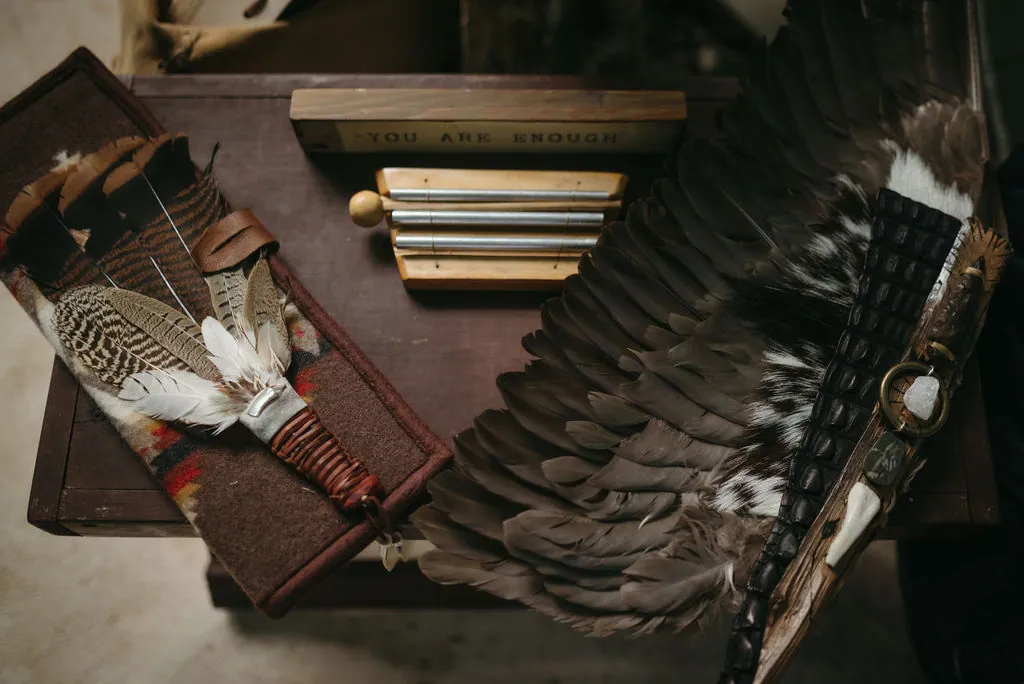
Each is built the same way underneath. An altar is raised. Permission is asked, of the land, of the four directions. Copal is burned. And the medicine is held by a medicine man or woman who knows what they are holding.
This is not a recreational experience. It is a ceremony, and it is treated as one.
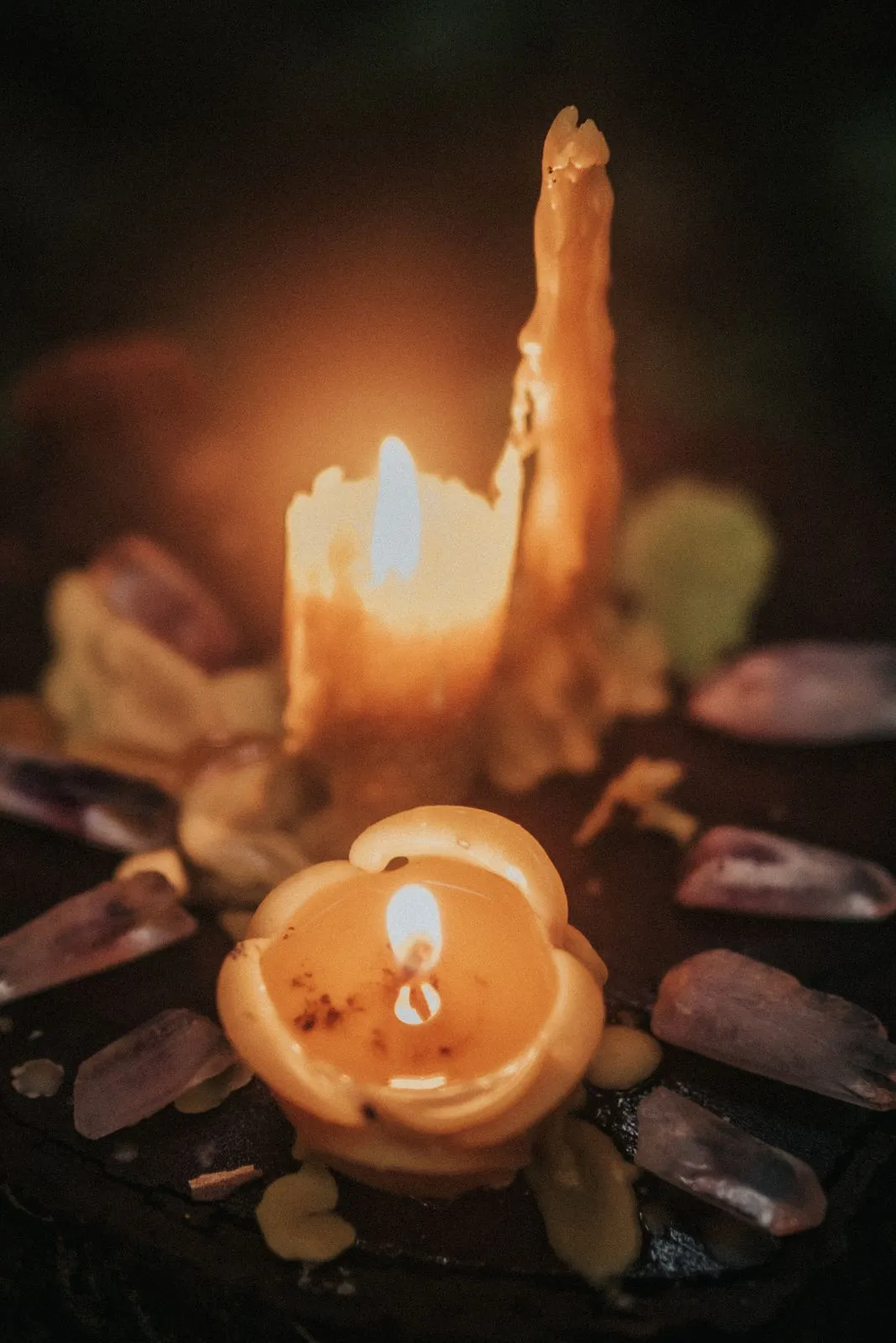
The medicine of
María Sabina.
In the mountains of Oaxaca, in a Mazatec town called Huautla de Jiménez, the mushroom ceremony has been held since long before anyone wrote it down. The Mazatec call the mushrooms Niños Santos, the Holy Children, and they are not taken for pleasure. They are taken to see, to heal, to ask, to know.
She held veladas, night ceremonies, in which the medicine was taken in darkness, and she sang. Her chants are some of the most documented sacred songs in the Americas: long, repetitive, hypnotic invocations that guided the people in her care through the night. She did not see herself as the source of the healing. She saw herself as the one who opened the door so the medicine could do its work.
Her tradition survived her, carried by her family and her community. The prayers and songs in Edgar's ceremonies at Lunita follow the tradition of María Sabina, not borrowed, not approximated, but carried through the line that has held this medicine the longest.
What the Mazatec understood, and what the ceremony still honors, is that this is sacred work, not casual work. The mushroom is not a substance to be consumed. It is a teacher, an elder, a being with its own intelligence, to be approached with preparation, with respect, with an altar built and permission asked and the proper songs sung.
That's the tradition Lunita stands inside. Every ceremony, in every form, begins there.
The lineage
María Sabina
1894 to 1985
A Mazatec curandera, a healer, from Huautla de Jiménez, in the Sierra Mazateca of Oaxaca. She spent her life in service to the Niños Santos, holding healing veladas for the people of her community in the Mazatec language, guided by chants she received from the mushrooms themselves.
In 1955 she allowed an outsider to attend a velada for the first time; the encounter was published, and the world arrived at her door. She became the most recognized figure in the history of this medicine, a woman who carried her tradition with devotion, and asked only that it be approached with respect.
What happens during
the ceremony.
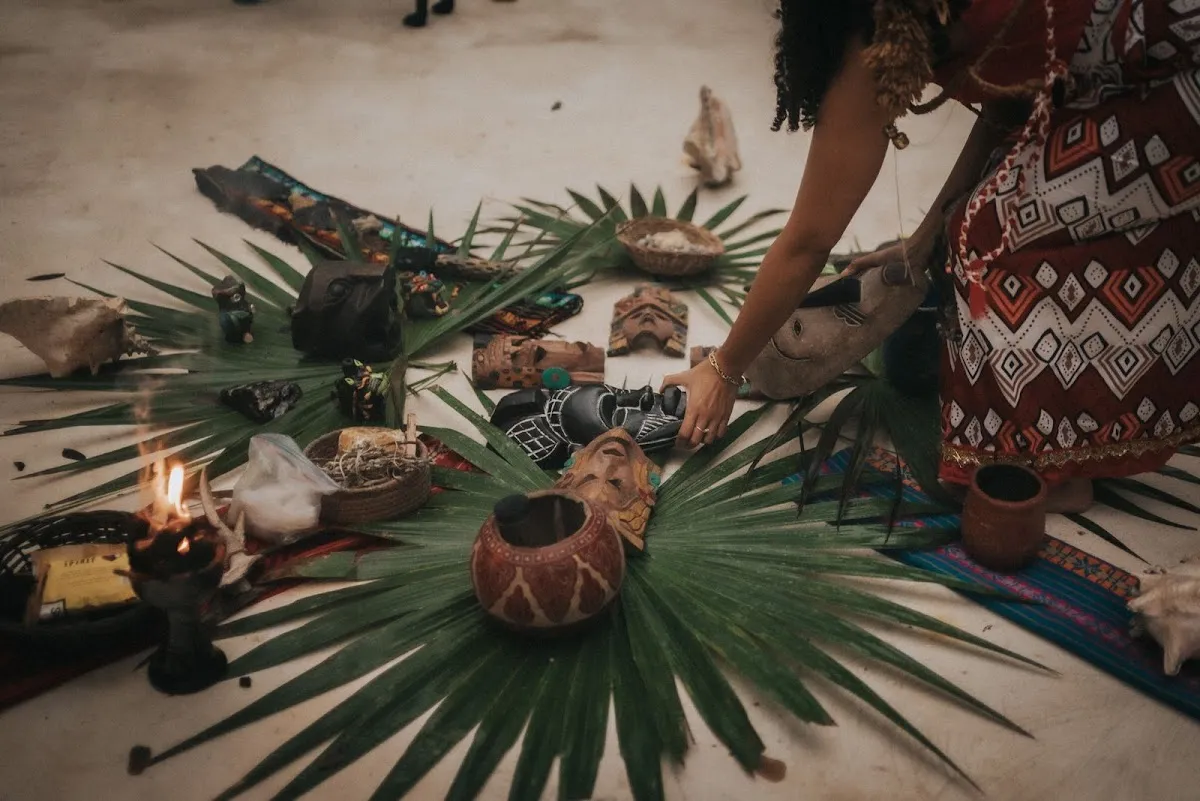
Every sacred mushroom ceremony at Lunita is built on the same foundation, regardless of which facilitator holds it.
Before the ceremony,
there's an intake call. You talk through your history, your health, your medications, your intention. Not everyone who asks is ready, and not every time is the right time. The intake is where that's determined honestly. If the ceremony is right for you, we send you a preparation protocol to follow in the days or weeks before you arrive: dietary guidance, things to abstain from, ways to prepare the body and the mind.
The altar is raised
before the ceremony begins. This is not decoration. The altar holds the intention of the ceremony, the offerings, the elements. The space is cleansed with copal, the sacred resin smoke that has purified Mesoamerican ceremony for thousands of years. Permission is asked: of the land, of the four cardinal directions, of the spirits the tradition recognizes. Nothing begins until the space has been properly opened.
The medicine is taken
in the way the ceremony calls for, and the facilitator, the medicine man or woman, holds the space. In a group ceremony, one or two additional people are present to support and watch over the group. You are never alone in it. The facilitator sings, prays, tends the altar, and keeps the container safe through every hour.
What happens inside
the ceremony is different for everyone, and different every time. The medicine can bring visions, emotions, memories, insights, tears, laughter, stillness. It can be gentle. It can be hard. The facilitator's role is to hold the space steady so that whatever comes, comes safely.
As the ceremony closes,
the integration begins: that night, in the immediate aftermath, and again the next day. What the medicine showed you only becomes useful when it's brought back and made sense of. The closing and the next-day integration are where that work starts.
Who leads
the ceremony.
Three facilitators hold the sacred mushroom ceremony at Lunita. Each respects the same tradition and the same process; what differs is the form, and which one is right depends on what you're seeking and what kind of retreat you're on.
The Mazatec lineage
Edgar
The ceremony closest to its Mexican root. Edgar is a Zapotec facilitator, local to Puerto Morelos, who carries multiple Indigenous Mexican lineages. For the mushroom ceremony, the prayers and songs he uses follow the tradition of María Sabina: the Mazatec tradition, held in the old way, with the chants that have guided this medicine for generations.
If you want the ceremony as close to its origin as Lunita offers it, this is the one.
Private ceremony with live music
Alberto
Alberto holds the medicine in a more intimate container, with song and instruments played live throughout, a soundscape that moves with the ceremony rather than following a fixed structure. Best suited to individuals, couples, or small groups on private retreats.
Tradition + breathwork
Savannah
Savannah's form brings the breath into the ceremony as a tool alongside the medicine, a contemporary thread woven into the traditional fabric, for those drawn to working with both.
All three are medicine men and women who know what they hold. None treats this work lightly. In every form, the ceremony is held with the full process: intake, intention, the altar, the medicine, integration.
What people come
to work with.
For some, it's grief: a loss that hasn't found its way out, a death that hasn't been fully felt. The medicine has a way of opening the grief that's been held too tightly, and letting it move.
For some, it's a question that won't resolve. A crossroads, a calling half-heard, a sense that something needs to change without knowing what. The medicine doesn't answer the question so much as quiet the noise around it, so the answer you already carry can be heard.
For some, it's healing work: old wounds, patterns that keep repeating, the long shadow of something that happened a long time ago. The medicine can bring these into the light where they can finally be looked at.
For some, it's the search for connection: to themselves, to something larger, to a sense of meaning that modern life has worn thin.
What we won't tell you is that the medicine will fix any of this. It doesn't fix. What it does is show, and open, and move, and what you do with what rises is the real work, held in the integration that follows. The ceremony is the doorway. Walking through it is yours.
Things to know
before you sit.
The sacred mushroom ceremony is real medicine, and it is not for everyone. The intake call exists precisely to work through the following honestly, but here is what matters most.
Psychiatric conditions. Schizophrenia, bipolar disorder, psychosis, and certain other psychiatric conditions are contraindicated with this medicine, meaning the ceremony is not safe, and we will not hold it for you. This is not a judgment and not a barrier we apply lightly; it's a recognition that this medicine can destabilize these conditions in ways that cause real harm. If any of these are part of your history or your family's, the intake call is the place to talk it through.
Antidepressants and psychiatric medications. SSRIs, SNRIs, MAOIs, lithium, and other psychiatric medications interact with this medicine, some by blunting it, some dangerously. We do not ask anyone to stop their medication for a ceremony, and we don't treat ceremony as a replacement for psychiatric care. If you take any of these, we'll discuss it carefully during intake; in many cases, the honest answer is that the timing isn't right.
Heart conditions. The medicine raises heart rate and blood pressure. Significant cardiovascular conditions need to be discussed during intake.
Pregnancy and breastfeeding. We don't hold this ceremony for pregnant or breastfeeding women.
Emotional readiness. Beyond the medical, there's the question of timing. If you're in the middle of an acute crisis, a fresh trauma, or a period of profound instability, the right answer may be not yet, not because you can't, but because the ground needs to be steady enough to integrate what comes up.
The preparation protocol we send before your retreat covers the rest: the dietary guidance, the abstinences, the ways to prepare. Follow it. The ceremony goes better when the body and mind have been readied for it.
If the medicine isn't right for you, or isn't right yet, we'll tell you. That honesty is part of how we hold this work.
Practical.
Duration
The ceremony itself runs several hours, typically held into the evening and night in the traditional way. The day of the ceremony is given over to it entirely; the day after is for rest and integration.
Group size
Group ceremonies are held for up to sixteen participants, with a medicine man or woman holding the space and one or two additional people supporting the group. Private ceremonies, on personal retreats, are held for anywhere from one to ten participants.
The altar and the opening
Every ceremony begins with the altar raised, the space cleansed with copal, and permission asked of the land and the four directions. Nothing begins until the space is properly opened.
Preparation
A preparation protocol is sent before your retreat: dietary guidance and abstinences to follow in the days or weeks beforehand. Following it matters.
Integration
Integration begins as the ceremony closes and continues the next day. This is part of the ceremony, not an add-on.
Group or private
Available both as a group ceremony within hosted retreats and as a private ceremony within personal retreats.
Included in the retreat proposal
Like all ceremonies at Lunita, the cost is part of your custom retreat proposal, never sold standalone.
Available within MoonSeeds retreats
Included in the custom proposal at a reduced ceremony cost.
Common questions about
the sacred mushroom ceremony.
What is the sacred mushroom ceremony like at Lunita?
Who leads the sacred mushroom ceremony?
Is the ceremony safe — who is it not for?
How should I prepare for the ceremony?
What do people come to work with?
Ready to begin
the conversation?
From the Journal
Whenever you're ready.
We're not in a hurry. And neither is the work.