Ceremony: One of Seven
The Kambo
Ceremony.
One of the seven ceremonies offered at Lunita. The one that works on the body more than the mind.
Kambo is not a psychedelic. It brings no visions, no journey, no altered way of seeing. It is the secretion of Phyllomedusa bicolor, the giant monkey frog of the Amazon, and what it offers is physical: a fast, intense cleansing that the body moves through in well under an hour.
The Indigenous peoples of the western Amazon, among them the Matsés and the Katukina, have used kambo for generations, traditionally to clear what they call panema, a heaviness or bad luck, and to sharpen the body before the hunt. It was, and is, a medicine of strength and clarity, worked through the body rather than the mind.
At Lunita, kambo is held by Edgar, who applies it in the traditional way and adapts the ceremony to what each person is working with. It is held with preparation, with care, and with full honesty about what it asks of you, because kambo asks a lot, briefly.
This is a cleansing, not a journey. It's worth knowing the difference before you arrive.
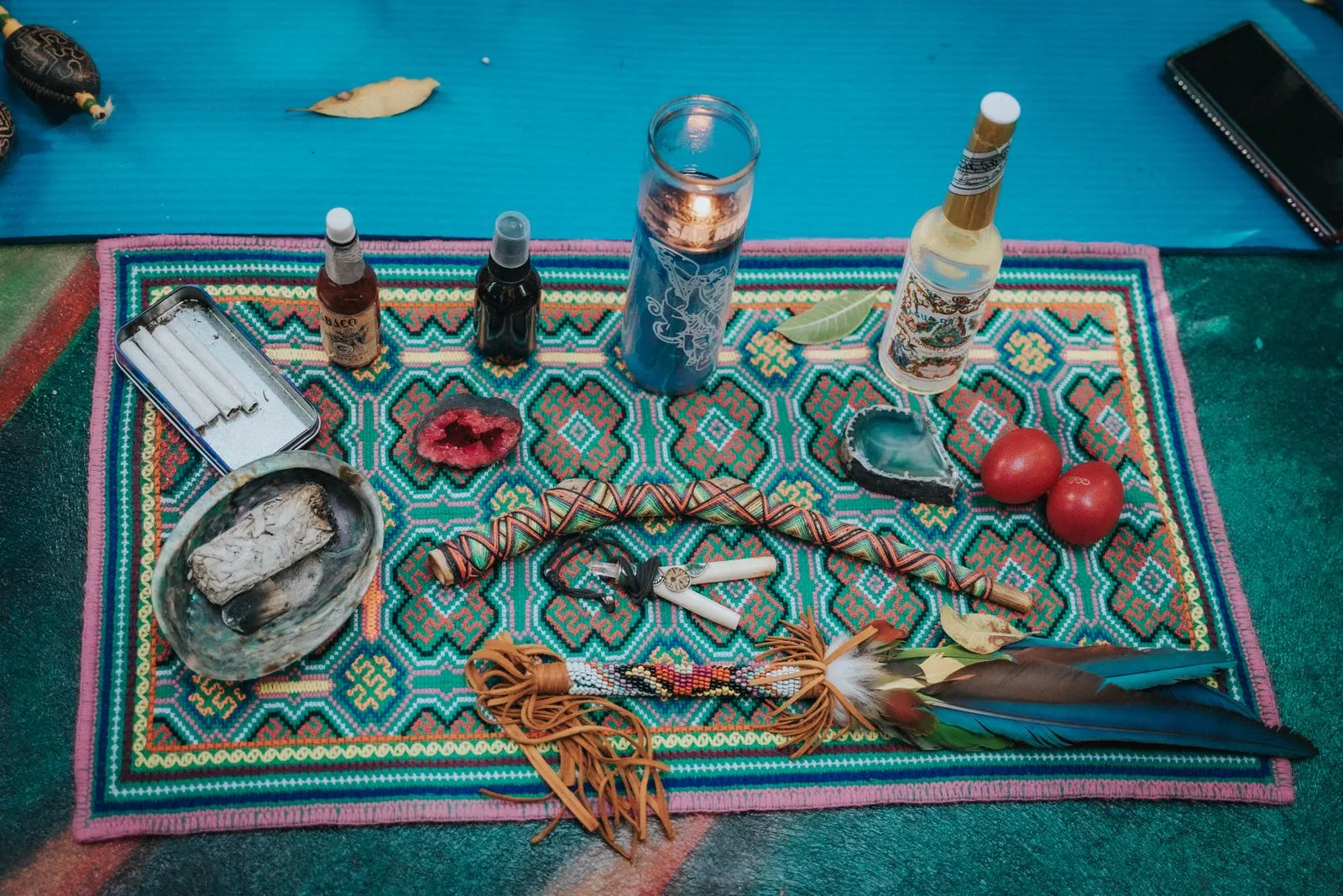
The medicine
of the hunt.
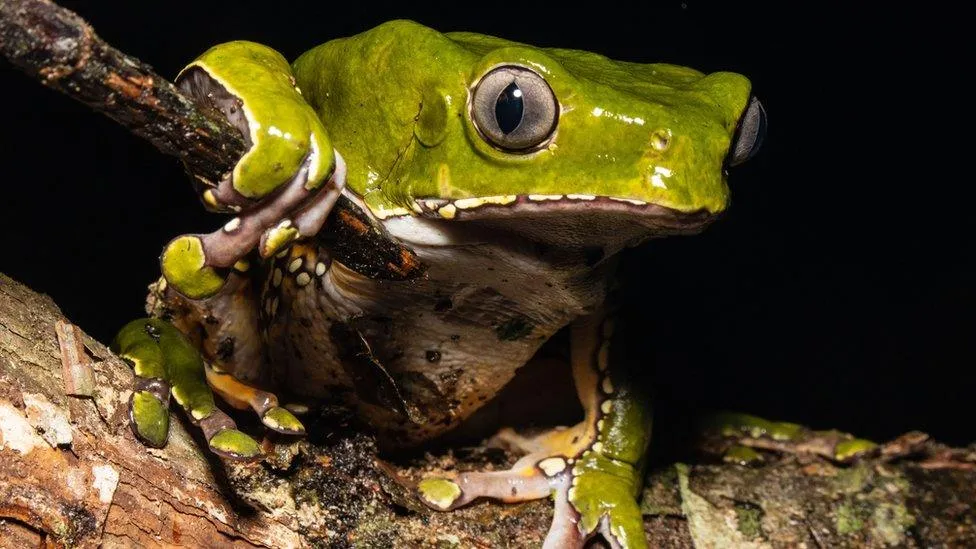
Kambo comes from the Amazon, from the secretion of a bright green tree frog, Phyllomedusa bicolor, that lives across the basin. The frog is not harmed: it's held gently, the secretion is collected from its skin, and it's released back to where it was found.
For the Indigenous peoples of the western Amazon (the Matsés, the Katukina, the Yawanawá, and others) kambo has been medicine for a very long time. Hunters took it to clear sluggishness from the body, to sharpen the senses, to remove what their traditions call panema, the heavy, unlucky, stagnant energy that settles on a person and dulls them. Kambo was how you cleared it, reset the body, and came back sharp.
Unlike ayahuasca or the sacred mushrooms, kambo does nothing to the mind. There are no visions. There is no expanded consciousness, no journey to integrate in that sense. What there is, instead, is the body, and a fast, total, physical process that traditional understanding sees as the body releasing what it has been holding.
At Lunita, kambo is held within this tradition. The application follows the way it has always been done, and the intention behind it (cleansing, resetting, clearing what's grown heavy) is the same intention the Amazonian peoples have brought to it for generations.
What happens during
the ceremony.
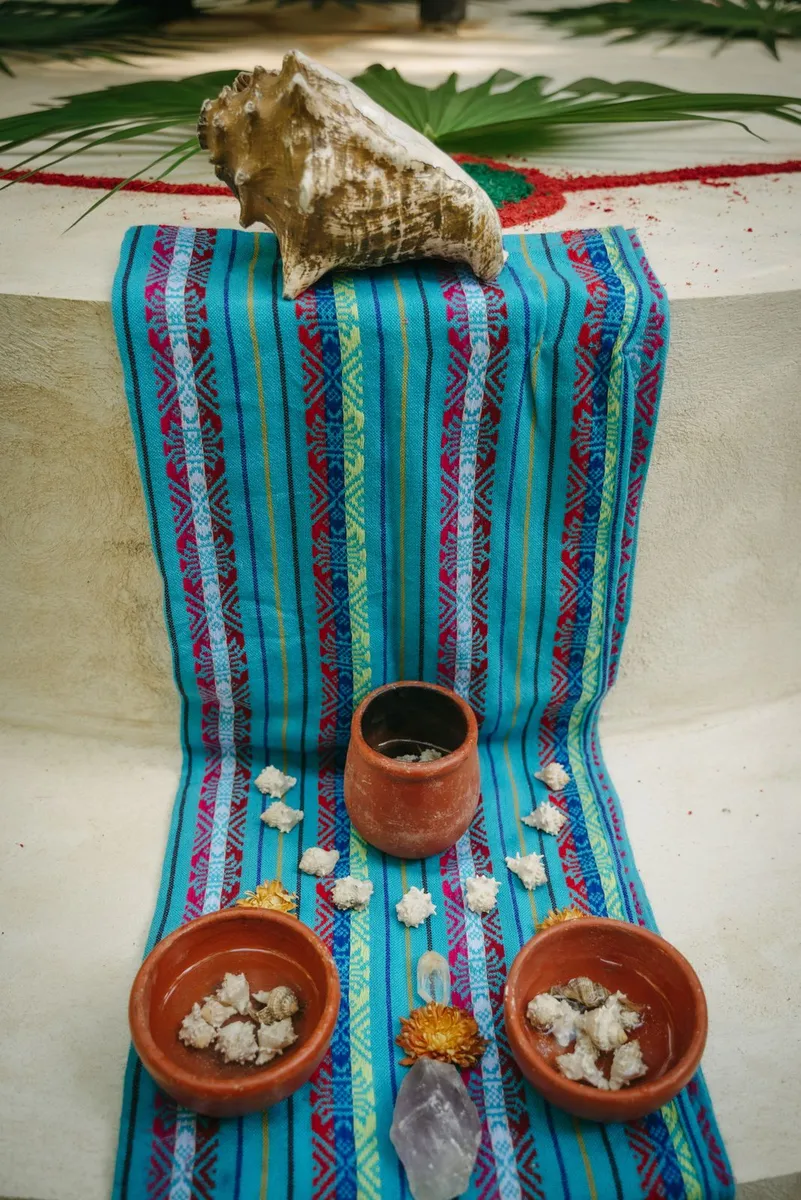
Kambo is fast. The whole active process is usually well under an hour, and most of what it asks of you happens in the first fifteen to twenty minutes.
Before the ceremony,
there's an intake call, and a preparation. In the hours before kambo, you'll eat lightly or fast as guided, and you'll drink water, at least two liters, shortly before the ceremony begins. The water matters: it gives the body something to work with during the purge, and the volume is guided carefully, because with kambo the water is part of the medicine and part of the safety both.
The gates.
Kambo is applied through small, superficial burns on the surface of the skin, called gates or points. A tiny amount of the dried secretion is placed on each one. Where the gates go depends on the work. The traditional placement is on the leg or the arm, but for more specific work, the points can be placed on different parts of the body. Edgar decides the placement with you, based on what you're there to clear.
The medicine works.
Within moments of the secretion touching the gates, you feel it. The body responds fast: a flush of heat, a rising intensity, often a strong purge. This is the center of the ceremony, and it's brief. Edgar stays with you through all of it, watching, guiding your breath, keeping you safe. It is uncomfortable. It is also over quickly.
The purge.
Most people purge. The water you drank comes back up, and with it, in the traditional understanding, what the body has been holding. It is intense and it is fast, and almost everyone, once it passes, describes a striking lightness on the other side of it.
Rest and integration.
When it's done, you rest. The body settles, the lightness sets in, and there's time to be quiet with what just moved through you. Kambo's integration is shorter than the journey medicines, but the rest afterward matters.
Who leads
the ceremony.
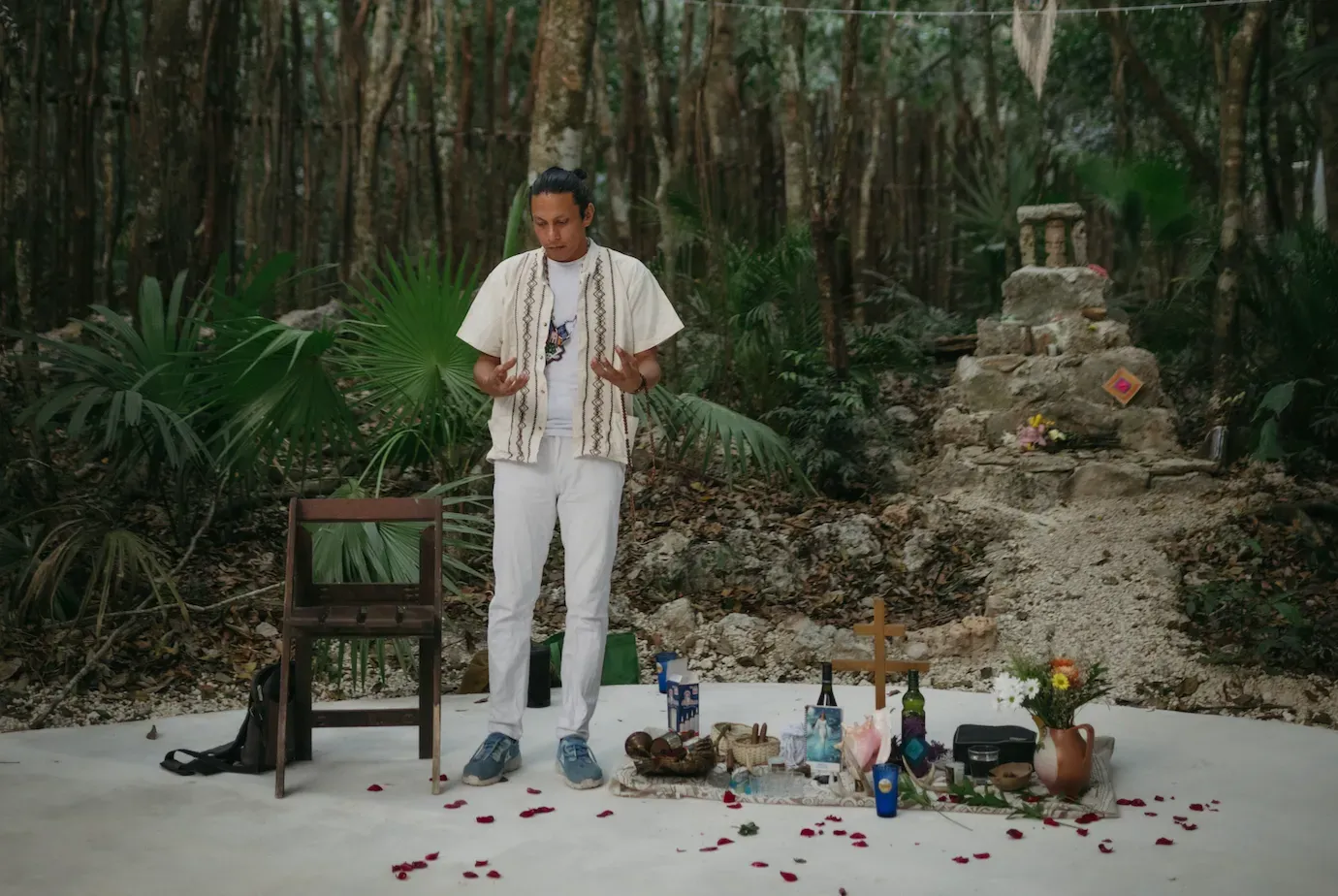
Kambo at Lunita is held by Edgar, a Zapotec medicine man, local to Puerto Morelos, who carries several Indigenous Mexican lineages and works with the medicines of the wider continent, kambo among them.
Kambo asks a particular kind of attention from the person holding it. The process is fast and physically intense, and the work happens in the body in real time, which means the practitioner has to read what's happening moment to moment, adjust, and keep the person safe through a short, demanding window. Edgar applies the gates, watches the body's response, guides the breath, and stays present through all of it.
He also decides the placement of the gates with you: the traditional points, or a more specific configuration depending on what you're there to clear. Each ceremony is shaped to the person.
What people come
to work with.
People come to kambo for the body, and for what the body is holding.
For some, it's a sense of heaviness: sluggishness, stagnation, a feeling of being weighed down that they can't quite name. This is close to what the Amazonian traditions call panema, and clearing it is what kambo has always been for.
For some, it's a reset. A hard period, a long illness recovered from, a stretch of life that left residue in the body. Kambo's fast, total cleansing can feel like a hard line drawn, a before and an after.
For some, it's preparation. Kambo is sometimes taken before deeper ceremonial work, as a way of clearing the body first, arriving lighter and more ready.
And for some, it's simply that they feel called to the medicine of the frog, and they trust the pull.
What we won't do is make medical claims for kambo. You'll find a lot of them online, that it treats this condition or boosts that system. We don't say those things, because the honest position is that kambo is a traditional cleansing practice, not a medical treatment, and it should never replace medical care. What it offers is what the tradition has always offered: a clearing, worked through the body. What you do with the lightness afterward is yours.
Things to know
before you sit.
Kambo is physically demanding, and although it doesn't touch the mind the way the other medicines do, it makes real demands on the body. The intake call works through all of this. Here is what matters most.
⚠ The water. This is the real risk.
Kambo involves drinking a large amount of water before the ceremony, which the body then releases during the purge. Drinking too much water, though, can dangerously dilute the body's sodium, a condition called hyponatremia, which is the most serious acute risk kambo carries. This is exactly why the water is measured and guided, not left to you to judge. Follow the protocol you're given. Don't improvise with the water, before or during.
Heart and blood pressure. Kambo affects heart rate and blood pressure, sometimes sharply, during the short intense window. Significant cardiovascular conditions (heart disease, arrhythmia, a history of stroke or serious cardiac events) must be disclosed during intake, and several of these mean we won't hold the ceremony.
Certain conditions and medications. Epilepsy, serious kidney or other organ conditions, a history of certain medical events, and some medications are contraindicated with kambo. We'll go through your full medical picture during intake.
Pregnancy and breastfeeding. We don't hold this ceremony for pregnant or breastfeeding women.
It is intense, and it is brief. Beyond the medical, it's worth being honest: the active part of kambo is uncomfortable. The heat, the rising intensity, the purge. None of it lasts long, and people are almost always glad they did it once it passes, but you should arrive knowing what you're saying yes to.
If kambo isn't right for you, or isn't right yet, we'll tell you. That honesty is part of how we hold this medicine.
Practical.
Duration
Fast. The active process is usually well under an hour, with most of the intensity in the first fifteen to twenty minutes. With preparation and rest afterward, plan for a few hours in total.
The gates
Kambo is applied through small, superficial burns on the skin. The traditional placement is the leg or the arm; for more specific work, the points can be placed elsewhere on the body. Edgar decides the placement with you.
The water
At least two liters, drunk shortly before the ceremony, measured and guided. The water is part of both the medicine and the safety.
Where
Held in one of Lunita's ceremonial spaces, prepared for the ceremony, with everything needed for the purge close at hand.
The marks
The gates leave small superficial marks on the skin that fade over weeks to months. Some people come to see them as a quiet record of the work.
Group or private
Available both one-on-one and in small groups, within hosted retreats and personal retreats alike. Included in your custom retreat proposal, never sold standalone. Available within MoonSeeds retreats at a reduced ceremony cost.
Common questions
about kambo.
What is a kambo ceremony?
Is kambo safe, and who is it not for?
What does a kambo session feel like?
How should I prepare for a kambo ceremony?
Does Lunita make medical claims about kambo?
Ready to begin
the conversation?
From the Journal
Whenever you're ready.
We're not in a hurry. And neither is the work.