Ceremony, One of Seven

The Cacao
Ceremony.

One of the seven ceremonies offered at Lunita. The gentlest doorway, and often the first one.

At Lunita, cacao ceremony comes in two forms, each held in the Mesoamerican tradition, each by a facilitator with their own way of offering it.

The first is Faby's: a ceremony paired with sound healing and a hands-on workshop weaving an Ojo de Dios, the traditional Mexican thread protection.

The second is Alberto's: a ceremony with live music, using cacao he grows and produces himself in the highlands of Chiapas, bean to cup, from the land that the medicine has always come from.

One to two hours. Outdoors, in one of Lunita's gathering spaces. No psychoactive effects in the way other medicines have them, no diet to follow before. Just you, the cup, the song or the silence, and the cacao.

For a deeper look at the cacao ceremony at Lunita, see the cacao ceremony story.

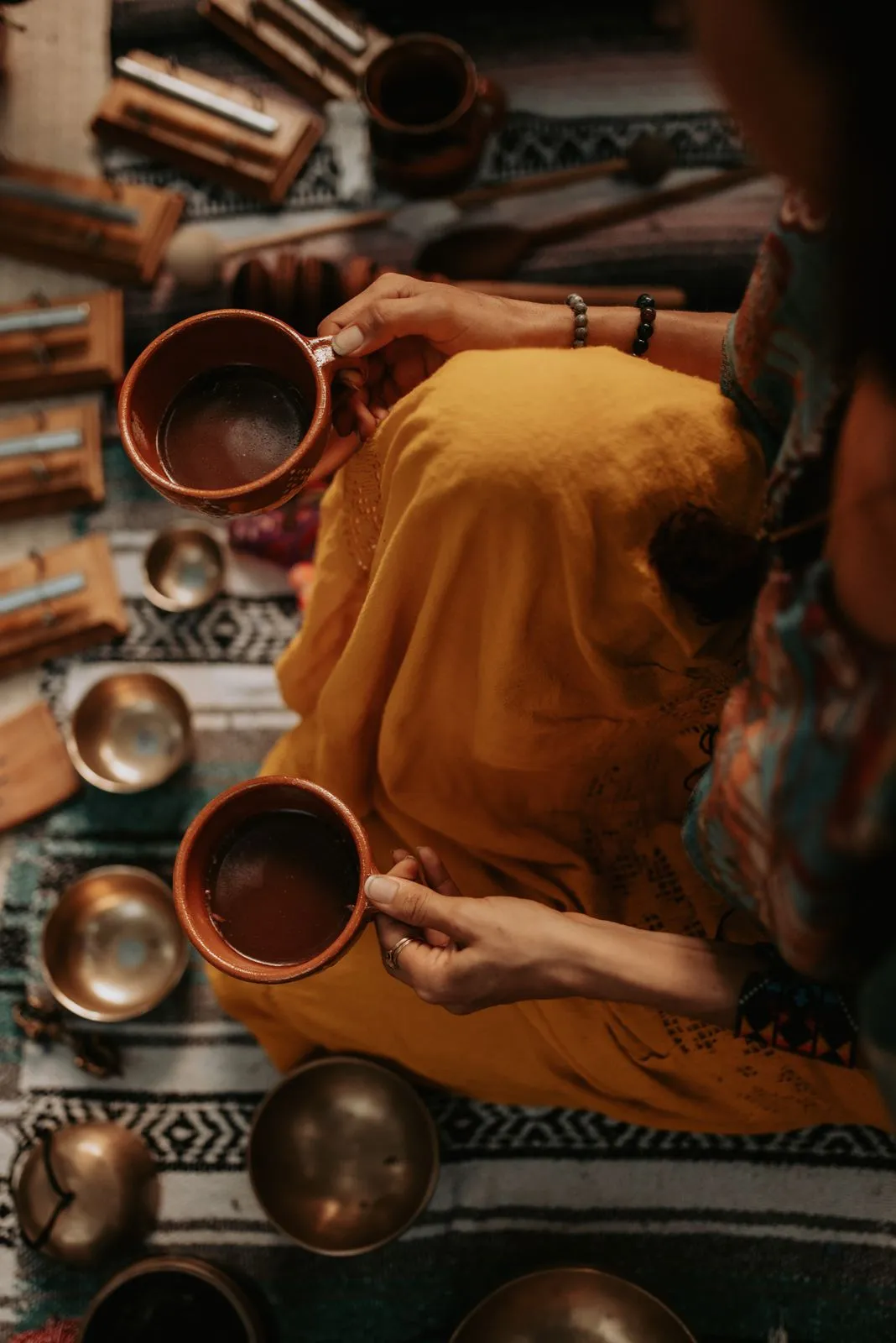
Overhead shot of a person in a saffron-yellow tunic sitting cross-legged on a black-and-white geometric woven rug, holding one clay cacao cup in each hand toward the viewer. Five b

A medicine older
than countries.

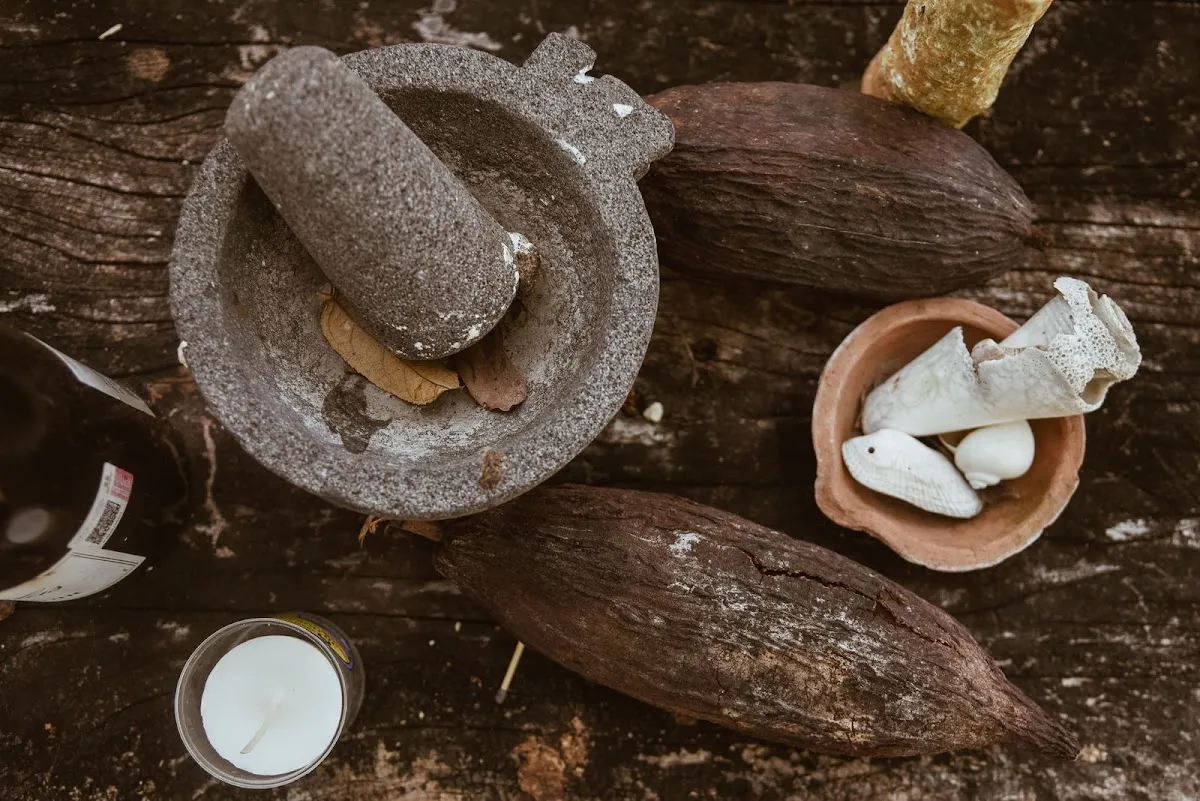
A granite mortar and pestle with dried bay leaves sits at center on weathered dark wood, flanked by two whole cacao pods and a small terracotta bowl holding white coral fragments,

Cacao has been consumed ceremonially in Mesoamerica for at least four thousand years, possibly closer to five. The Olmec drank it. The Maya called it Kakaw and inscribed it on stelae. The Aztecs called it Cacahuatl and traded it as currency, the seeds were money. Carl Linnaeus, when he gave the plant its scientific name, called it Theobroma cacao: “food of the gods.”

For the entire pre-Columbian period, cacao was not a sweet. It was bitter, mixed with chile and water and corn, drunk in ceremony, traded across vast distances, and held as a substance close to the divine.

What lives on in contemporary cacao ceremony is that older relationship. The cacao you drink at Lunita is not a hot chocolate. It is a preparation closer to what the Maya and the Aztecs drank, ground from whole beans, mixed with hot water and spices, with no added sugar. The bitterness is the point. So is the warmth. So is the slowness with which you drink it.

What ceremonial cacao does, in physical terms, is open the heart, both in the metaphorical sense the tradition speaks of, and in the circulatory sense that the chemistry actually causes. Theobromine, the active compound, dilates the blood vessels. The heart works harder, blood moves more freely, the body warms. Whatever happens after that is up to the ceremony you're in.

What happens during
the ceremony.

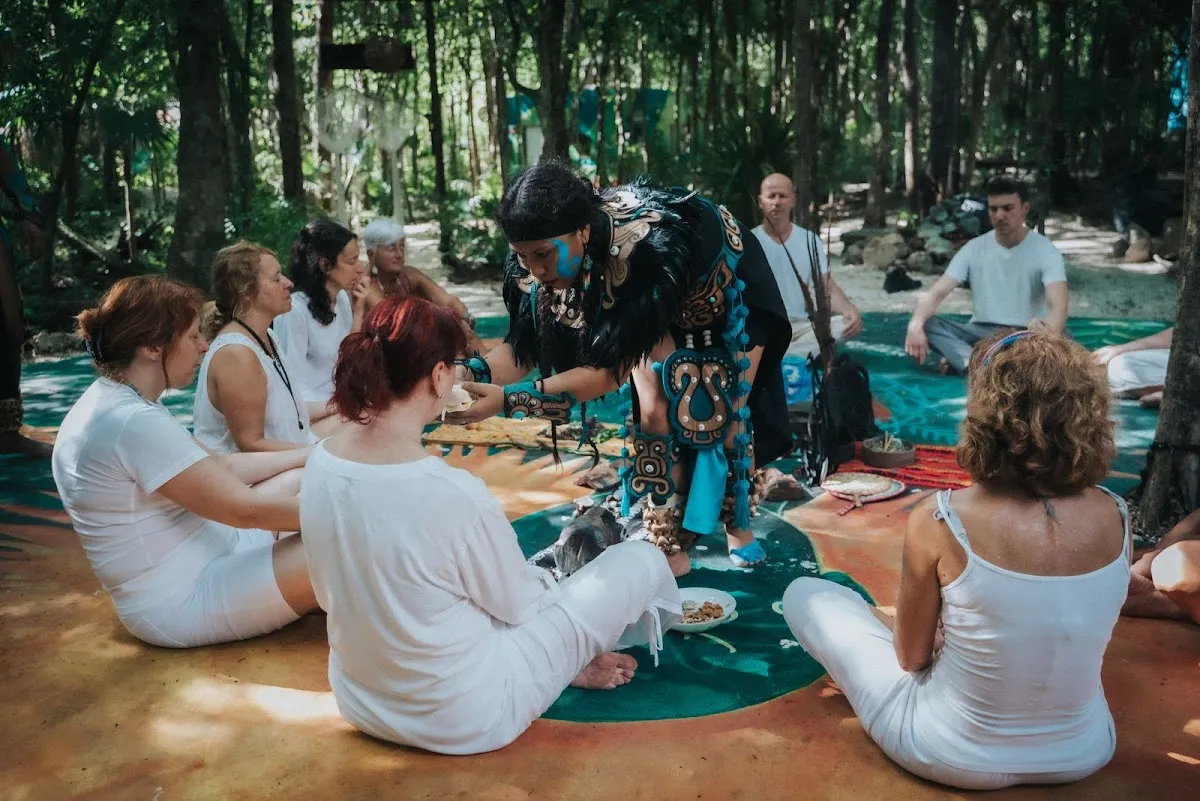
facilitator blue patterned robe black bandana stands

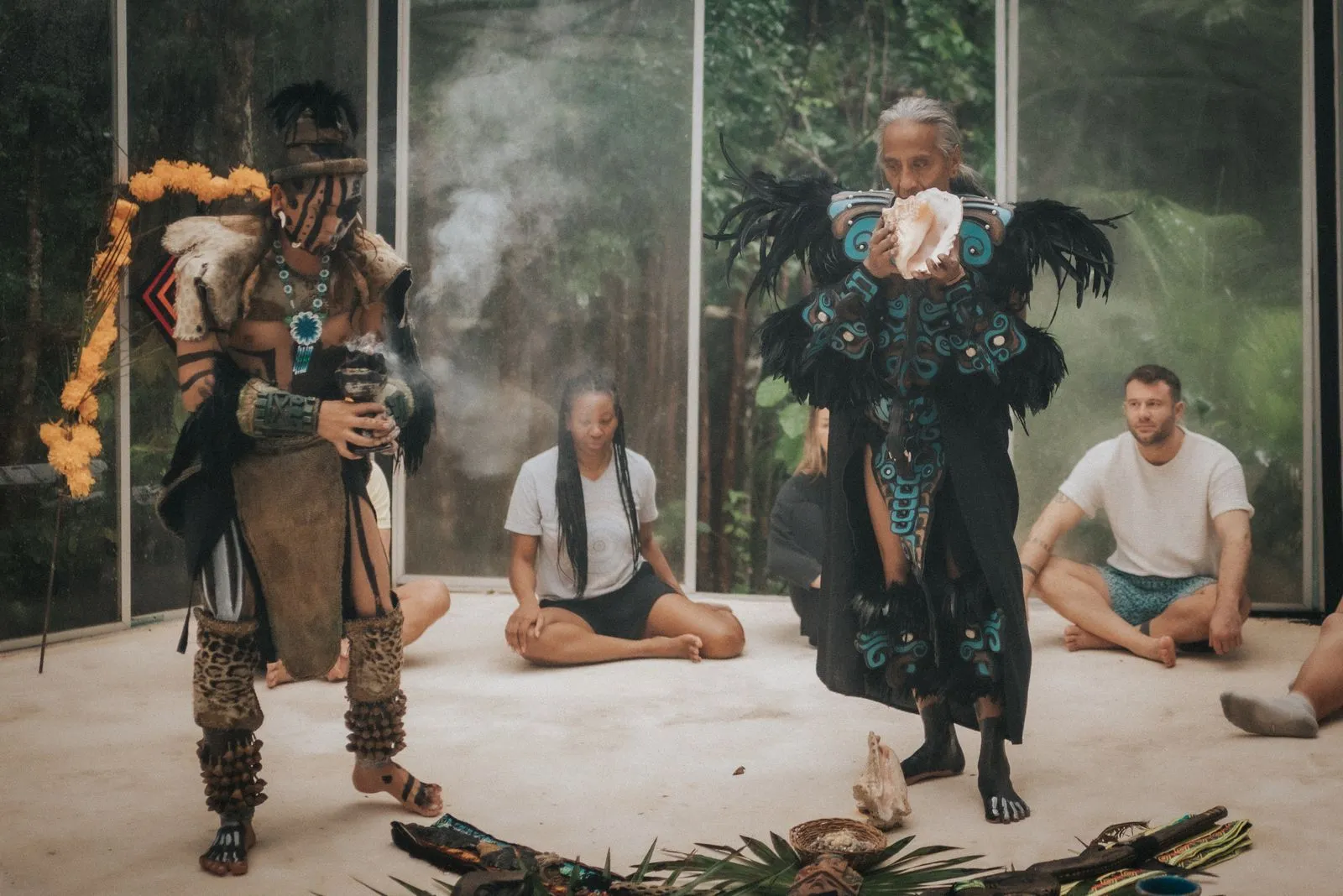
The group gathers: outdoors, usually in one of the meditation spaces, sometimes directly around the fire. The setting changes depending on the day, the weather, and the group's size.

The cacao is prepared in front of you. This is part of the ceremony, not a backstage activity. The facilitator explains, as the preparation unfolds, what's happening: the beans, the water, the spices, the way the mixture is whisked. The preparation follows the tradition: hand-made, no shortcuts, the way Mesoamerican families have prepared cacao for centuries. You learn as you watch.

When the cacao is ready, it's served cup by cup, person by person, with an intention spoken into each one. You hold the cup for a moment before you drink. You drink slowly. The cacao is warm and bitter and rich. It moves through you within minutes.

What follows depends on which of the two facilitators is holding the ceremony — Faby pairs the cacao with sound healing and an Ojo de Dios weaving, Alberto with live music. Both are described below.

Both forms close in stillness. Most groups sit for a long quiet moment before anyone speaks.

Who leads
the ceremony.

Two facilitators hold cacao at Lunita, and they do it differently. Neither is interchangeable with the other — which one you sit with depends on what you're seeking, and which is on-site during your retreat.

A rustic terracotta clay mug filled with dark black coffee rests directly on a rough, lichen-speckled stone surface surrounded by decomposing…
With Faby

Faby

Sound healing · Ojo de Dios weaving

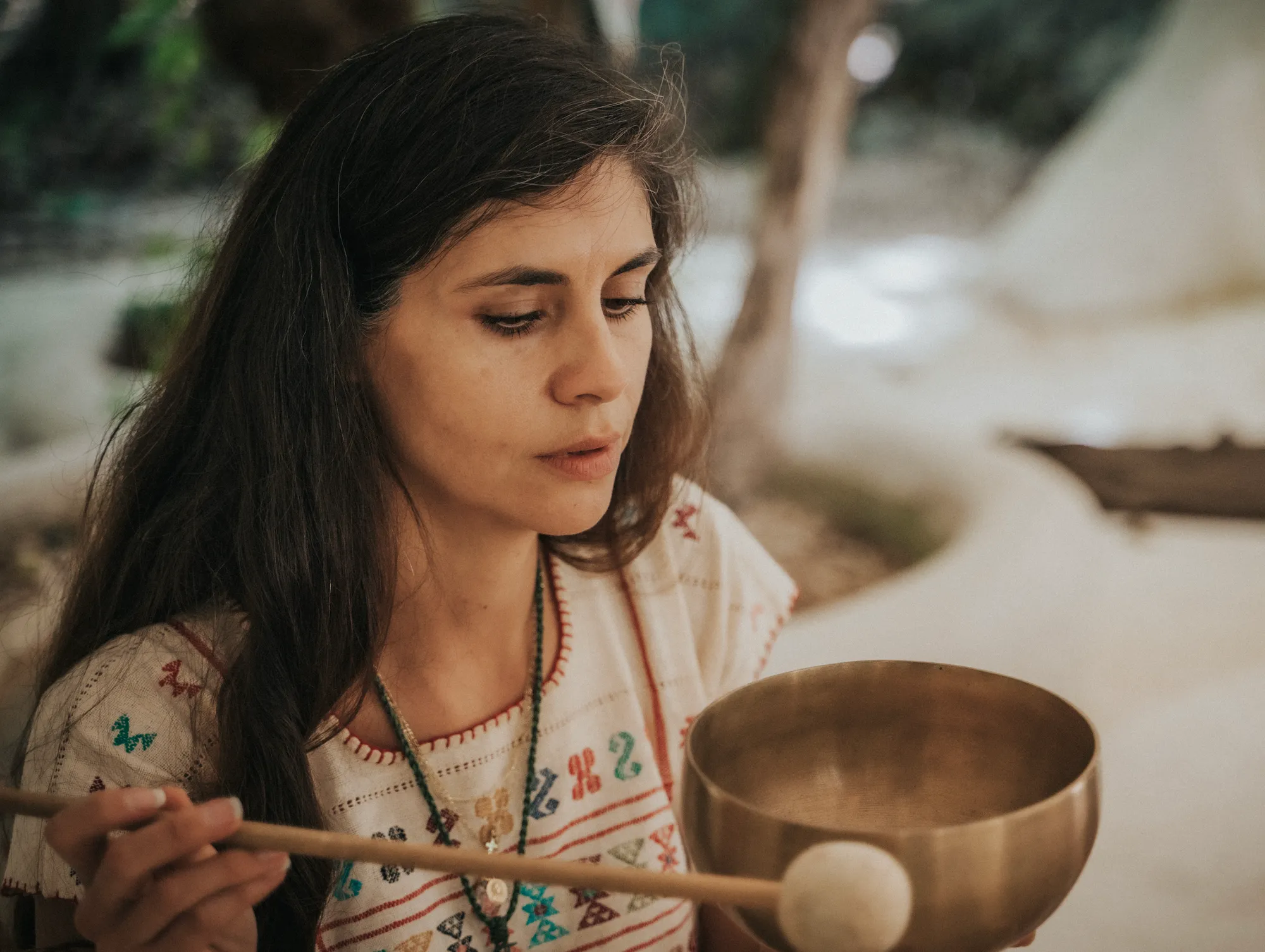
A Mexican artist and facilitator working under the brand Caminando con Flores (“walking with flowers”). She works with the ancestral materials of Mexico — cacao, clay, color, sound, thread — and her ceremony reflects all of it.

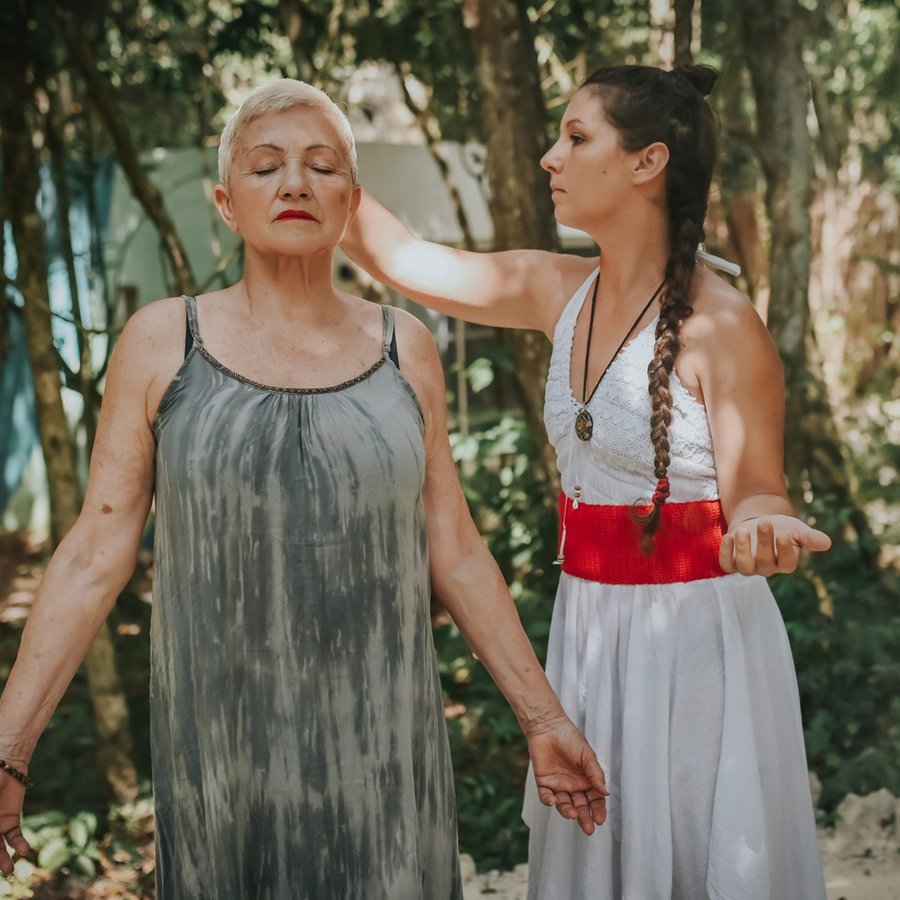
Her session: the cacao is paired with sound healing — bowls, voice, song — and later a hands-on workshop weaving an Ojo de Dios, the traditional Mexican thread protection, with your intention held in the colors and the knots. The integration of cacao with textile work is a Faby signature; you won't find it anywhere else.

Read more about Faby →
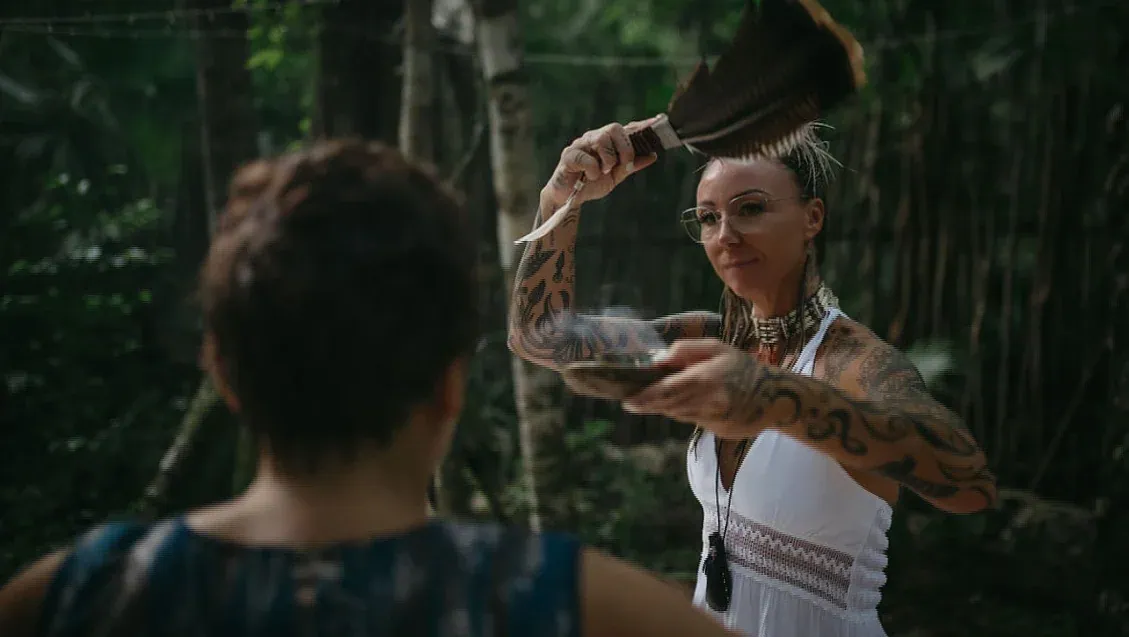
tattooed hand drips cacao from wooden stick
With Alberto

Alberto

Live music · Chiapas-grown cacao

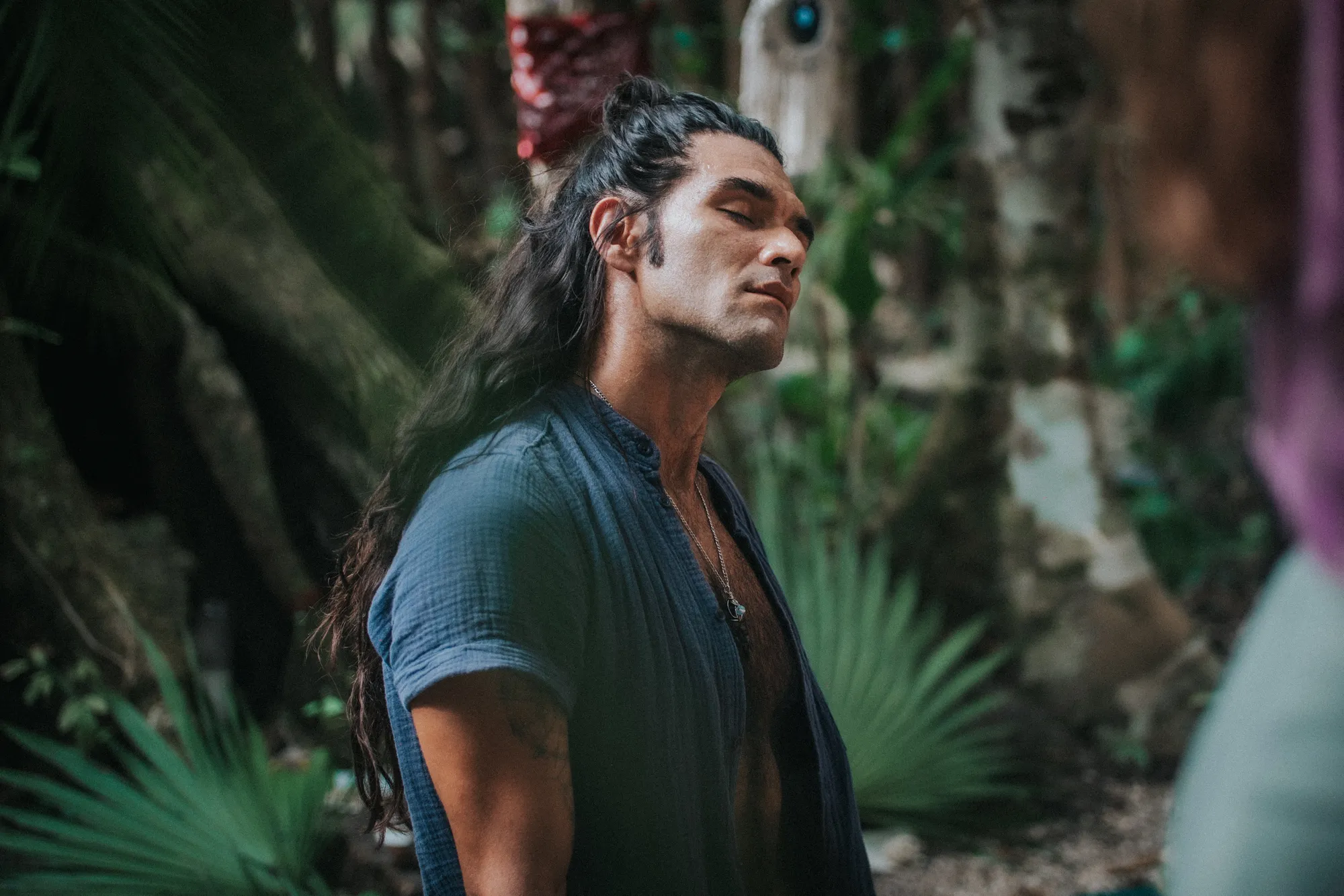
The rarer kind of facilitator: one who grows and produces the medicine himself. Alberto runs a small cacao production in the highlands of Chiapas, where Mesoamerican cacao has been cultivated for thousands of years. The cacao he serves is his own — selected, fermented, dried, ground, prepared by his hands.

His session: built around live music. He sings and plays — guitar, drum, sometimes flute — building a soundscape the cacao opens you into. The music is active and rhythmic; the room often moves with it, the way song has held cacao ceremony for as long as cacao has been ceremony.

What people come
to work with.

For some people, it's a doorway in, the gentlest of the seven ceremonies, the easiest place to begin if you've never sat with medicine work before. There's nothing intense about cacao. You drink, you settle, you stay with whatever rises.

For others, it's a setting tool, held at the start of a retreat to mark the beginning, to gather the group, to soften the chest before the deeper work that follows. Some retreat leaders bring cacao on day one for exactly this reason.

For others still, it's the whole work. Cacao on its own, held intentionally, in a circle of people willing to be there with you, can do quiet but real things: open something that's been closed, soften something that's been hardened, let something out that's been pressing.

What we won't promise: that cacao will heal anything, fix anything, resolve anything. It won't. What it does is make space, for something already in you to be felt, met, held. What you do with that space is up to you, the work you're carrying, and the people holding the circle with you.

Things to know
before you sit.

Cacao has fewer considerations than any of the other ceremonies at Lunita, but it's not nothing. A few things to be honest about before you arrive.

It's a mild stimulant. Cacao at ceremonial doses contains theobromine and a small amount of caffeine. If you're sensitive to stimulants, you'll feel the warming, the heart rate increase, the energy. Most people experience this as pleasant; some find it more intense than they expected.

Heart conditions and blood pressure medications. Because theobromine dilates blood vessels and increases heart workload, anyone with significant cardiovascular conditions should mention this in the intake call. Some conditions don't preclude ceremony; others do. We'll talk through your specific situation.

Pregnancy. Ceremonial doses of cacao are higher than what most people consume daily. If you're pregnant, tell us before the ceremony. Often we can adjust the dose, sometimes we suggest skipping this particular ceremony in favor of others.

Migraine history. Cacao can trigger migraines in some people. If you have a history of cacao-related migraines, this might not be the ceremony for you.

Antidepressants and SSRIs. Cacao has milder interactions with these medications than the heavier medicines, but still worth flagging on the intake call.

Outside of these considerations, cacao is welcoming. Most people who arrive at Lunita have no contraindication at all.

Practical.

Duration

One to two hours. The preparation, the serving, the holding, the close.

When in the retreat

Cacao is often held early, day one or two, both because it sets the tone for the rest of the retreat and because it's gentle enough not to need significant integration time afterward.

Where

Outdoors, in one of Lunita's gathering spaces: the meditation pavilion, the area near the Grandfather tree, sometimes around the fire pit. The exact place depends on the day.

Group or one-on-one

Both forms are designed for groups, but cacao can also be held privately for individuals or couples on personal retreats. Tell us in advance and we'll arrange it.

Included with full hosting

Available within hosted retreats. The cost is included in the custom retreat proposal, no separate pricing for cacao.

Available within personal retreats

Included in the custom proposal, typically at a modest add-on cost given the dedicated facilitator time.

What to wear

Comfortable clothes you don't mind getting a small splash of cacao on. The cacao is dark and stains. Faby's workshop also involves colored thread that can transfer.

What to bring

Nothing. Everything is provided.

Common questions

What is a cacao ceremony?
A cacao ceremony is a gathering held with ceremonial cacao, ground from whole beans and mixed with hot water and spices, no sugar, close to what the Maya and Aztecs drank. It has been held in Mesoamerica for at least four thousand years. At Lunita it is the gentlest of the seven ceremonies and often the first: one to two hours, outdoors, the cacao prepared in front of you and served cup by cup with an intention. It comes in two forms, Faby's, paired with sound healing and an Ojo de Dios weaving, and Alberto's, with live music and cacao he grows himself in Chiapas.
What does ceremonial cacao do?
In physical terms it opens the heart, both in the way the tradition means it and in the circulatory sense the chemistry causes: theobromine dilates the blood vessels, the heart works a little harder, the body warms. There are no psychoactive effects in the way the heavier medicines have them. What cacao does is make space, gently, for something already in you to be felt. What happens after that is the ceremony and the work you bring to it.
Is a cacao ceremony safe? Are there contraindications?
Cacao has fewer considerations than any other ceremony at Lunita, but not none. It is a mild stimulant (theobromine and a little caffeine), so anyone with a significant cardiovascular condition or on blood-pressure medication should flag it in the intake. Ceremonial doses are higher than daily chocolate, so pregnancy is discussed and the dose adjusted or skipped. A history of cacao-triggered migraines can make it the wrong ceremony, and it has mild interactions with SSRIs worth mentioning. Outside these, most people have no contraindication at all.
How is cacao different from the other ceremonies?
Cacao is the gentle doorway, the easiest place to begin if you have never sat with medicine work, with no diet to follow before. It is often held on day one to gather a group and soften the chest before deeper work like ayahuasca or bufo, but it can also be the whole work on its own. Compared with the journey and dissolving medicines, cacao simply makes quiet space.

Whenever you're ready.

We're not in a hurry. And neither is the work.