Ceremony, One of Seven
The Ayahuasca
Ceremony.
One of the seven ceremonies offered at Lunita. The grandmother medicine of the Amazon.
Ayahuasca is a brew, Banisteriopsis caapi, the vine, cooked together with the leaves of Psychotria viridis. The Indigenous peoples of the Amazon basin have worked with it for centuries, possibly far longer, as medicine, as teacher, as a way of seeing what waking life keeps hidden. The name comes from Quechua: aya (spirit, soul, the dead) and waska (vine, rope), the vine of the soul.
This is the most intensive of the plant medicine ceremonies at Lunita. It is long, held through the night, or sometimes through the day. It asks the most of the people who sit with it: in preparation, in the ceremony itself, and in the integration that follows.
At Lunita, ayahuasca is held by Edgar, a Zapotec medicine man, local to Puerto Morelos, who carries the Amazonian medicine within his own Mexican ceremonial tradition. He has held this work for years, for people from all over the world, with the care it demands.
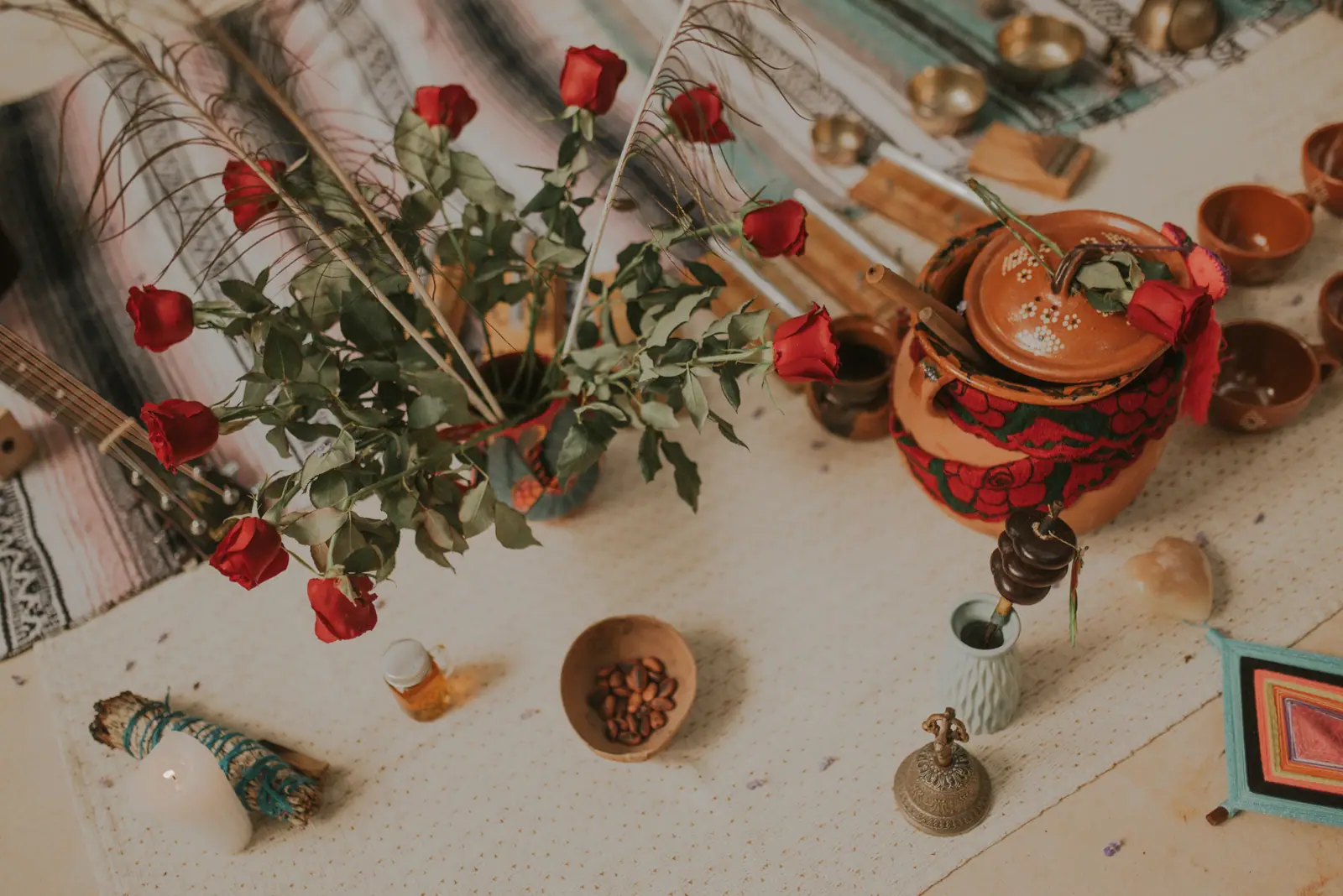
It is held the way ayahuasca has always been held: in ceremony, with song, with an altar, with an experienced hand guiding every hour.
This is not a tourist experience. It is the deepest work Lunita offers.
For the full educational guide (what ayahuasca is, the dieta, the medication interaction to take seriously, legality, and how to choose a retreat) see The Complete Ayahuasca Guide.
New to ayahuasca?
Start with the complete, honest guide: what ayahuasca is, the dieta, the medication interactions to take seriously, legality, and how to choose a retreat.
The vine of
the soul.
Ayahuasca comes from the Amazon, the vast basin spanning Peru, Brazil, Colombia, Ecuador, and beyond, where Indigenous peoples have worked with the brew across more cultures and languages than anyone can fully count. It is not one tradition. It is many, each with its own songs, its own protocols, its own way of understanding what the medicine is and does.
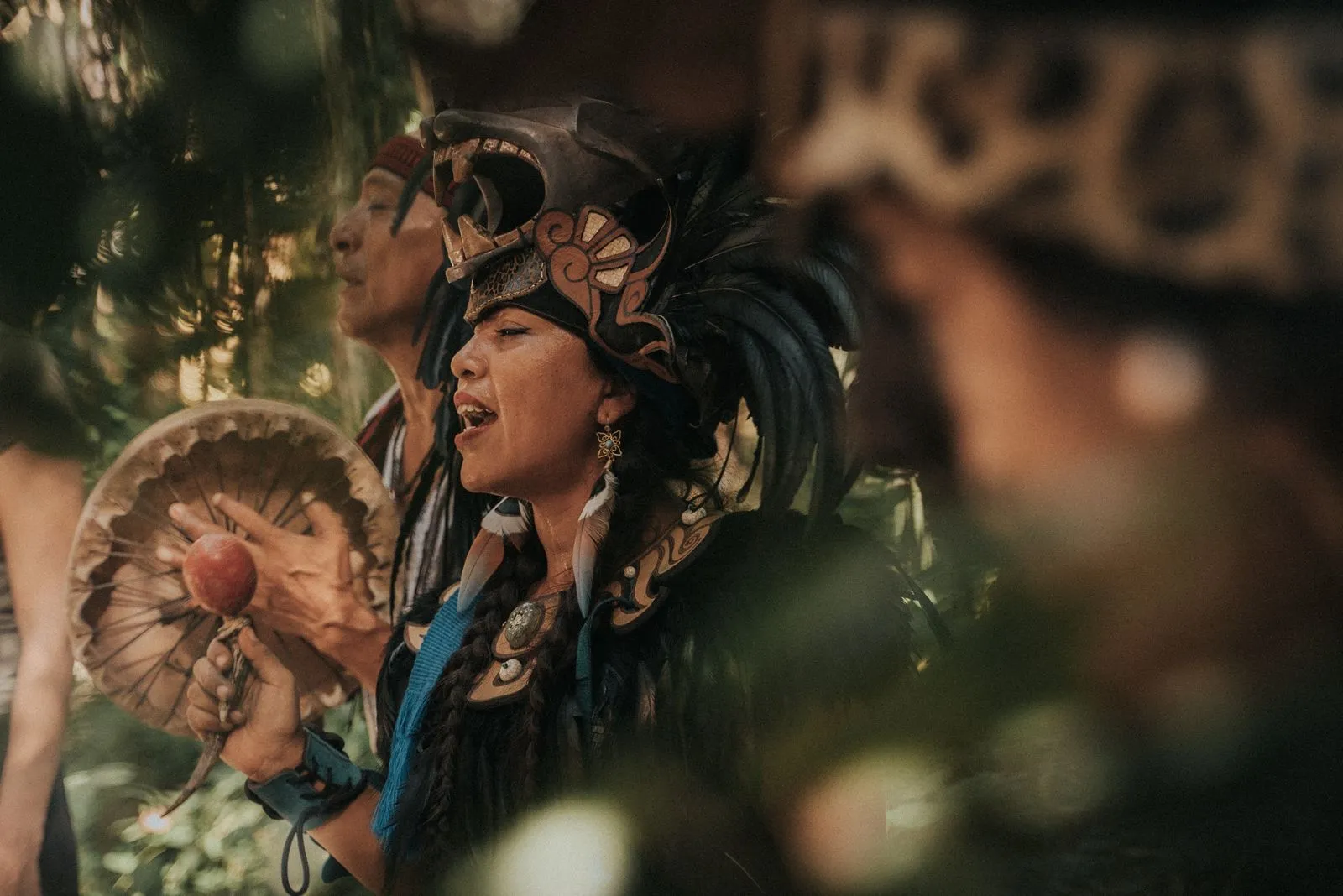
What they share is the brew itself, and the reverence. Ayahuasca is not taken casually anywhere it is taken traditionally. It is cooked over hours or days, with prayer. It is served in ceremony, almost always with song, the icaros, the medicine songs that guide the ceremony, call in what's needed, and protect the space.
The brew works on the body and the mind at once. It can bring visions, sometimes gentle, sometimes overwhelming. It can surface old memory, old emotion, things long buried. It often brings a physical release as well, which the tradition understands not as a side effect but as part of the cleansing, the body letting go of what it has held. In the traditions ayahuasca comes from, none of this is incidental. All of it is the medicine working.
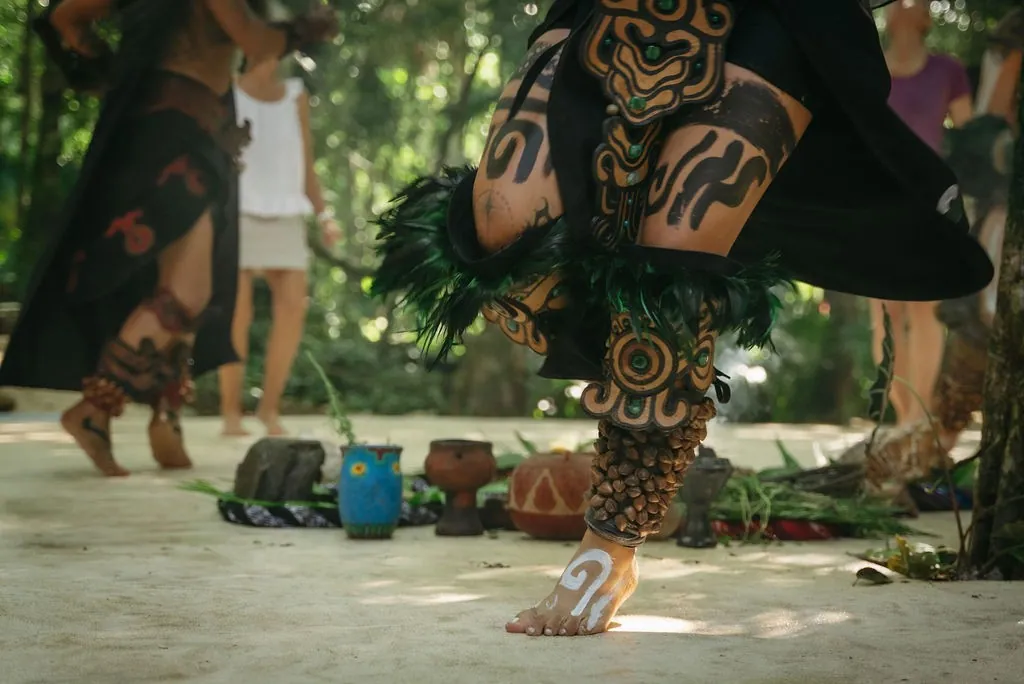
At Lunita, Edgar carries this medicine within his own lineage, a Mexican ceremonial tradition that has long held space for the sacred plants of the wider continent. He unites the Amazonian root of ayahuasca with the Mexican ceremonial forms he was raised in: the altar, the prayers to the seven directions, the copal, the mapacho. The medicine is Amazonian. The hands that hold it are Mexican.
The ceremony at Lunita stands in this lineage, and treats the medicine with the seriousness it has always been given.
What happens during
the ceremony.
Every ayahuasca ceremony at Lunita is built on the same careful foundation.
Before the ceremony,
there's an intake call. Ayahuasca asks more of this conversation than any other ceremony: your full medical history, every medication and supplement you take, your psychological history, your intention. This is not a formality. Ayahuasca interacts dangerously with a long list of medications, and the intake is where safety is established. If the ceremony isn't right for you, or isn't right yet, this is where we'll say so.
The dieta
comes next. Ayahuasca requires the strictest preparation of any ceremony at Lunita, a dieta shared with you in detail before you arrive. At minimum: no pork, no alcohol, and no sexual activity for at least a week before the ceremony, alongside other dietary and lifestyle guidelines. The dieta isn't arbitrary. It prepares the body to receive the medicine safely and clears the ground for the work.
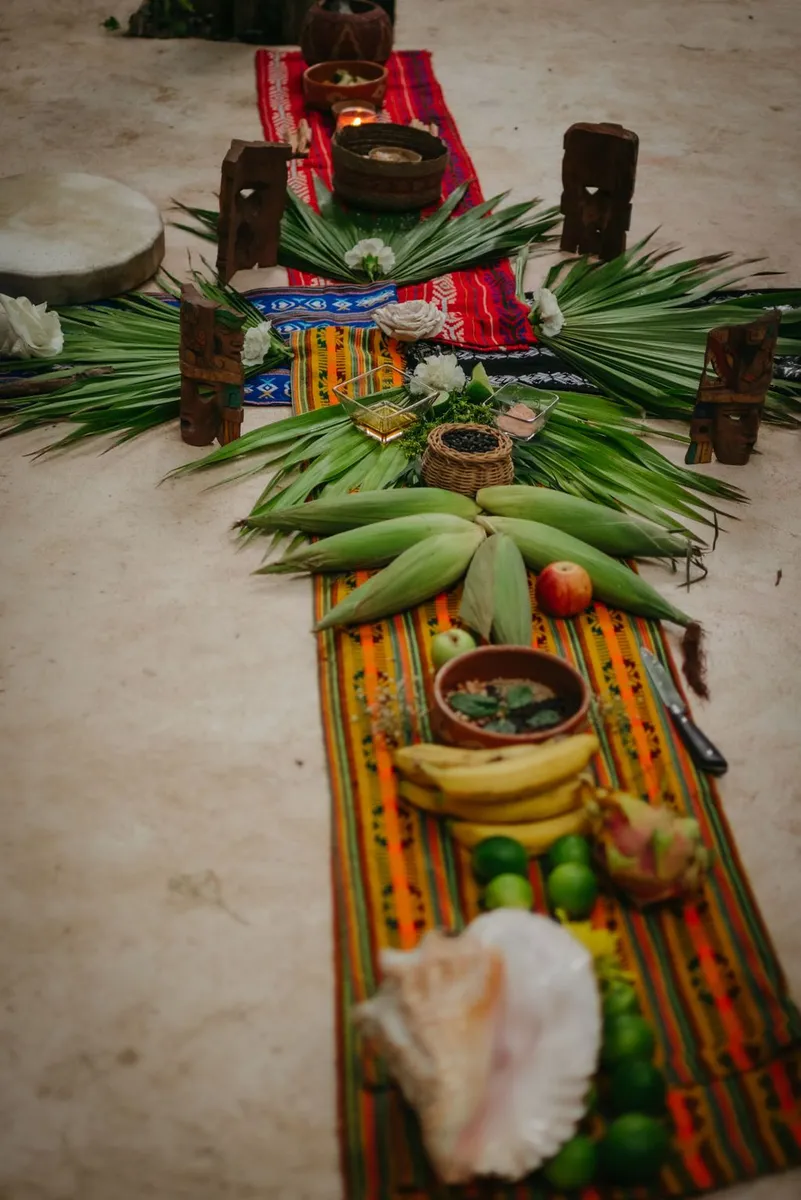
The altar is raised,
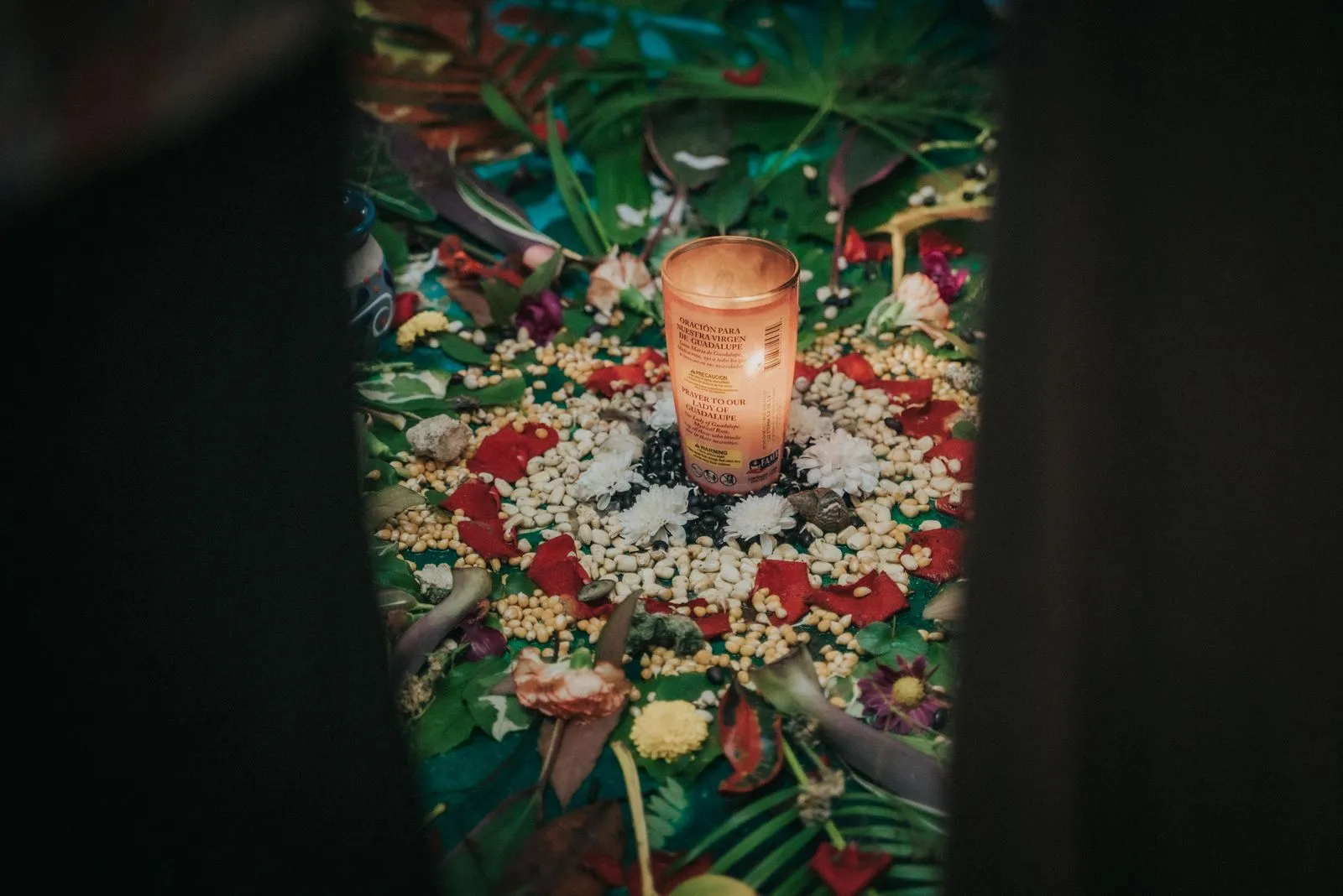
and Edgar shares the meaning of each part of it as he builds: what each element is, what it holds, why it's there. Thanks are given to the seven cardinal directions. The space is cleansed with copal. Mapacho, sacred Amazonian tobacco, is present throughout, as it is in every ayahuasca ceremony, and agua de florida may be used during the night.
The medicine is served
in cups, and how many you take across the ceremony depends on your own journey, always following Edgar's guidance. He reads where each person is and offers accordingly. The ceremony runs long: four to six hours, usually through the night, sometimes held during the day instead. Edgar guides the whole of it with song and prayer.
As the ceremony closes,
integration begins, that night, and again the next day. Ayahuasca often brings up a great deal, and what it surfaces only becomes useful when it's brought back, understood, and woven into how you live. The closing and the next-day integration are where that begins.
Who leads
the ceremony.
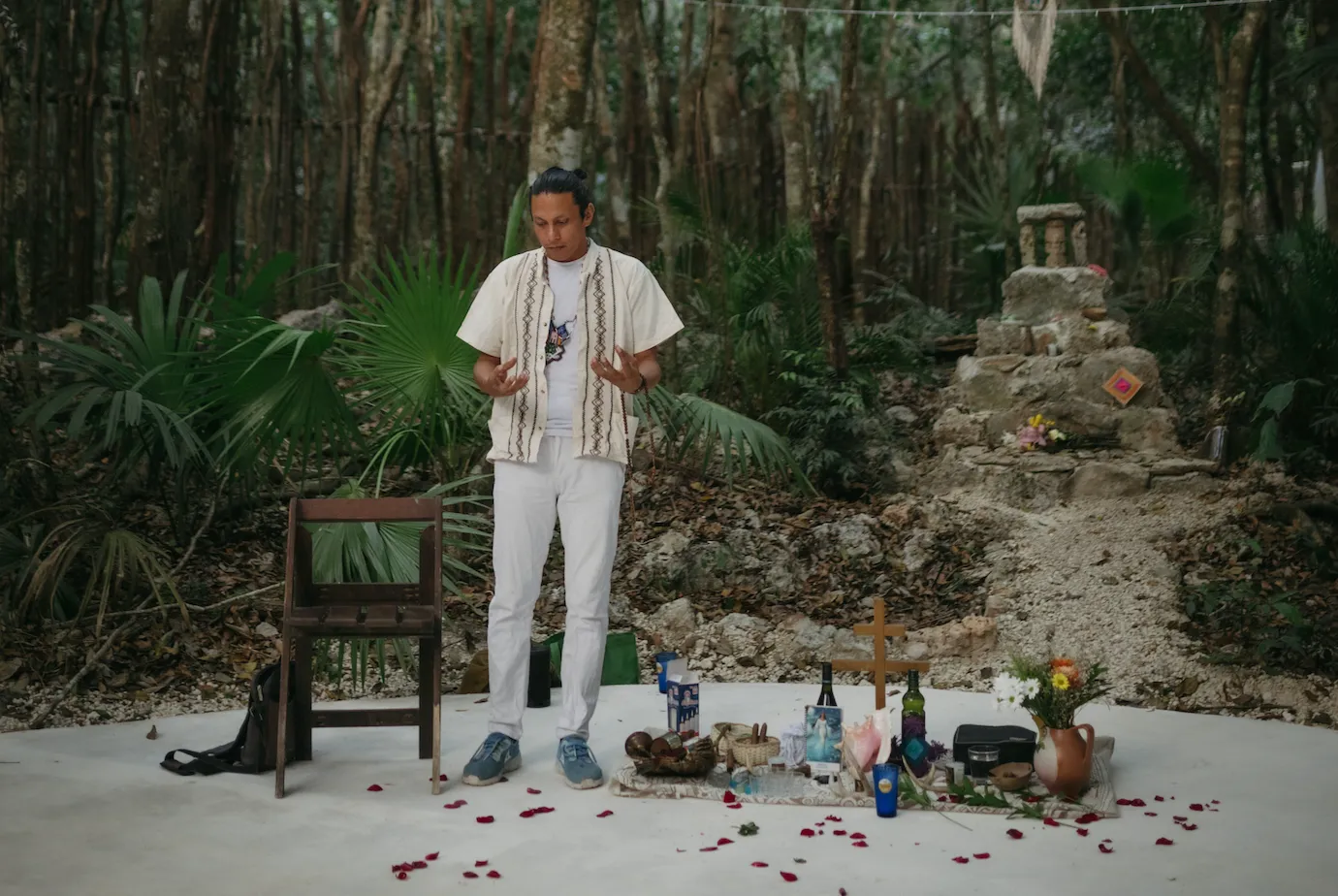
Ayahuasca at Lunita is held by Edgar, a Zapotec medicine man, born and raised in the ceremonial traditions of Mexico, local to Puerto Morelos. He carries several Indigenous Mexican lineages, and within them he has long held space for the sacred plants of the wider continent, ayahuasca among them.
What Edgar brings to ayahuasca is not borrowed showmanship. It's a lifetime inside ceremony: the altar, the songs, the reading of where a person is and what they need, the steadiness to hold a long and sometimes difficult night without losing the thread. People who sit with him describe feeling held the entire way through, even when the medicine took them somewhere hard.
He works with a team. In ceremony, he is never holding the space alone. There are people present to support the group, to tend to anyone who needs it, to keep the container safe through every hour.
What people come
to work with.
Ayahuasca tends to draw people at the thresholds of their lives.
For some, it's trauma, something that happened, sometimes long ago, that has shaped everything since and never fully resolved. Ayahuasca has a way of bringing such things back into view, not to relive them, but to finally move through them with the medicine and the facilitator holding you.
For some, it's a depression or a heaviness that talk alone hasn't lifted. The medicine doesn't erase it, but people often describe coming out the other side of a ceremony able to see their own life from a different height.
For some, it's a spiritual hunger, the sense that there is more, and the longing to make direct contact with it. Ayahuasca is, for many traditions, exactly this: a way of meeting the sacred without an intermediary.
And for some, it's a calling they can't explain. They feel summoned to the medicine and trust the pull.
What we won't promise is a cure, a fix, or a guaranteed outcome. Ayahuasca is not gentle and it is not predictable. What it offers is a doorway into the parts of yourself that are hardest to reach, and the work, as always, is what you do with what you find there. The integration is where the ceremony becomes a life.
Things to know
before you sit.
Ayahuasca is the most powerful medicine at Lunita, and the one with the most that can go wrong if it's approached carelessly. The intake call exists to work through all of this. Here is what matters most.
⚠ Antidepressants and medications: this one can be dangerous.
Ayahuasca contains natural MAOIs. Combined with SSRIs, SNRIs, certain other antidepressants, and a range of other medications, this can cause serotonin syndrome, a serious, sometimes life-threatening reaction. This is not a “take it easy” caution. Some combinations are genuinely dangerous. We will go through every medication and supplement you take during intake, and we never ask you to stop a medication on your own. In many cases, the safe and honest answer is that the timing isn't right.
Psychiatric conditions. Schizophrenia, bipolar disorder, psychosis, and certain other psychiatric conditions are contraindicated. Ayahuasca can destabilize these conditions in ways that cause lasting harm. If any are part of your history or your family's, we'll talk it through carefully, and sometimes the answer is no.
Heart conditions. Ayahuasca affects heart rate and blood pressure. Significant cardiovascular conditions must be discussed during intake.
Pregnancy and breastfeeding. We don't hold this ceremony for pregnant or breastfeeding women.
The dieta is not optional. The preparation diet (no pork, no alcohol, no sexual activity for at least a week beforehand, plus the further guidelines we send you) exists partly for safety and partly to prepare you for the work. Coming unprepared is coming unsafe.
Emotional readiness. Ayahuasca asks a lot. If you're in an acute crisis or a period of profound instability, the right answer may be not yet. The ground needs to be steady enough to hold what the medicine brings up.
If ayahuasca isn't right for you, or isn't right yet, we will tell you plainly. With this medicine, that honesty is not optional either.
Practical.
Duration
Four to six hours. Usually held through the night; available during the day by arrangement. The day before is for final preparation; the day after is for rest and integration.
The cups
The medicine is served in cups across the ceremony. How many you take depends on your own journey, always following Edgar's guidance. He reads each person and offers accordingly.
Group size
Group ceremonies are held for up to sixteen participants, with Edgar holding the space and a team supporting the group. Private ceremonies, on personal retreats, are held for one to ten.
The altar and the opening
Every ceremony begins with the altar raised and explained, thanks given to the seven directions, the space cleansed with copal. Mapacho is present throughout; agua de florida may be used during the night.
The dieta
A detailed preparation diet is sent before your retreat. Following it is required, not suggested.
Integration
Begins as the ceremony closes and continues the next day. Part of the ceremony, not an add-on.
Group or private
Available within hosted retreats and within personal retreats.
Included in the retreat proposal
Never sold standalone; the cost is part of your custom proposal. Available within MoonSeeds retreats at a reduced ceremony cost.
Common questions
What is ayahuasca?
Is ayahuasca legal in Mexico?
Is ayahuasca safe?
What is the ayahuasca diet and preparation?
How long is an ayahuasca ceremony?
How is ayahuasca different from the other medicines?
Where can I do an ayahuasca retreat in the Riviera Maya?
Ready to begin
the conversation?
From the Journal
Whenever you're ready.
We're not in a hurry. And neither is the work.