Ceremony: One of Seven
The Peyote
Ceremony.
One of the seven ceremonies offered at Lunita. The cactus the Wixárika call hikuri, one of the oldest sacred medicines of the Americas.
Peyote is a small, slow-growing cactus, Lophophora williamsii, native to the deserts of north-central Mexico and southern Texas. It contains mescaline, and it has been at the center of Indigenous ceremony in this part of the world for thousands of years. For the Wixárika people, who walk a sacred pilgrimage each year to gather it, peyote is not a substance. It is an ancestor, a deity, a teacher at the heart of their cosmology.
That history asks for care, including care about where the medicine comes from. Wild peyote is endangered, and the pilgrimage of the Wixárika depends on it. For that reason, the peyote in Lunita's ceremonies is cultivated, never taken from the wild populations the desert and its peoples depend on.
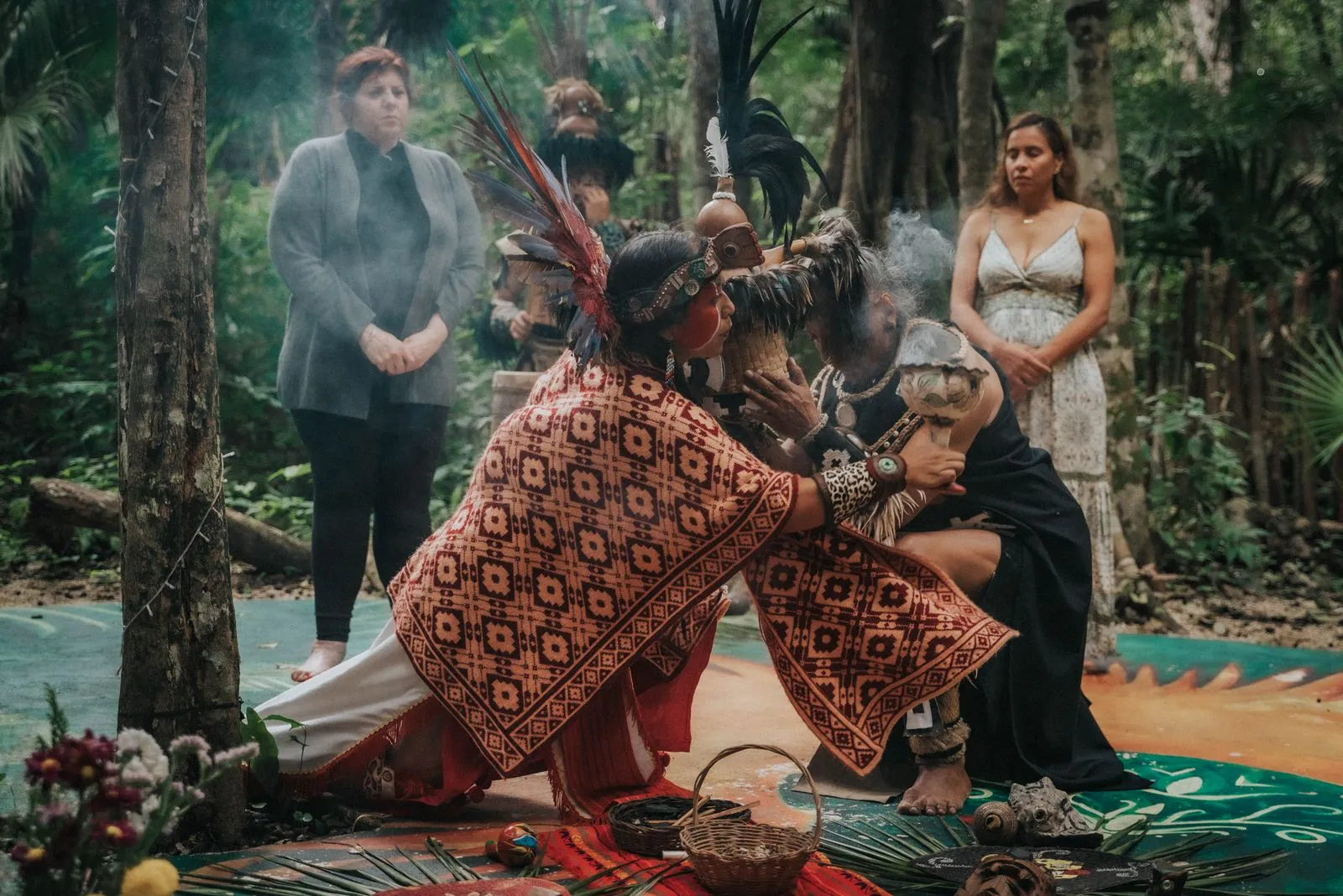
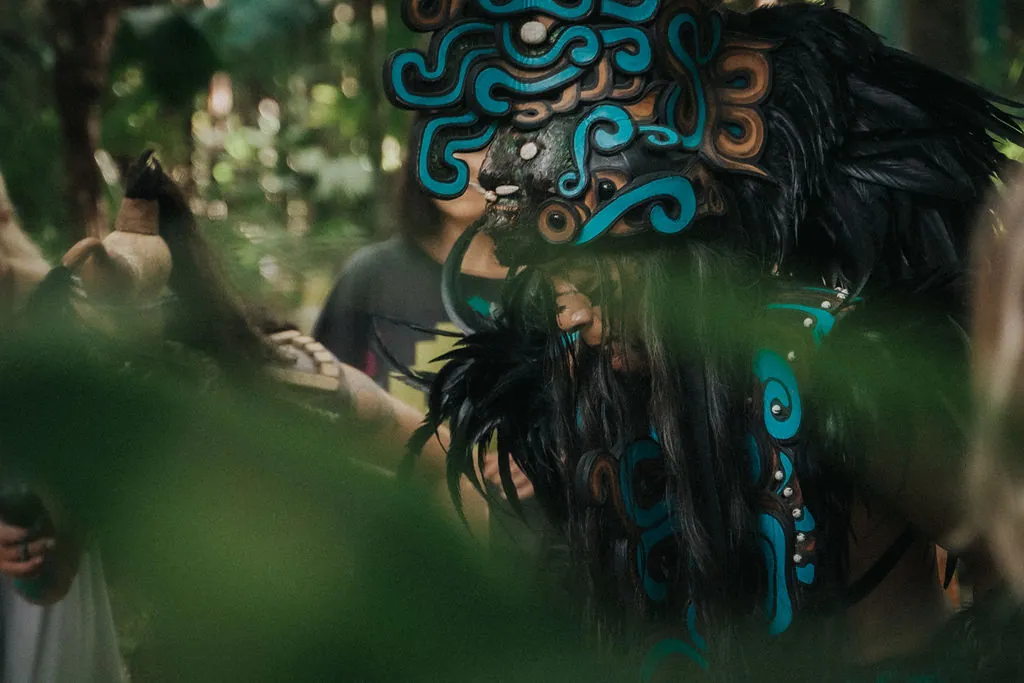
At Lunita, the ceremony is held by Edgar, in the Wixárika tradition: an all-night ceremony before the fire, with prayer, original songs, and the slow unfolding the medicine asks for.
This is among the most sacred and ancient ceremonies in the Americas. It is held that way.
The cactus of
the desert.
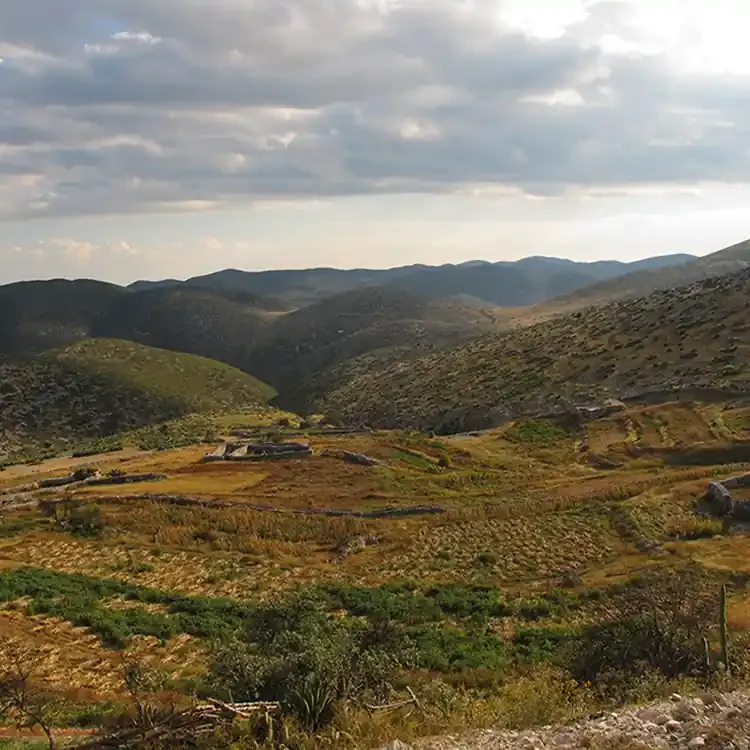
Peyote may be the oldest psychoactive medicine in continuous ceremonial use anywhere on earth. Archaeological evidence from the Texas-Mexico borderlands suggests it has been used for more than five thousand years, possibly far longer. Across that immense span, it has remained what it began as: a sacred medicine, taken in ceremony, treated as a living being rather than a thing.
For the Wixárika, the people often called the Huichol, peyote sits at the very center of the world. Each year they make a pilgrimage of hundreds of kilometers to Wirikuta, the sacred desert where the medicine grows, to gather it in the way their ancestors did and to renew their relationship with it. To the Wixárika, hikuri is not a tool for personal growth. It is kin. It is how the world is kept in balance.
This is the tradition Lunita's ceremony draws from, and it draws from it with respect for what it is and whose it is. Peyote does not belong to the wellness world, and Lunita doesn't pretend otherwise.
And because that respect has to be more than words, it extends to the medicine itself. Wild peyote populations are under serious threat: slow to grow, over-harvested, and essential to the Wixárika pilgrimage that has sustained this tradition for millennia. The peyote used at Lunita is cultivated, so that the ceremony here takes nothing from the wild desert or from the people whose sacred relationship with it came first.
What happens during
the ceremony.
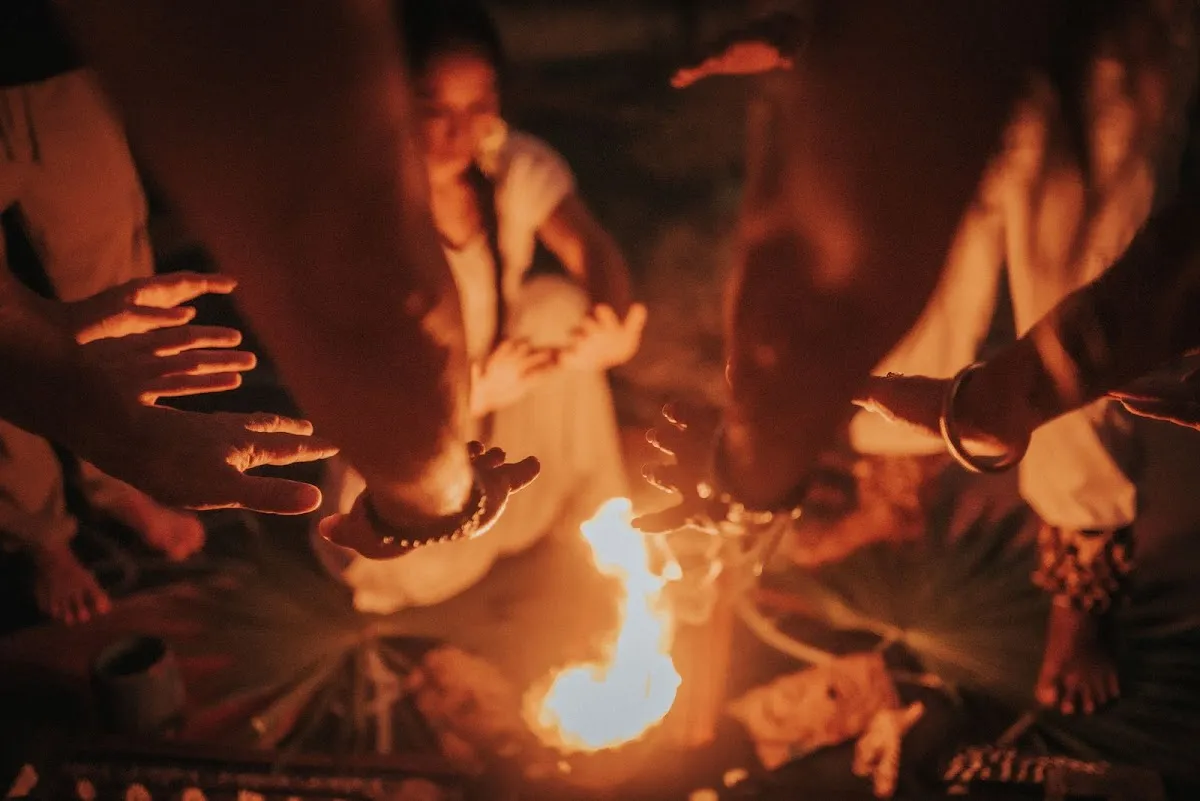
Peyote is a slow medicine, and its ceremony is long, held through the night, around the fire, in the way the tradition has always held it.
Before the ceremony,
there's an intake call and a preparation. As with all the medicines at Lunita, you'll talk through your health, your history, and your intention, and you'll receive guidance on how to prepare in the days beforehand.
The fire is lit, and the altar is raised.
The ceremony is built around the fire, its center and its heart through the long night. Edgar raises the altar, explains what it holds, asks permission of the land, and gives thanks to the cardinal directions. The space is opened with care before the medicine enters it. Nothing begins until it's been properly prepared.
The medicine is taken,
and the night begins. Peyote comes on slowly. There's no sudden arrival, but a gradual deepening over hours. The ceremony unfolds at the pace the medicine sets, which is to say slowly, patiently, across the whole of the night. Through the night, the ceremony is carried by the fire, by prayer, and by original music, the songs that hold a peyote ceremony together and guide it through its hours. This is not a silent inward journey alone; it's a held, sung, tended ceremony, with everyone gathered around the same fire.
Dawn, and integration.
Peyote ceremonies traditionally close with the dawn: the long night giving way to morning, the medicine easing, the fire burning down. There's rest afterward, and integration: making sense of a night that often moves through many things. As with every medicine at Lunita, the integration is where the ceremony becomes something you carry forward.
Who leads
the ceremony.
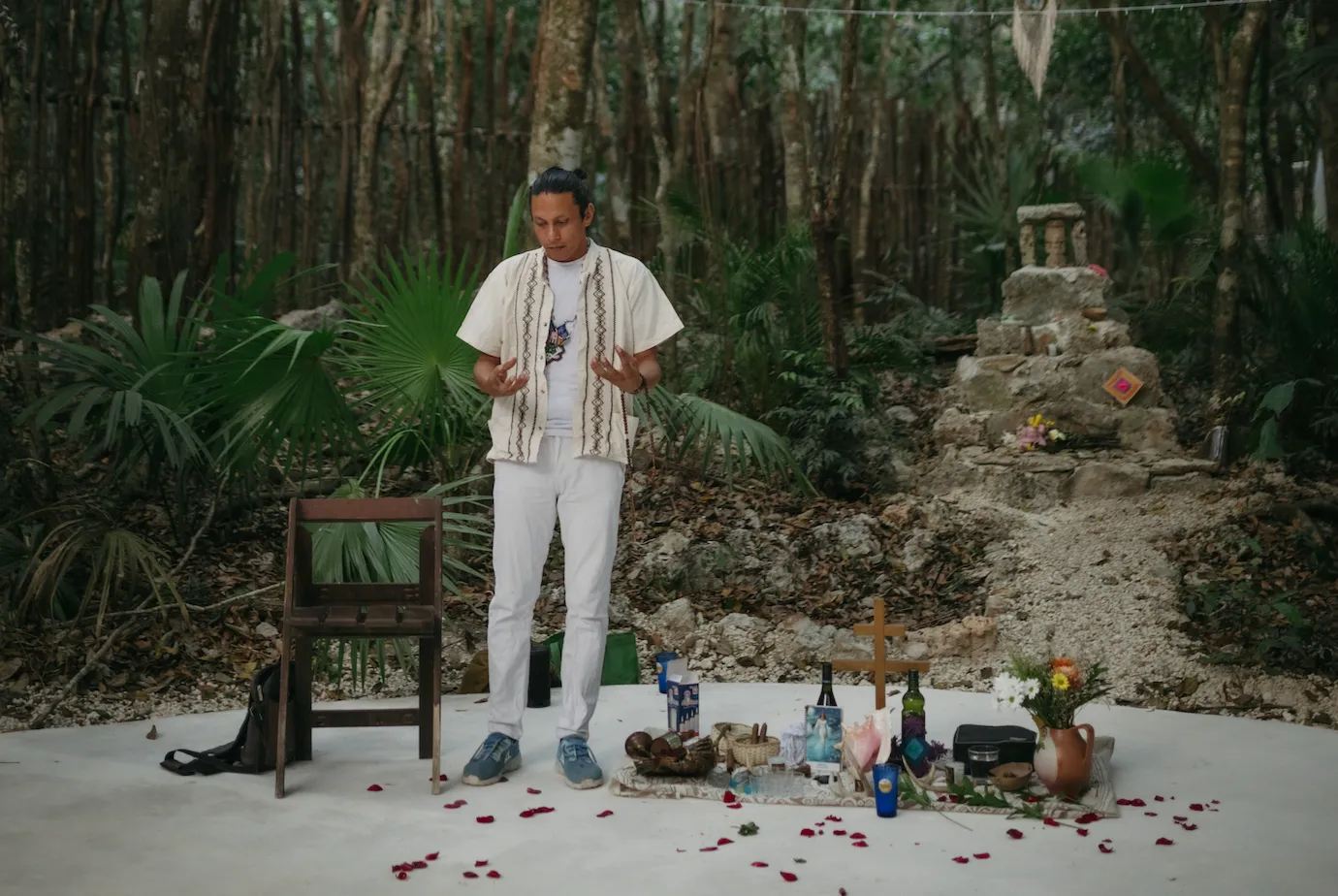
Peyote at Lunita is held by Edgar, a Zapotec medicine man, local to Puerto Morelos, who carries several Indigenous Mexican lineages and holds the peyote ceremony in the Wixárika tradition.
An all-night fire ceremony asks for a particular kind of endurance from the one holding it: the stamina to tend the fire, carry the songs, and hold the space through the whole of the night without flagging, while staying attentive to everyone gathered around it. Edgar holds peyote the way it asks to be held: patiently, steadily, all the way to dawn.
He tends the fire, leads the prayer, carries the music, and keeps the ceremony moving through its long hours, reading the night and the people in it as it unfolds.
What people come
to work with.
Peyote is a slow teacher, and people come to it for the kind of work that can't be rushed.
For some, it's connection: to the earth, to the natural world, to something larger and older than themselves. Peyote has a way of dissolving the distance a person feels from the living world around them, and many describe coming out of a night with the sense of belonging to something again.
For some, it's direction. A life decision, a crossroads, a question about which way to turn. The long night by the fire gives space for clarity to arrive at its own pace, rather than being forced.
For some, it's healing: old grief, old patterns, things carried too long. Peyote works on these slowly, across the hours, in the company of the fire and the songs.
And for some, it's the pull toward an ancient, sacred ceremony, and the wish to sit inside it with respect.
What we won't promise is a cure or a fix. Peyote is not a quick answer to anything. It's the opposite, a slow night of being with what's there. What it offers is time, and the fire, and the medicine's long patient unfolding. What you carry out of the night is the work of the integration that follows.
Things to know
before you sit.
Peyote is a powerful medicine, and as with all the plant medicines at Lunita, the intake call is where we work through whether it's right for you. A few things to be honest about before you arrive.
Heart and blood pressure. Mescaline raises heart rate and blood pressure. Significant cardiovascular conditions need to be discussed during the intake call, and some of them mean we won't hold the ceremony.
Psychiatric conditions. Schizophrenia, bipolar disorder, psychosis, and certain other psychiatric conditions are contraindicated with this medicine. If any are part of your history or your family's, we'll talk it through carefully.
Medications. Some medications, including certain antidepressants, interact with mescaline. We'll go through everything you take during intake, and we never ask you to stop a medication on your own.
Pregnancy and breastfeeding. We don't hold this ceremony for pregnant or breastfeeding women.
The long night. Beyond the medical, peyote asks for physical endurance most ceremonies don't. It's an all-night ceremony, sitting up by the fire through the dark until dawn. It's worth arriving knowing you'll be awake and present for the whole of it.
If peyote isn't right for you, or isn't right yet, we'll tell you. That honesty is part of how we hold this medicine.
Practical.
Duration
An all-night ceremony. It begins in the evening and closes with the dawn, the full night by the fire. The following day is for rest and integration.
Around the fire
The ceremony is built around the fire, which is tended through the whole night. Prayer and original music carry it through its hours.
The opening
As with every ceremony at Lunita, it begins with the altar raised and explained, permission asked of the land, and thanks given to the cardinal directions.
The medicine: cultivated only
Cultivated peyote, never taken from the wild, out of respect for the endangered desert populations and the Wixárika pilgrimage that depends on them.
Where
Held outdoors at Lunita, around the fire, under the night sky.
Group or private
Held around the fire, the ceremony suits a gathered circle, and is available within both hosted retreats and personal retreats. Included in your custom retreat proposal, never sold standalone. Available within MoonSeeds retreats at a reduced ceremony cost.
Common questions
about peyote.
What is a peyote ceremony like at Lunita?
Is peyote safe — who is it not for?
Is the peyote sustainably sourced?
How should I prepare for an all-night ceremony?
What do people come to peyote to work with?
Ready to begin
the conversation?
From the Journal
Whenever you're ready.
We're not in a hurry. And neither is the work.