Ceremonies · Lunita Jungle Retreat
Ceremonies
at Lunita.
Seven ceremonies have a place at Lunita: cacao, temazcal, sacred mushrooms, ayahuasca, bufo, kambo, and peyote.
Each is held by a facilitator with real lineage, within the structure of a retreat, never as a standalone product. None is required. Many of the people who come to Lunita never sit with any of them, and that's right too.
What follows is not a menu. It's a doorway to seven traditions, with enough information to help you decide whether one of them is calling you, which one, and what coming for it would honestly look like.
If after reading this page you're sure, write to us. If after reading this page you're unsure, also write to us. We're not in a hurry, and neither is the work.
How we hold
this work.
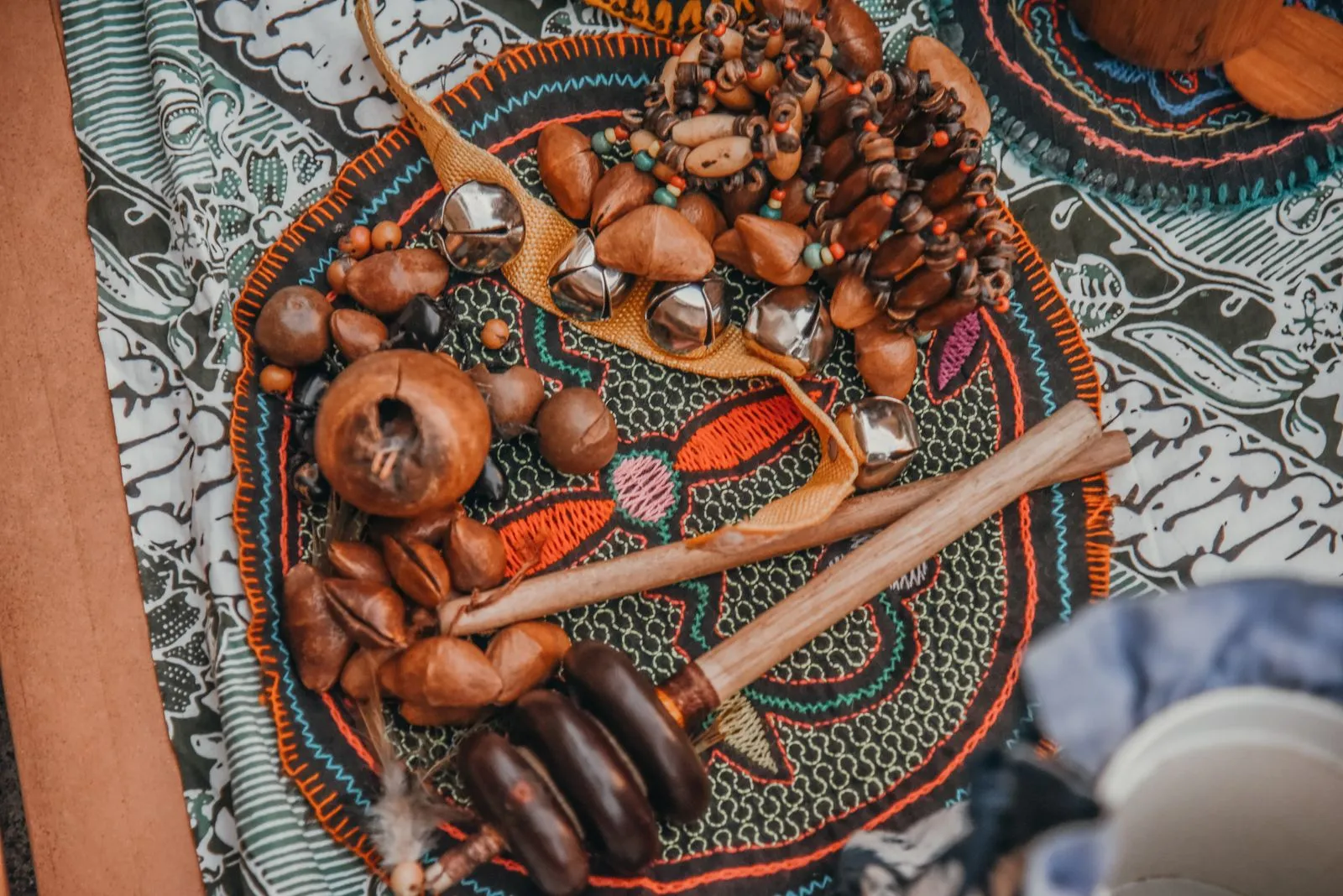
A ceremony is not a product, and it's not a tourist experience. It's a meeting, between a person who came with a question, a facilitator who carries a tradition, and a medicine or a ritual that's been used the way it's being used here for a very long time.
We hold this work with the gravity it deserves.
No ceremony at Lunita is held without a real intake. Before you arrive, you talk with us about why you want to sit with this work, what you're carrying, what your medical and psychological history includes, what medications you take. That conversation might lead to “yes, we’ll prepare you,” or “yes, but later,” or “this isn’t the medicine for what you’re working on,” or “this isn’t the right time.” All four answers are equally welcome from our side.
No ceremony at Lunita is held without preparation. Each medicine has its own preparation (diet, abstinence, internal work) that begins in the days or weeks before the ceremony itself.
No ceremony at Lunita is held without integration. What happens during a ceremony is only part of the work. The rest (the days and weeks after, the meaning-making, the slow integration of what came up) is held with the same care.
No ceremony at Lunita is held by anyone who isn’t trained in its lineage. What that means specifically is laid out on each ceremony’s page.
The seven
ceremonies.
Each ceremony has a deep page with the tradition, the facilitator, the contraindications, and what an actual ceremony at Lunita involves. The descriptions below are starting points.
Cacao
The gentlest doorway. A ceremonial preparation of pure cacao: what the Maya called Kakaw, what science calls Theobroma cacao, what the Aztecs called Cacahuatl. No psychoactive effects in the way other medicines have them, no major contraindications, no diet to follow before. What cacao opens is the heart, circulatorily and metaphorically. The ceremony is sometimes paired with sound, sometimes held in silence, depending on who holds it. Read about the Cacao Ceremony →
Temazcal
The temazcal (temazcalli in Nahuatl): a domed Mexican sweat lodge built from a frame of bent saplings and blankets, heated by volcanic stones and ancestral plants. Often described as a return to the womb of the earth. Physically intense; cleansing in the way ceremonial heat work has always been cleansing. Held at Lunita by a temazcalero in the Mexican, ancestral tradition. Read about the Temazcal →
Sacred Mushrooms (Niños Santos)
The medicine of the Mazatec tradition, called Niños Santos, "Holy Children," by María Sabina, who carried this work in Huautla de Jiménez, Oaxaca. At Lunita, this ceremony is held by Edgar, following the tradition of María Sabina. The ceremony is held in a specific structure, with chants, candles, and the careful holding of the medicine. Read about the Sacred Mushroom Ceremony →
Ayahuasca
The Amazonian medicine, a brew of Banisteriopsis caapi vine and Psychotria viridis leaves, used in shamanic traditions across the Amazon basin for purposes that are hard to describe in a paragraph. Long ceremonies, typically four to six hours of active work, held overnight with traditional songs (icaros) and the holding of the facilitator and his community. Read about the Ayahuasca Ceremony →
Bufo
The medicine of Bufo alvarius, the Sonoran Desert toad. A short, intensely concentrated ceremony: minutes, not hours, but minutes that carry weight. The intake before bufo is the deepest of any ceremony at Lunita: what's discussed, what's prepared, what's understood beforehand. Read about the Bufo Ceremony →
Kambo
The secretion of the Amazonian giant monkey frog, used in traditional Indigenous medicine of Peru and Brazil. Applied topically (not psychoactive). Often used for what practitioners call "physical cleansing." What the body does in response is uncomfortable but brief. Held in ceremony with intention. Read about the Kambo Ceremony →
Peyote
The cactus of the Wixárika and other Indigenous traditions of the Mexican high desert. Long, slow ceremony, sometimes a full night or more. The medicine of pilgrimage, in the tradition of those who walk for days to find the plant. Held with deep respect for its origins and protected status. Read about the Peyote Ceremony →
How the intake
works.
Every ceremony at Lunita follows the same shape, regardless of which medicine.
The first conversation.
You write to us, or you book a call. You tell us what’s bringing you to this work, what you’ve worked with before, what you’re hoping for, and we listen.
The medical and psychological intake.
A more detailed conversation, sometimes a written intake form, sometimes a second call, covering your physical health, your mental health, your medications, your history. This is the conversation that determines whether the ceremony you’re calling toward is safe for you, and if not, whether something else might be.
Preparation.
Each medicine has its own preparation. Some involve dietary restrictions in the days before. Some involve abstinence from certain substances or medications. Some involve internal work (journaling, fasting, reflection) that begins before you arrive.
The ceremony itself.
Held within your retreat, by a facilitator trained in the lineage of that medicine, with the supplies and the time the ceremony requires.
Integration.
Conversations in the days following, and structures for the weeks after, where the work becomes lived. Nothing about a ceremony is finished when the ceremony ends.
When ceremony
isn't right.
The intake process is also the screening process. We will not hold ceremony for everyone who asks for it. The reasons we say no, or “not now,” fall into a few categories:
Medical conditions.
Cardiovascular conditions, certain neurological conditions, pregnancy in some cases, and several others. Each medicine has its own contraindications, which we discuss specifically during intake.
Medications.
Some medications (particularly SSRIs, MAOIs, and certain other psychiatric and cardiovascular drugs) interact dangerously with these medicines. We don’t ask people to stop their medications, and we don’t pretend that ceremony is a substitute for them.
Active psychiatric conditions.
Schizophrenia, bipolar I, active psychosis, severe dissociation. These conditions are not “obstacles” to be worked through with ceremony. They are reasons ceremony is the wrong tool. We hold a firm line here, regardless of how strongly someone feels called.
Recent loss or destabilization.
Sometimes the right answer is “not yet.” If you’ve recently experienced a significant trauma, loss, or destabilization, we may suggest waiting, not because you can’t handle the ceremony, but because the integration afterward needs ground that may not be there yet.
If we say no to your ceremony, it's not a judgment. It's a kindness. The medicine you're seeking will still be there when the time is right.
Ceremonies at Lunita are never standalone offerings. They live inside retreats.
In either path, ceremonies are held by Lunita's facilitators with their lineage and training, not as add-ons, but as part of the work.
Personal retreat
If you're coming on your own, as a couple, or as a small group, you design a retreat around the ceremony (or ceremonies) you're seeking. The intake process is the same. The retreat is shaped to give the ceremony the space it needs: preparation days, the ceremony day, integration days. Plan a personal retreat →
Hosted retreat
If you're a retreat leader bringing a group, you can include ceremonies in your retreat for those participants who are ready. Each participant goes through the intake separately; the group itself doesn't decide. Some leaders build their retreats around a ceremony; others offer it as an optional thread within a broader program. Both work. Host a retreat at Lunita →
Practical & pricing.
Where ceremonies happen.
Always at Lunita, on the property, in the spaces built for them: the meditation pavilion, the temazcal lodge, or the cabana the ceremony calls for.
How long they last.
Varies widely by medicine. Cacao is one to two hours. The temazcal is one to two hours. The sacred mushrooms are typically four to six hours. Ayahuasca is four to six hours, sometimes more. Bufo is fifteen minutes, but the day around it is the ceremony. Kambo is one hour. Peyote is most often a full night.
What ceremonies cost.
Each ceremony is quoted within your custom retreat proposal: the price depends on the medicine, the facilitator, the group size, and what your retreat includes around it. There’s no standalone ceremony pricing; the ceremony is part of the retreat.
Common questions
What plant medicine ceremonies are available in Mexico?
Do I have to do plant medicine at a Lunita retreat?
How does the ceremony intake and screening work?
Who should not do a plant medicine ceremony?
Can I combine ceremonies in one retreat?
How much does a ceremony cost at Lunita?
From the Journal
Whenever you're ready.
We're not in a hurry. And neither is the work.