5-MeO-DMT and the Bufo Ceremony: The Complete Guide
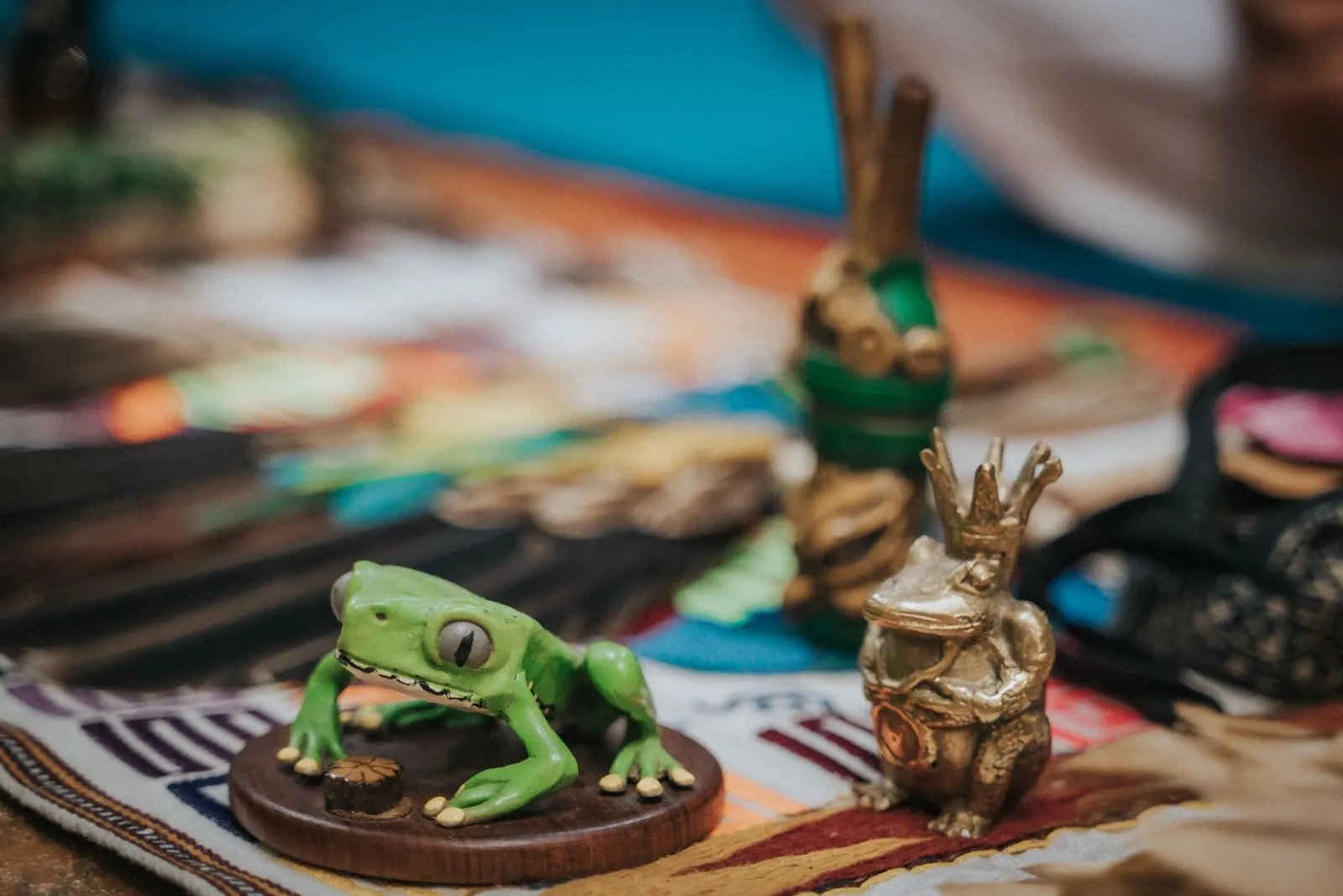
Bufo is the shortest of the sacred medicine ceremonies, and, many people say, the most profound. This guide covers what 5-MeO-DMT actually is, where it comes from, what happens in a ceremony, who should not sit with it, the conservation question, legality, and how to tell a serious facilitator from a dangerous one.
Quick facts
- Substance
- 5-MeO-DMT (5-methoxy-N,N-dimethyltryptamine), a naturally occurring tryptamine
- Best-known source
- The secretion of Bufo alvarius (Incilius alvarius), the Sonoran Desert toad; also produced synthetically
- Peak experience
- Minutes, typically under half an hour, with the peak far shorter
- Character
- Non-narrative; complete dissolution rather than visions to follow
- Documented ancient lineage
- Debated. Widespread ceremonial use is a phenomenon of recent decades
- Primary safety concern
- Sudden cardiovascular load, with heart rate and blood pressure rising sharply. Heart disease, arrhythmia, high blood pressure, and a history of stroke or cardiac events must be disclosed at intake, and several of them mean the ceremony will not be held
- Legal status
- Not specifically scheduled in Mexico, and not specifically prohibited, so ceremonies operate in a regulatory gray space. Schedule I in the United States since 2011, so the ceremony is illegal there outside narrow research contexts
- At Lunita
- Held one person at a time by Edgar, a Zapotec medicine man, after the deepest medical intake of any ceremony
What is 5-MeO-DMT?
5-MeO-DMT (5-methoxy-N,N-dimethyltryptamine) is one of the most potent naturally occurring psychoactive compounds known. It is found in the defensive secretion of the Sonoran Desert toad and in several plants, and can also be made synthetically. Its effects are brief, minutes, not hours, and typically described as a total dissolving of the sense of self rather than a visionary journey.
It belongs to the tryptamine family, the same chemical family as DMT and psilocybin, but it behaves very differently from both. Where DMT tends to produce vivid, complex visions and psilocybin unfolds over hours, 5-MeO-DMT tends to produce something people struggle to describe at all: not imagery, but a complete, overwhelming release of the boundaries of ordinary experience. Researchers studying it use words like "ego dissolution" and "unitive experience." The people who sit with it usually reach for the language of the ineffable, because that's often the only language that fits.
The intensity-to-duration ratio is the defining fact of this medicine. The peak lasts minutes. What those minutes contain can carry the weight of something much larger.
What is bufo?
"Bufo" is the ceremonial name for the practice built around the Sonoran Desert toad, Bufo alvarius, also classified as Incilius alvarius, whose secretion contains 5-MeO-DMT. The toad lives in the Sonoran Desert of northern Mexico and the American Southwest. In ceremonial settings, "a bufo ceremony" and "a 5-MeO-DMT ceremony" usually refer to the same thing.
One distinction worth knowing: bufo refers to the toad-derived medicine; 5-MeO-DMT is the compound itself, which today is also produced synthetically. The synthetic molecule is chemically identical. This distinction matters for the conservation question covered below.
What is a bufo ceremony?
A bufo ceremony is a guided, ceremonial setting in which a person receives 5-MeO-DMT under the care of an experienced facilitator. Because the experience is brief but total, the ceremony is built around careful preparation, one-on-one attention during the experience itself, and integration afterward. Serious practitioners hold bufo for one person at a time.
The ceremonial framework around bufo is drawn largely from the broader traditions of Mexican plant and animal medicine: the altar, the cleansing, the prayers, the calling of guardians, the careful holding of a person through something overwhelming. The medicine is brief; the container around it is what makes it a ceremony rather than an event.
What happens during a bufo ceremony?
A serious bufo ceremony follows a recognizable arc. At Lunita, where the ceremony is held by Edgar, a Zapotec medicine man local to Puerto Morelos, it runs like this:
- Deep intake, before anything else. Medical conditions, every medication, psychological history including past trauma, and intention. Bufo's intake should be the deepest screening of any ceremony a center offers. If it isn't, that tells you something.
- The space is prepared. The altar is built, the space is cleansed, the guardians are called, before the medicine enters it.
- Explanation and breathwork. The facilitator explains what's about to happen and how to meet it. Breathwork settles the body.
- A small first dose. A way to make contact with the medicine before the full experience. At Lunita, the person receiving reads a prayer written for this work as they begin, a way of setting intention.
- The full dose. The heart of the ceremony, the minutes that can feel like everything. The facilitator holds the space completely, one person at a time. There is nothing the person needs to do but let it happen.
- Rest and integration. Making sense of something that often resists being made sense of. With bufo, integration matters as much as with any medicine, sometimes more, precisely because the experience is so hard to put into words.
When two people receive on the same day, the others are present, gently holding space while each takes their turn. No one goes through it in a crowd, and no one goes through it alone.
How long does a bufo ceremony last?
The peak of the 5-MeO-DMT experience typically lasts only minutes, and most people return to ordinary awareness within twenty to forty minutes. The full ceremony, preparation, breathwork, the doses, rest, and integration, takes a meaningful part of a day. Centers that rush people through in quick succession are running a production line, not a ceremony.
In some retreats, bufo is the only medicine of the day. In others it's held in the morning, followed by rest and integration, with ayahuasca or mushrooms in the night.
What does 5-MeO-DMT feel like?
Honestly: people can't fully tell you, and the honest ones say so. The most consistent reports describe a rapid, complete dissolving of the sense of being a separate self, not visions or a story, but totality. Some describe it as merging with everything; some as white light; some as the most profound experience of their life; some as overwhelming and frightening while it lasted.
What it is not: a journey medicine. There are usually no long visions to interpret, no narrative to follow. Where ayahuasca unfolds over six to eight hours of imagery, memory, and emotion, bufo tends to be more total than that: a complete release, a dissolving, a return.
The aftermath varies. Many people report a period of calm, clarity, or reorganization in the days and weeks after. Others need real support to process what happened. This is why the integration, and choosing a facilitator who takes it seriously, is not optional.
5-MeO-DMT vs DMT vs ayahuasca: what's the difference?
The three are often conflated, but they are distinct substances producing distinct experiences: different duration, different character, different history, and different safety profiles. The table below is the clearest way to see the differences at a glance.
| 5-MeO-DMT (bufo) | N,N-DMT | Ayahuasca | |
|---|---|---|---|
| What it is | Tryptamine from the Sonoran Desert toad's secretion (or synthetic) | Tryptamine found in many plants | A brew: B. caapi vine + P. viridis leaves |
| Duration | Minutes; back within ~half an hour | Roughly 10 to 20 minutes when smoked | Six to eight hours |
| Character | Total dissolution; little or no imagery | Intensely visual, often otherworldly imagery | Long visionary and emotional journey; memory, purging, song |
| Documented ceremonial lineage | Debated; recent decades | Traditional use mostly within ayahuasca | Centuries among Amazonian peoples |
| Typical setting | One person at a time | Varies widely | Group ceremony, through the night, with icaros |
| Primary safety flag | Cardiovascular load | Cardiovascular + psychological intensity | MAOI interactions with antidepressants and other medications |
The two are sometimes held in the same retreat, bufo in the morning, ayahuasca at night, but they are different medicines asking different things. For most people, the honest sequencing question isn't "which is stronger" but "which work am I actually here to do." Our ayahuasca guide covers the other side of this table in depth.
Is bufo safe? Who should not sit with it
Bufo is among the most powerful experiences a human being can have, and it is not for everyone who feels drawn to it. The risks concentrate in a few areas, and a serious facilitator screens for all of them:
Heart and blood pressure: the critical one. 5-MeO-DMT places sudden, intense demand on the cardiovascular system: heart rate and blood pressure rise sharply and fast. Heart disease, arrhythmia, high blood pressure, a history of stroke or cardiac events: these must be disclosed in intake, and several of them mean a responsible center will not hold the ceremony. At Lunita this is the contraindication we are strictest about. It is not negotiable.
Psychiatric conditions. Schizophrenia, bipolar disorder, psychosis, and certain other psychiatric conditions are contraindicated. The totality of the experience can destabilize them seriously.
Medications. Several medications interact with 5-MeO-DMT, including some antidepressants (MAOIs in particular are a dangerous combination) and anything affecting the cardiovascular system. A serious center goes through everything you take, and never asks you to stop a medication on your own.
Pregnancy and breastfeeding. Contraindicated.
Readiness. Bufo is not a place to begin if you're in acute crisis or profound instability. Because the experience is so total and so fast, readiness matters enormously. For many people the honest guidance is to do other, gentler work first and come to bufo later, if at all.
Bufo is not a rite of passage to be collected. A facilitator who treats it as one is a red flag in himself.
The toad and the conservation question
This is the part of the bufo story that serious coverage now always includes, so you should know it. The Sonoran Desert toad is under growing pressure, from habitat loss and, increasingly, from harvesting for its secretion as ceremonial demand has exploded. Parts of its range now protect it; New Mexico lists it as threatened, and conservationists and several Indigenous voices from the region have asked the ceremonial world to leave the toad alone.
The relevant fact: synthetic 5-MeO-DMT is chemically identical to the toad-derived compound, and a growing share of serious practitioners have moved to it precisely for conservation and consistency reasons. When evaluating a facilitator, the sourcing question, and whether they'll answer it directly, is a legitimate thing to ask.
Does bufo have an ancient tradition?
Mostly no, and you should distrust anyone who claims otherwise too confidently. Unlike ayahuasca, peyote, or the sacred mushrooms, bufo does not come with centuries of documented ceremonial lineage. Claims of an ancient toad-medicine tradition are debated by researchers, and the widespread ceremonial use of 5-MeO-DMT is largely a phenomenon of recent decades.
What has grown up around it, in the hands of serious practitioners, is a ceremonial framework drawn from the broader traditions of Mexican plant and animal medicine. That container is real, and it matters. But the history is young, and the honest centers say so plainly. A facilitator's willingness to be straight about this is one of the most reliable credibility signals in the entire bufo world, because the invented-lineage problem is well documented, and the people who invent histories tend to cut other corners too.
Is 5-MeO-DMT legal?
It depends entirely on where you are. In Mexico, 5-MeO-DMT is not specifically scheduled, and bufo ceremonies operate in a regulatory gray space, openly held, not specifically prohibited. In the United States, 5-MeO-DMT has been Schedule I since 2011, making the ceremony illegal outside narrow research contexts. Other countries vary widely, and laws change; verify the current status of wherever you're considering before you commit.
This legal geography is a large part of why serious bufo work concentrates in Mexico, the medicine's home range and the home of the ceremonial traditions its container draws from.
How to choose a bufo facilitator
The gap between the best and worst operators in the bufo world is enormous, and the consequences of choosing badly are not abstract. What to look for:
Green flags: one person at a time, always. A medical intake that feels almost intrusive: conditions, every medication, psychological history, intention. A facilitator with verifiable years inside ceremony, not a weekend certification. Honesty about the young history of this medicine. A straight answer on sourcing. Real integration support after, not a hug and a van to the airport. A willingness to tell you no, or not yet.
Red flags: group dosing. Trophy framing ("the everest of psychedelics: are you ready?"). No medical screening, or screening that's a formality. Invented ancient lineages. Volume operations running multiple strangers through per day. Anyone who promises healing outcomes.
The depth of the intake is the single most reliable signal. A facilitator who asks you nothing is telling you everything.
Bufo at Lunita
At Lunita Jungle Retreat in Puerto Morelos, bufo is one of seven ceremonies, held by Edgar, a Zapotec medicine man, local to the area, who carries several Indigenous Mexican lineages and has spent his life inside ceremony. It is held one person at a time, most often in front of the Grandfather tree or in the Crystal Shala, Lunita's octagonal glass yoga shala, beside the cenote water, after the deepest intake of any ceremony we offer. It is never sold standalone. It's held within hosted retreats and personal retreats, as part of a custom proposal.
The full ceremony page covers the structure, the setting, and the contraindications in detail: The Bufo Ceremony at Lunita
A bufo alvarius retreat in Mexico, at Lunita
If you are looking for a bufo alvarius retreat in Mexico, this is where we hold it. Lunita sits in the jungle at Puerto Morelos, Quintana Roo, on the Ruta de los Cenotes, roughly thirty minutes from Cancún airport, well away from Tulum, Playa del Carmen, or the city. The property is around 5,000 square meters of built space, surrounded by more than 80,000 square meters of preserved jungle. It runs 100 percent on solar power, fully off-grid, with cenote water on site, and guests can visit a private cenote about ten minutes away, which is not on the property but is part of the wider experience.
Bufo here is one-on-one, held after the deepest intake of any ceremony we offer, and never sold standalone. Since opening in November 2022 we have hosted more than 120 retreats, and guests have left us 4.9 stars across 140+ Google reviews and 4.9 stars across 40+ TripAdvisor reviews. It is experiential work only, with no dosing or medical claims.
Frequently asked questions
Is bufo stronger than ayahuasca?
Can you do bufo and ayahuasca in the same retreat?
Is 5-MeO-DMT addictive?
How do you prepare for a bufo ceremony?
Do you see visions on bufo?
Is the toad harmed?
Where does Lunita hold bufo ceremonies?
Who facilitates bufo at Lunita, and what is their lineage?
What is included, and how do I book a bufo retreat at Lunita?
Where to go next
The Bufo Ceremony Read how this ceremony is actually held
The Complete Ayahuasca Guide The other side of the comparison
Ceremonies All seven ceremonies at Lunita
Personal retreats Designing a retreat around this work