Retreating in Mexico: The Honest Guide
A note on who's writing this. We run a retreat center, which means you should read this guide with that in mind, and it also means we've watched hundreds of people choose well and badly, we've turned people away when we weren't the right fit, and we know exactly what the marketing hides. We'd rather you choose the right retreat than choose us wrongly. So no rankings here, no "top 10," and no center named, including ours, except at the end, plainly labeled. Just the things that actually decide whether your retreat is good.
The Mexico retreat landscape at a glance
| Region | Character | Tends to suit |
|---|---|---|
| Riviera Maya (Quintana Roo) | Jungle, cenotes, Caribbean coast; the most accessible, direct flights to Cancún | Plant medicine, yoga, group retreats; first international retreats |
| Tulum | Beautiful, famous, scene-heavy; wellness next door to nightlife | Style-led retreats; people who want a social orbit around the work |
| Oaxaca | Mountains, Indigenous traditions, the home of the sacred mushrooms | Mushroom ceremony in its actual birthplace; culture-rich travel |
| Tepoztlán / Valle de Bravo | Mountain towns near Mexico City; long spiritual-retreat history | Shorter retreats, meditation, domestic + CDMX-connected travelers |
| Baja California | Desert meets ocean; whales, silence, space | Silent retreats, surf-wellness, dramatic landscape |
| San Miguel de Allende / central highlands | Colonial towns, art, mild climate | Creative and wellness retreats with comfort and culture |
Why do people choose Mexico for a retreat?
Five honest reasons: it's close, direct flights from most of North America; it's significantly more affordable than equivalent retreats in the US or Europe; the climate works most of the year; it has one of the deepest living ceremonial cultures in the world, from temazcal to the sacred plant traditions; and for plant medicine specifically, ceremonies operate in a legal gray space rather than outright prohibition.
There's a sixth reason people discover once they're here: the land itself. The Yucatán's cenote system, the underground rivers the Maya understood as sacred, the Oaxacan mountains, the Sonoran desert. Mexico's retreat culture didn't appear for tourists; it grew out of traditions that were already here.
What kind of retreat are you actually looking for?
Most bad retreat choices happen at this step. People book a place before they've named the work. The main types, and what to verify for each:
Yoga retreats. The most common format. Verify: who's actually teaching (a named teacher with a real history, or "our rotating instructors"), the daily schedule, and whether the venue serves the practice, a real shala, not a conference room with mats.
Plant medicine retreats (ayahuasca, mushrooms, bufo, peyote). The highest-stakes category. Verify: the medical screening process above everything else. It's covered in its own section below.
Wellness and spa retreats. Massage, food, rest, light programming. Verify: what's actually included versus à-la-carte, and the food story. At this format, the kitchen is the retreat.
Meditation and silent retreats. Verify: the container, experienced teachers, a real structure for silence, and a property where silence is physically possible.
Specialized retreats: grief, burnout, couples, life transitions. Verify: the facilitator's actual qualification for that specific work, and whether there's a screening conversation before money changes hands.
Hosted retreats, a teacher or facilitator you already follow, running their retreat at a venue. Often the best first retreat: you already trust the human. Verify the venue behind them. (And if you're the teacher considering hosting one, that's a different guide: Planning your first retreat as a leader.)
Where in Mexico should you go?
The table above gives the map; here's the honest commentary.
The Riviera Maya is the default for a reason: Cancún's airport makes it the easiest serious retreat region in the hemisphere to reach, and the jungle-and-cenote landscape gives it a ceremonial setting nothing else replicates. The honest caveat: its fame brought volume, and volume brought operations of every quality. The region rewards careful vetting more than any other.
Tulum deserves its own honest paragraph. It is genuinely beautiful and genuinely scene-y. Wellness and nightlife share the same streets, prices run high, and some retreats there are styled experiences more than held ones. None of that makes it wrong; it makes it a specific choice. If you want depth and quiet, look twenty minutes in any direction. Towns like Puerto Morelos, between Cancún and Playa del Carmen, offer the same jungle and cenotes without the scene.
Oaxaca is the real home of the sacred mushroom traditions. If mushroom ceremony in its cultural birthplace is the point, this is the region, and it asks more travel of you.
Tepozltlán and Valle de Bravo carry decades of Mexican spiritual-retreat history and suit shorter stays; Baja trades jungle for desert-and-ocean drama; the central highlands suit retreats where culture and comfort share the bill.
When is the best time of year for a retreat in Mexico?
November through April is the sweet spot for most of Mexico: dry, warm, and reliable, which is also why it's high season. May through October is hotter, more humid, and greener, with afternoon rains and lower prices; the Caribbean hurricane window runs June to November, peaking August to October. Cenotes and jungle hold their character year-round.
Two honest notes: "rainy season" in the Yucatán usually means an afternoon downpour, not a washed-out week, and a jungle retreat in the green season is its own experience, lush and quieter and cheaper. If your dates are flexible, late November to early December and late April are the value windows: dry-season weather without peak pricing.
How much does a retreat in Mexico cost?
Typical market ranges in 2026, per person, for roughly five to seven days: budget group retreats with shared rooms commonly run under $1,000; the mid-range, where most serious small-group retreats live, runs about $1,000 to $3,000; luxury and high-end specialized retreats run $4,000 and up. Plant medicine retreats typically fall between $1,500 and $4,000 depending on length, group size, and screening depth.
What actually drives the price: group size (small groups cost more per person and are worth it), the support ratio, food quality, ceremony access, and the property itself. What the price does not reliably tell you: quality. Cost correlates poorly with quality in both directions. There are expensive volume operations and modest family-run centers doing the most careful work in the country. Judge the screening and the container first; the cheapest retreat with no intake is the most expensive thing on this page.
How do you tell a serious retreat center from a marketing operation?
This is the section that matters most, so here is the honest checklist.
Green flags: Named humans. You can find out who owns and runs the place, and they're reachable. Family-run and owner-operated centers stake their name on every retreat. A screening or discovery conversation before payment, where they ask about you. Honest group sizes published, not hidden. Reviews across platforms, Google, Tripadvisor, Airbnb, that sound like different real people, including imperfect ones. Photos that match reality (reverse-image-search a few; stock photography is a confession). Clear answers about what's included, refund terms, and who leads what. A willingness to say "we're not the right fit."
Red flags: Anonymous operations, no named owner, no named facilitators. Booking flows with no human conversation. "Unlimited" anything. Pressure tactics and countdown timers. Reviews that all sound alike. Outcome promises. Any center guaranteeing healing, transformation, or results is selling something no honest practitioner sells. And for any retreat involving ceremony: screening that's a checkbox.
Does group size matter?
More than almost anything else you can control. In a small group, most serious retreats in Mexico run six to twenty people, the facilitators actually read you, the food adapts to you, and a hard moment gets a person, not a protocol. In a forty-person operation, you are attending an event. Small-group retreats cost more per person because the ratio is the product; it's the best money in the entire category.
What about plant medicine retreats specifically?
Everything above applies, doubled. The single most reliable signal of a serious plant medicine retreat is the depth of the medical screening, full medical history, every medication, psychological history, intention, before money is the subject. Ayahuasca's interaction with antidepressants is genuinely dangerous; bufo's cardiovascular load is non-negotiable; a center that doesn't ask is a center to walk away from.
Legality, briefly: the ceremonial plants operate in a regulatory gray space in Mexico, not specifically prohibited, openly practiced, which is much of why the serious work concentrates here. We've written full, honest guides to the two heaviest medicines, including safety, contraindications, and how to choose a facilitator: The Complete Ayahuasca Guide · The Complete 5-MeO-DMT & Bufo Guide. The seven ceremonies as they're actually held: Ceremonies.
One comparison people ask about: ayahuasca versus psilocybin retreats. Mushrooms generally offer a shorter (4 to 6 hour), often gentler arc with centuries of Mexican tradition behind them, many people's wisest first ceremony. Ayahuasca is longer, more demanding, and asks the strictest preparation. The honest sequencing question is never "which is stronger" but "which work am I here to do."
What about yoga retreats?
People searching for the best yoga retreats in Mexico are usually choosing between two things without quite naming them: a beach town or the jungle. Beach towns give you walkable cafes, other travelers, and a practice that shares its soundtrack with the street. The jungle gives you quiet, a cenote instead of a pool, and nowhere to drift off to, which is either the point or the problem depending on why you are going. Neither is better. Knowing which one you actually want narrows the shortlist faster than any ranking will.
Two honest things the listings won't tell you. First: the venue is half the retreat. A real shala, food that supports practice rather than fighting it, and a property that holds quiet. These decide more than the schedule PDF does. Second: many of the best yoga retreats in Mexico aren't run by centers at all. They're run by independent teachers hosting at a venue. If you love a teacher, follow the teacher; then vet the venue under them with this guide.
And if you are the teacher, the one whose students keep asking, hosting your own is more reachable than it looks, and we wrote the honest version of that too: Planning your first retreat as a leader.
Should you book through an aggregator or directly?
Use aggregators for what they're good at: breadth, browsing, discovering that a category exists. Book direct when you can: you'll usually get a better price (aggregators take 15 to 25% commission, which someone pays), and more importantly you get the conversation, the screening call that tells you who these people actually are. Either way, never book any serious retreat without a human conversation first. If a center won't get on a call, that is the information.
Questions to ask before you book (the checklist)
Nine questions that decide whether a retreat is worth your time and money.
- Who owns and runs the center, and who will actually be there during my retreat?
- Who leads each session or ceremony, by name, and what's their history?
- What's the maximum group size, and what's the staff-to-guest ratio?
- What screening do you do before accepting me? (For ceremony retreats: walk me through the medical intake.)
- What exactly is included, food, transfers, sessions, and what costs extra?
- What's the refund and rescheduling policy, in writing?
- What does a typical day look like, hour by hour?
- Can I speak with someone who's done this retreat?
- What kind of person is this retreat not right for?
That last question is the best filter on the list. Honest centers answer it instantly, because they think about it constantly. Marketing operations have never considered it.
Where Lunita fits, labeled honestly
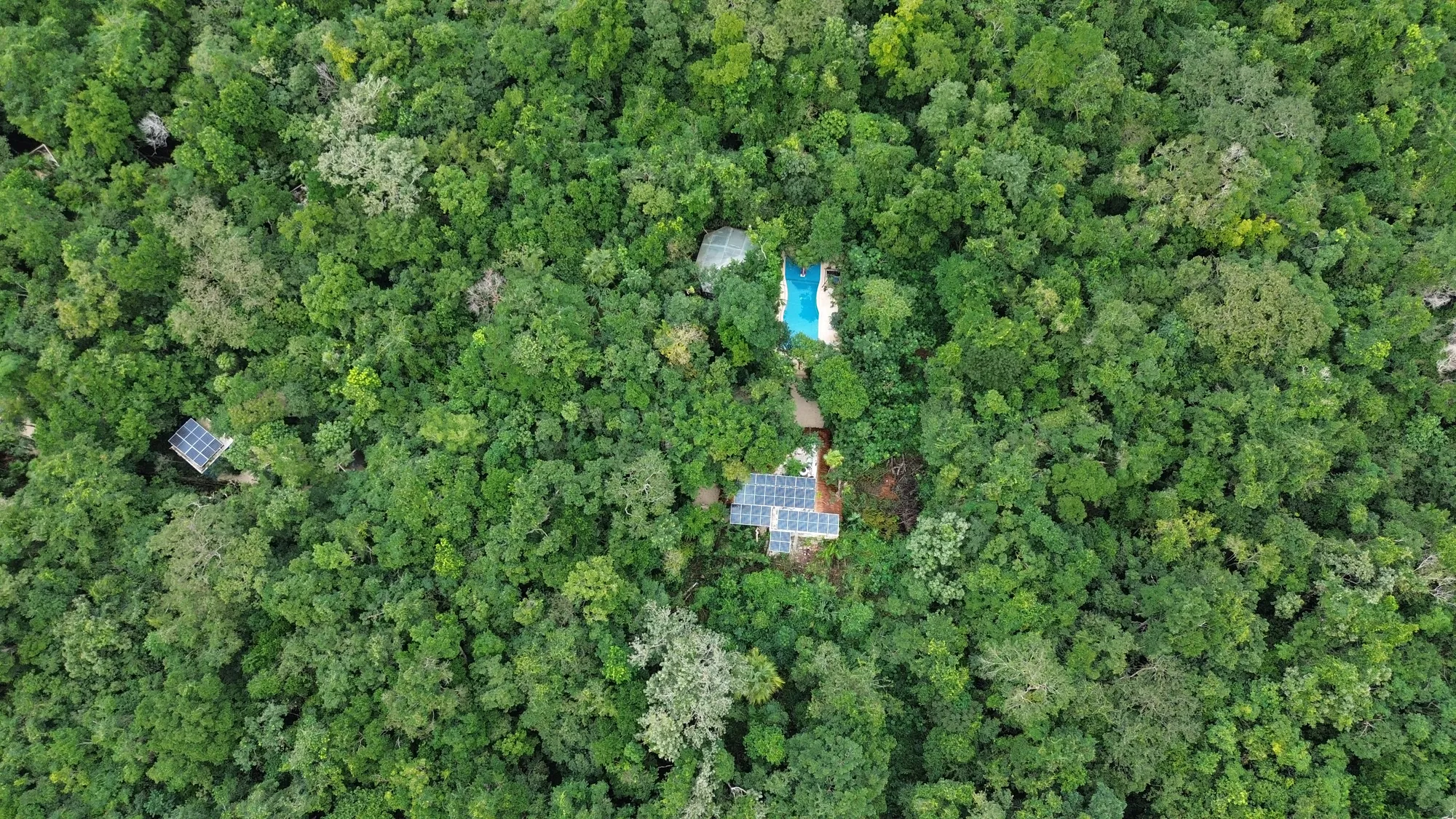
Since we wrote the guide: Lunita Jungle Retreat is a family-run center, Lorenza and her son Nico, on twenty acres of jungle on the Ruta de los Cenotes in Puerto Morelos, forty minutes from Cancún airport. Eight cabanas, twenty guests maximum, 100% solar, seven ceremonies held by local facilitators, and three ways in: joining a retreat, designing a personal one, or hosting your own. We're the right place for people who want small, held, and honest, and not the right place for people who want a resort, a party, or a guarantee. Judge us by this guide's own checklist: Our center · Retreats · or book a call and ask us question 9.
Frequently asked questions
Common questions about choosing and booking a retreat in Mexico.
What is the best month for a retreat in Mexico?
Is Mexico safe for a retreat?
Do I need to speak Spanish?
Can a complete beginner go on a retreat?
How far in advance should I book?
Do I need travel insurance?
What are the best yoga retreats in Mexico?
Where to go next
The two heaviest medicines, honestly: Ayahuasca guide → Bufo guide →
How the ceremonies are actually held: Ceremonies →
If you're the one your students keep asking: Planning your first retreat as a leader →
The place behind this guide: Our center → Book a call →