Planning Your First Retreat as a Leader: The Complete Guide
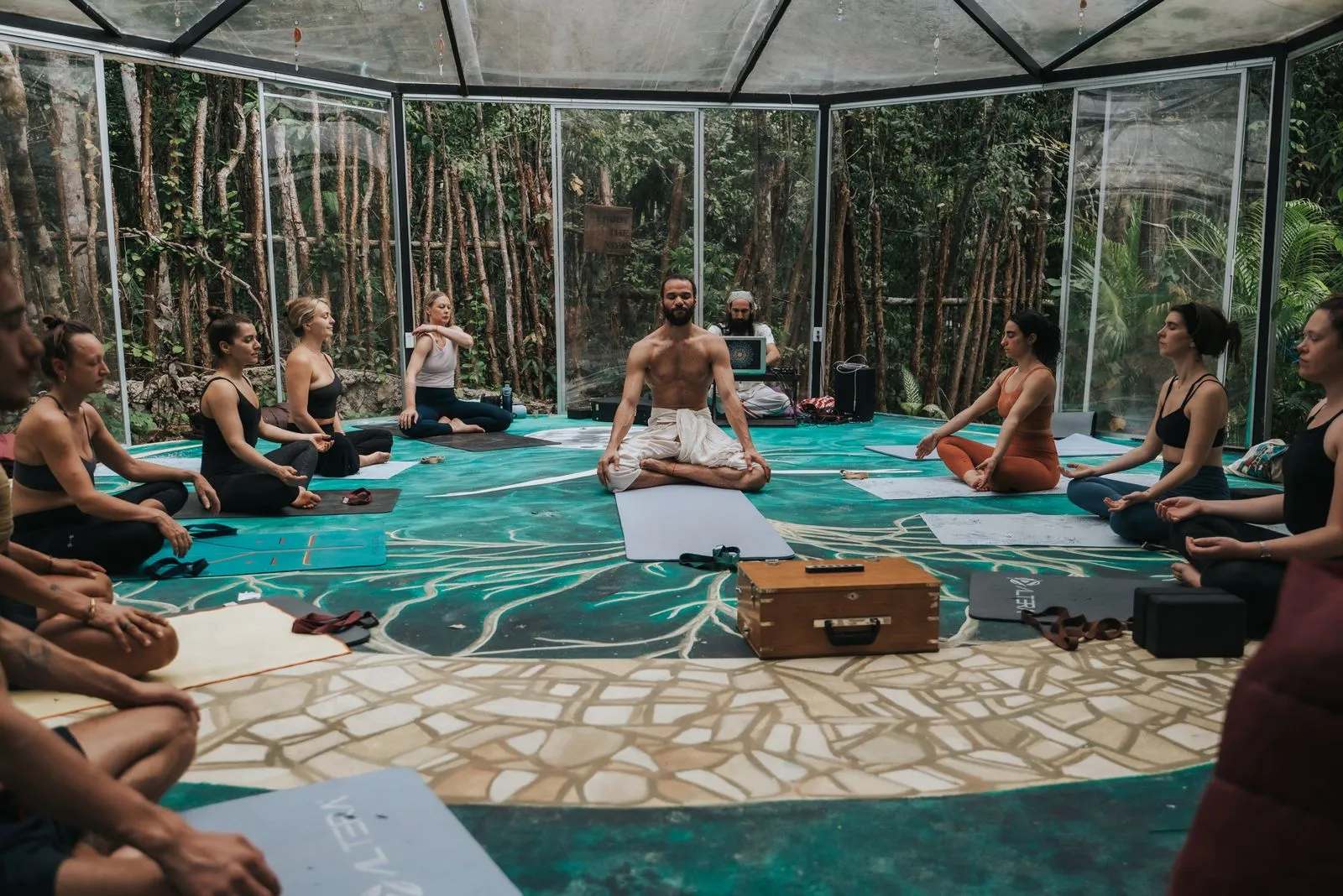
This guide is for the moment your students keep asking when you'll finally do a retreat, and you've started to think they might be right. You have a community and a practice. What you don't have is operational experience, and the gap between those two things is where most first retreats die: not from lack of readiness, but from lack of a map. This is the map. Written by a venue that has watched a lot of first retreats succeed, and knows exactly why the ones that struggled, struggled.
What does planning a first retreat actually involve?
Planning a retreat means making seven decisions, roughly in order: when (pick dates six to twelve months out), where (choose a venue, and a venue model), what (design the program arc), how much (price it on real math), who (fill the spots, starting with the community you already have), running it (the week itself), and after (follow-up, which is where your second retreat is born).
Each gets its own section below. But first, the part nobody puts in the checklist.
What stops most first-time leaders?
Three fears, and they deserve to be named out loud, because every first-time leader carries all three and most carry them alone.
"What if I can't fill it?" The real one. The fix isn't marketing genius. It's choosing a financial structure where a small group still works (covered in the venue and low-risk sections below), and starting the filling process with people who already trust you, months earlier than feels natural.
"What if it falls apart?" It mostly can't, if the operational weight isn't on you. Food, rooms, transfers, schedules, the thousand small logistics: these are exactly the things a true venue partner carries, and exactly the things a venue-only rental dumps on you. The single biggest determinant of whether your first retreat feels possible is which of those two you choose.
"What if I'm not really ready?" You're ready to lead what you already lead. A retreat is your existing work, held in a better container, over more days. You don't need to become an operations manager, a chef, and a travel agent. You need partners who already are.
How far in advance should you plan a retreat?
Six to twelve months for a first retreat, long enough to fill spots without panic, short enough to keep momentum. Nine months is the comfortable middle. Here's the timeline that works:
| When | What happens |
|---|---|
| T-9 to T-12 months | Choose dates and venue; sign and pay the reservation deposit; set your price |
| T-8 months | Announce to your own community first, before any public marketing |
| T-6 to T-7 months | Open early-bird pricing with deposits; design the program arc with your venue |
| T-5 months | Public marketing begins; first third of spots should be committed |
| T-3 to T-4 months | Midpoint payment to the venue (typical); finalize program, food preferences, special requests |
| T-2 months | Two-thirds filled or adjust strategy; send participants the prep guide; book your own travel |
| T-2 weeks | Final venue balance (typical); final participant logistics; participant intake forms done |
| Retreat week | Arrive a day early. Lead. Let the venue team carry the rest |
| T+1 week | Follow up: photos, a closing note, and the question that fills retreat #2: “would you come again?” |
Two structural notes hiding in that table. Venue payments are typically staged (a deposit to reserve, a midpoint payment, a final balance near arrival) so your cash outlay tracks your participant deposits coming in, not ahead of them. And the announcement order matters: your community first, weeks before the public. The people who already trust you are your first third of the room, and being first is part of what they're buying.
How do you choose a venue?
There are really only two venue models, and choosing between them is the most consequential decision of your first retreat.
Venue-only rental: you get the property. Food, staffing, transfers, schedules, supplies, problems at 7am: yours. It's cheaper on paper and it's how first-time leaders end up running a small hotel instead of leading their retreat.
Partner venues: the property plus the operation: kitchen and food shaped to your group, a team handling logistics, local knowledge, transfers arranged, and (at the serious ones) help before the retreat: pricing guidance, promotion support, program-flow design. You stay in the role your participants came for.
For a first retreat, the honest advice is unambiguous: pay for the partner. The questions that find one:
- What exactly is included (food, staff, spaces, ceremonies) and what's extra?
- Do you help with pricing, promotion, and program flow before the retreat, or only the week itself?
- Who is on the ground during my retreat, and what do they handle without me?
- How does payment stage out: deposit, midpoint, balance?
- What happens if I fill fewer rooms than I hoped? (Their answer to this one tells you everything.)
- Can I talk to a leader who hosted their first retreat with you?
- Do you handle dietary restrictions and allergies, or do I?

How many people do you need for a retreat?
Fewer than you think. A real retreat happens at six people; many of the best run at eight to twelve; twenty is a full house at most serious small venues. The number that matters isn't headcount. It's the relationship between your venue's financial structure and your realistic fill. A model where you pay for the whole property needs more bodies than a model where you pay per room filled.
This is the question to pressure-test with any venue before signing: "what does my downside look like at six participants?" If the answer is "you lose money badly," keep looking, or look at the room-based models covered in the low-risk section below.
How should you price your retreat?
Build it from the floor up, not from what feels modest. The formula: (your total venue cost ÷ realistic participant count) + per-person costs (their transfers, materials, anything not in the venue price) + your fee, and your fee is a real line item, not a remainder. Price for the realistic fill, not the dream fill; if more people come, that's margin, not rescue.
Three practical rules. Don't race to cheap: underpriced retreats signal underconfidence to the exact people who trust you, and one fairly-priced retreat with nine people beats a discounted one with eleven. Take real deposits: 25 to 30% non-trivial deposits are what turn "interested" into "coming," and they fund your venue deposit. Early-bird honestly: a genuine early price for your community rewards the people who commit first and gives you proof-of-life numbers by month two.
How do you fill the spots?
In order of effectiveness, not glamour:
- Your existing community. The students, clients, and followers who've been asking. They are most of your first retreat. Tell them first, personally, not via a post, via a message.
- Deposits and a date. Nothing fills a retreat like the existence of other committed people. Announce names-on-the-list milestones (with permission).
- One channel, consistently. Whatever you already use (email list, Instagram, the studio) show the retreat weekly: the place, the food, the why. Drip beats blitz.
- A co-leader. Sharing the room with a peer halves the filling burden and doubles the audiences. Many first retreats are co-led for exactly this reason.
- Your venue's content. Good partner venues hand you photos, copy, and even a per-participant price breakdown you can publish. Use all of it. Professional images of the actual place outsell anything you can write.
What doesn't work for a first retreat: paid ads to cold audiences. Strangers don't buy retreats from leaders they don't know; communities do.
What should the program look like?
Think in an arc, not a schedule. Arrival and opening: land them, feed them, open the container the first evening. The daily rhythm: your practice in the strong slots (morning, golden hour), real free time in the middle; over-programming is the most common first-timer mistake, and rest is not dead air, it's where the work settles. A peak: one anchor experience mid-retreat the week bends around: a ceremony, a cenote day, a long practice. Integration and closing: the last full day turns toward closing; people need to land before they fly.
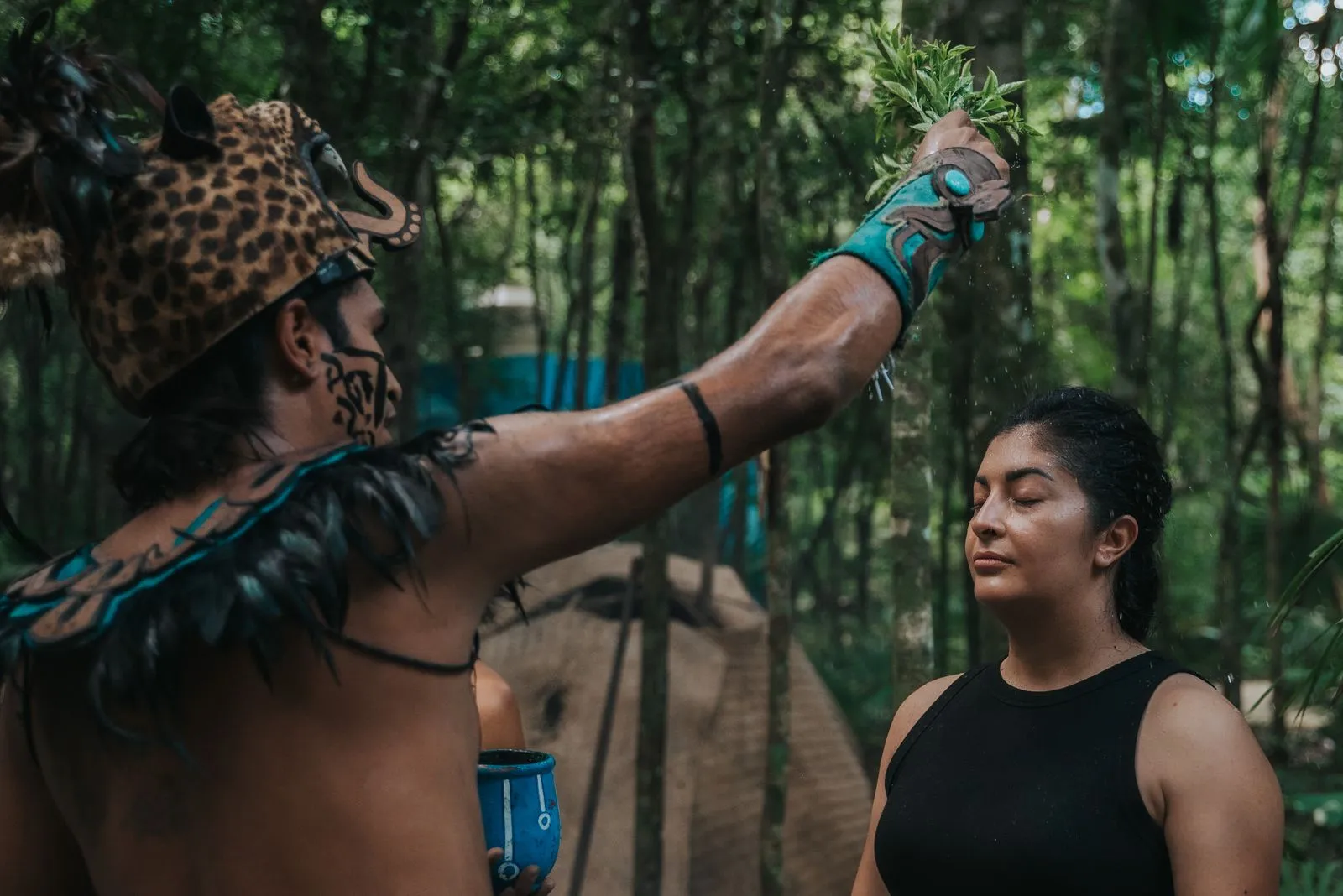
If your venue holds ceremonies, place them as anchors only where they genuinely align with your work. Borrowed depth reads as borrowed. And one closing element worth stealing: a real group photo session near the end. The images become your participants' keepsake and your entire marketing engine for retreat number two.
What can go wrong, honestly?
Under-filling. The most common, and the most survivable, if your venue model scales down. Eight people is not a failed twelve-person retreat; it's an eight-person retreat, and often the better one.
A participant in crisis. Someone gets sick, someone unravels, someone's grief arrives on day two. This is why the venue team question matters: you stay with the person, the team runs the retreat.
Weather. Tropical rain is part of jungle retreating; a good venue has the indoor flow ready and the schedule flexes. Plan season-aware (see our honest guide to retreating in Mexico for the calendar).
Leader burnout. The sneaky one. You will hold space all week; build your own rest into the schedule like it's a session, because it is. This, too, is what a real venue team buys you.
What is a low-risk way to host your first retreat?
Look for room-based models: instead of renting an entire property and betting on a full house, you pay only for the rooms you actually fill, which removes the financial cliff that stops most first-time leaders. These models exist at a handful of venues; at Lunita it's called MoonSeeds: roughly one week each month is set aside for it, there's no minimum group size, bring three people and pay for three rooms, and the payment schedule stages the same way as full hosting.
The honest trade-off: those weeks are limited and shared with other small groups' bookings, so dates take flexibility. The honest upside: your first retreat becomes a question of when, not whether, and the leaders who start this way are the ones who come back with full groups. MoonSeeds
How Lunita works with first-time leaders, labeled honestly
Since we wrote the guide: Lunita is a family-run jungle center in Puerto Morelos: twenty acres on the Ruta de los Cenotes, eight cabanas, twenty guests max, forty minutes from Cancún airport. We work as the partner model this guide describes: before your retreat, help with promotion, pricing, market thinking, and program flow; during it, a team that has done this a hundred times handles food (shaped entirely to your group, allergies included), spaces, and the thousand details, while you stay in the room your people came for.
Payment stages 25% to reserve, 25% at the midpoint, 50% two weeks out, and after a call we send a detailed estimate: your investment, the per-participant cost, and content you can use to start promoting immediately. Sixteen leaders have come back to host again; that's the number we'd want to see if we were you.
Start with the conversation, not a contract: Host a retreat at Lunita · book a call
Frequently asked questions
The questions leaders ask most before their first retreat, answered plainly.