Psilocybin mushrooms, often called "magic mushrooms", are a group of fungi containing the psychoactive compounds psilocybin and psilocin. Revered for millennia by Indigenous cultures (the Aztecs and Mazatecs called them teonanácatl, "flesh of the gods"), they produce altered states used for healing, divination, and spiritual connection. This guide covers what they are, how they work, their effects, the legal picture, and the science. At Lunita, mushroom ceremonies are held within this traditional, grey-area context, more below.
What are psilocybin mushrooms?
They're a polyphyletic group of fungi, over 200 species, with Psilocybe cubensis among the best known, that contain psilocybin and psilocin. Far from mere recreational substances, they've been treated as sacred fungi across cultures, approached with intention and ceremony. (The cross-cultural history is here.)
How psilocybin works
Once ingested, psilocybin converts to psilocin, which acts on serotonin 5-HT2A receptors. One key mechanism: it temporarily quiets the brain's default mode network (DMN), the system tied to self-referential thought, rumination, and ego, producing a more interconnected brain state, novel perspectives, and a sense of unity. This neurobiology underpins both the spiritual experiences and the therapeutic effects under study.
The effects
Effects vary with dose, physiology, mindset, and setting, but commonly include perceptual shifts (enhanced colors, geometric patterns, synesthesia), emotional amplification, ego dissolution (a felt oneness), mystical experiences (sacredness, transcendence of time and space), and cognitive insight that can lead to lasting change. Reverence, preparation, a clear intention, and a supportive setting are essential.
What is the spiritual significance of sacred mushrooms?
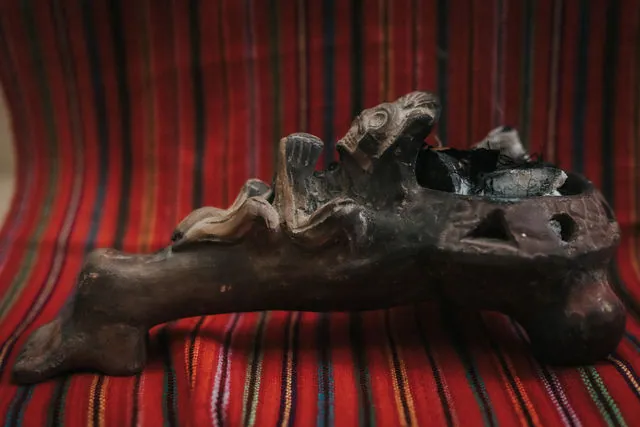
For thousands of years, mushrooms held a central place in Mesoamerican spiritual life, used by shamans and curanderos in sacred containers for healing and divination. That lineage runs through the Mazatec curandera María Sabina, whose veladas brought the tradition to the world's attention. Today's "psychedelic renaissance" is, in many ways, modern science catching up to what these traditions long understood.
The legal picture
Psilocybin is a controlled substance in Mexico (and Schedule I in the US), but traditional ceremonial use, rooted in the Mazatec velada and other Indigenous practice, has long occupied a tolerated grey area, and a 2021 Mexican Supreme Court ruling on personal autonomy adds further context. This is not legal advice. For why many people choose to do this work in Mexico, see Mexico vs. a US psilocybin retreat.
How Lunita relates to mushrooms
Lunita facilitates mushroom ceremonies within this traditional, grey-area context, with screening, experienced facilitation, and integration woven through a personal retreat. To see what a ceremony actually involves, read a mushroom ceremony, described and sacred mushroom ceremonies in Mexico, or how they sit alongside ayahuasca and bufo.
How a ceremony at Lunita is prepared
Preparation begins before the flight. A screening conversation covers medical history, medications and state of mind, and some people are told, kindly, that this is not for them now. Certain medications and conditions rule the work out, and a facilitator who does not ask about them is one to walk away from.
The days before are quiet: light food, no alcohol, early nights, and a clear intention written down. The ceremony itself is held at night, in a space set for it, with the facilitator and a helper present for the whole of it and the morning after kept free.
Integration is a session the next day and a conversation in the weeks after, because what arrives in the ceremony is only half the work. A personal retreat gives all of this the days it needs, which is why Lunita does not offer the ceremony on its own.
What to bring, and what to leave at home
Bring warm and loose clothing, since the night cools and the body cannot regulate well in the hours of the ceremony. Bring a blanket you like, a journal, and a photograph or object that matters to you, if the facilitator invites it.
Leave expectations, and leave the reading. The accounts of other people's nights are the least useful preparation there is. Leave the phone in the cabana. And leave the decision itself open until the screening is done; a facilitator's no is part of the practice, not an obstacle to it.