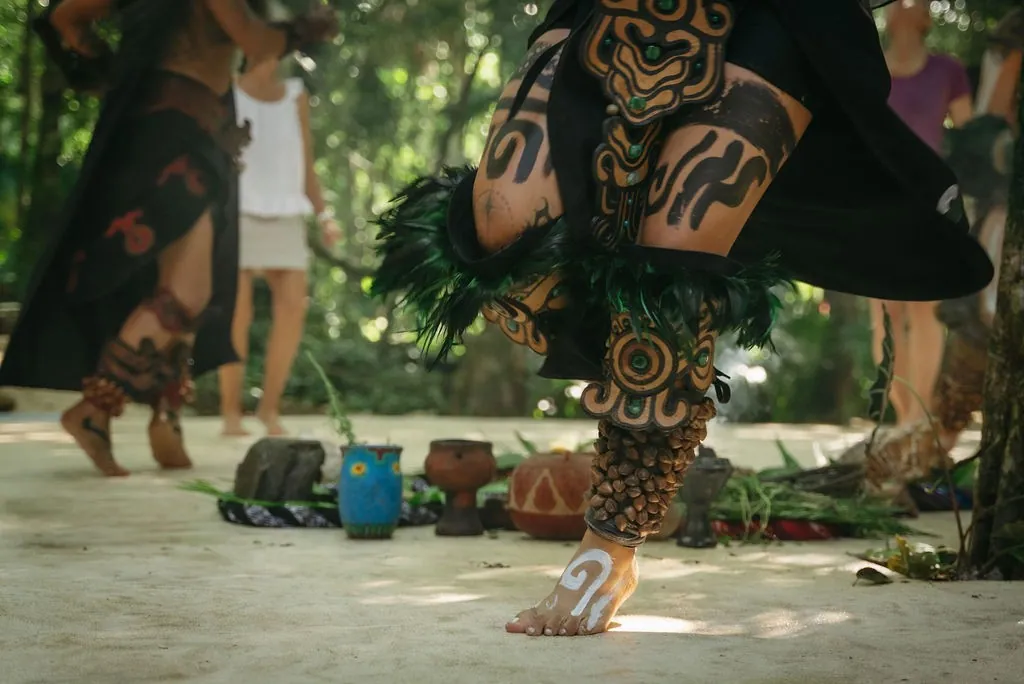
Ayahuasca is a ceremonial plant medicine from the Amazon, brewed from two plants, the Banisteriopsis caapi vine and the leaves of Psychotria viridis (chacruna). Together they produce a drink containing DMT, a powerful psychedelic. Drunk in ceremony, it brings on 4 to 8 hours of visions, deep emotional processing, and spiritual insight, and has been used by Amazonian peoples for generations as a tool for healing and connection. At Lunita Jungle Retreat we hold ayahuasca ceremonies in the Mayan jungle of the Riviera Maya, Mexico.
What is ayahuasca made of, and why two plants?
Ayahuasca isn't one plant but a synergy of two. The Banisteriopsis caapi vine contains beta-carbolines (harmine, harmaline, tetrahydroharmine) that act as monoamine oxidase inhibitors (MAOIs). The chacruna leaf (Psychotria viridis) contains DMT. Taken orally, DMT is normally broken down in the gut before it can act, but the vine's MAOIs switch off that breakdown, letting the DMT become active. That two-plant solution reflects the deep botanical knowledge of Amazonian healers who developed and refined the brew.
Where does ayahuasca come from?
Unlike some modern psychedelic ceremonies, ayahuasca has a genuinely long, documented ceremonial lineage. Across the Amazon basin, indigenous communities have used it for generations as a sacred sacrament and "teacher plant", guided by curanderos to work with illness, resolve conflict, and seek spiritual insight. The ceremony is communal, reverent, and intentional, rooted in a worldview where the forest is alive with spirit.
What does an ayahuasca experience feel like?
It's profoundly personal and varies from person to person and night to night. Effects usually begin within 30 to 60 minutes and last 4 to 8 hours. Common elements:
- Visions, from geometric patterns to encounters with archetypal figures or memories
- Emotional release, grief, fear, anger, or joy surfacing and clearing
- Introspection, a deep look at the patterns and beliefs shaping your life
- Connection, a felt sense of unity with nature and something larger
- Purging, nausea and vomiting are common and seen as part of the cleansing
The experience is shaped enormously by set and setting, your mindset and intentions, and the safety of the space. This is why experienced facilitation matters so much. Ayahuasca differs sharply from a bufo (5-MeO-DMT) ceremony, which is far shorter and less visual.
What is ayahuasca used for?
Ayahuasca is not a cure-all, but people report emotional healing (processing trauma and grief), mental clarity, spiritual awakening, insight into addictive or unhealthy patterns, and increased empathy. A growing body of clinical research on ayahuasca and healing, including a randomized controlled trial for treatment-resistant depression, points in a promising direction, though it remains early.
How Lunita holds ayahuasca
When the question turns from what ayahuasca is to where to sit with it, our ayahuasca retreat near Cancun answers the practical half.
Lunita facilitates ayahuasca ceremonies on-site, with experienced facilitators, thorough screening, and integration woven through the personal retreat. Ceremonies are held in an open-air space in the Riviera Maya jungle, with a temazcal, cacao ceremony, and sound healing supporting the work. If you're considering it, see our ayahuasca retreat in Mexico and the legal picture in Mexico, or book a free discovery call.