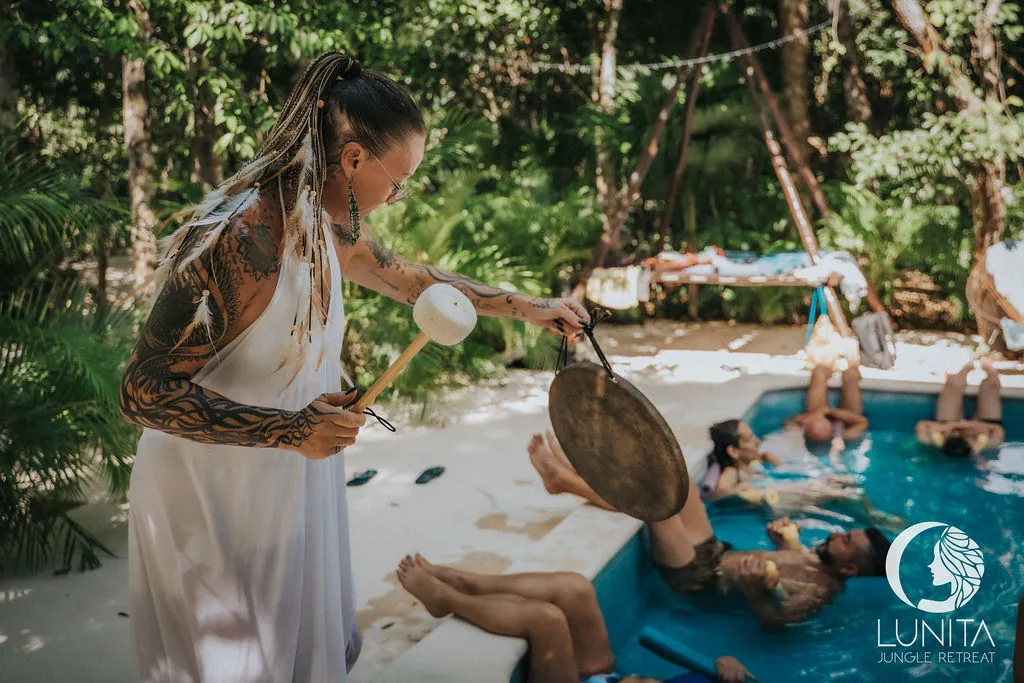
Sound healing uses intentional vibration, crystal bowls, gongs, chimes, and voice, to guide the nervous system into deep relaxation and restoration. At Lunita in the Mayan jungle, it's offered in two distinct spaces, each with its own atmosphere. This is what sound healing is, how it works, and the two ways to experience it here. It complements every other modality, from cacao to yoga to ceremony.
What sound healing is and how it works
Sound healing is the intentional use of vibration to support well-being in body, mind, and spirit. As you rest, the frequencies help quiet mental chatter, release held tension, and create space for new insight. Many cultures, including Mayan lineages, have long understood sound as a bridge between the seen and unseen. Common, honestly-held benefits include deep relaxation and better sleep, a sense of energetic clearing, emotional release, and a feeling of connection with nature and your own inner wisdom.
Sound healing in the meditation space
Lunita's open-air meditation shala is designed for grounding and stillness. The wooden floor and natural acoustics let the frequencies resonate clearly, and the sounds of the jungle blend with the tones of crystal bowls and gongs. This setting is ideal for a deeply restful, anchored experience that invites reflection.
Sound healing in the pool
For a different dimension, sound healing is also offered in the shallow saltwater pool. Warm water supports your body while the vibrations move through you with unique intensity, floating on soft cushions, you may feel a weightlessness and release that's hard to find elsewhere. The pool option suits those who enjoy fluid, sensory experiences and want to explore how water amplifies sound.
Why it enriches a retreat
Adding sound healing to a program enriches every other modality, leaving a lasting impression of care and intention, which is why retreat leaders choose Lunita. Whether part of a larger retreat or a standalone session, it's a transformative complement to yoga, meditation, and ceremony.
To build a stay around this, a personal retreat is the simplest door in.
See the land itself: the spaces at Lunita.
When in the day does sound work best?
Evening, most often. A sound session in the shala after dinner sends people to bed already half asleep, and the jungle's own noise carries on where the bowls stop. Guests tend to remember these nights more than the afternoon sessions.
The pool version is a daytime practice. The saltwater is warmest in the afternoon, and floating with the canopy overhead needs light to be worth it. It closes an afternoon well and leaves the evening free.
After a temazcal, sound is a gentle landing. The body is tired and open, and lying still is the only thing it wants to do.
What to bring and how to lie
For the shala, loose clothing, socks, and a light layer, because the body cools as it stills. Mats, cushions and blankets are provided, and an eye pillow helps if you have one.
For the pool, a swimsuit and a towel. You are held on floats, so no swimming is asked of you and the water is shallow enough to stand in. Ears under the surface hear the bowls differently from ears above it; try both.
Lie however you can stay for an hour. On your back is usual, but on your side is fine, and falling asleep is not a failure. Many people do. Cacao sits well beside it too, and if you are weighing where to do that work, our notes on choosing a cacao retreat cover the land, the facilitators, and the care.