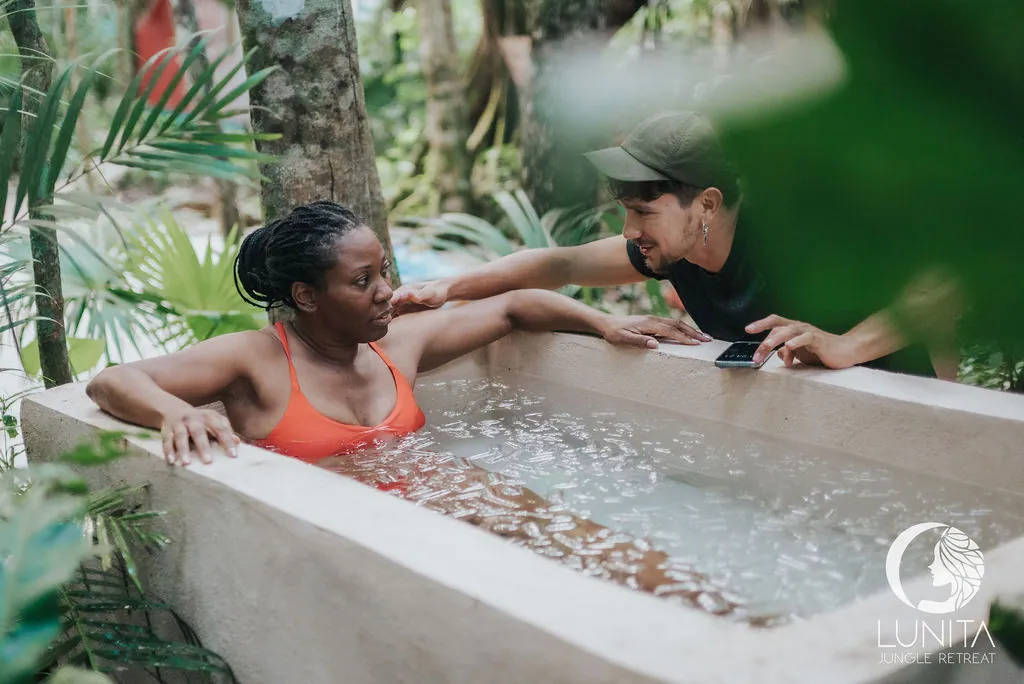
Search for a wellness retreat in the Riviera Maya and you get two different worlds wearing one name. The first is the coast: resort spas, beach yoga at sunrise, a treatment menu. The second is inland, on the jungle side of the highway: retreat centers built around ceremony, silence and nature, where wellness is the whole architecture rather than an amenity. Both are real. They do different things, and choosing between them is the actual decision.
What the coast does well
Comfort, polish, and ease. A resort spa asks nothing of you: massages happen to you, the beach is beautiful, the margarita arrives. For a tired body that wants pampering, it delivers exactly that, and there is no shame in it. What it cannot do is interrupt anything. You return rested the way a good hotel rests you, and the pattern you brought comes home intact.
What the jungle side does
Inland, along the Ruta de los Cenotes behind Puerto Morelos, the format changes. Days are built rather than booked: morning practice, one held experience each day, a temazcal, a sound session, a cacao circle, cenote water, and long quiet in between. The jungle itself does work no spa menu offers, because attention behaves differently under canopy, and a nervous system reads eighty thousand square meters of trees as permission to stand down. This is where the retreat centers live, ours among them: Lunita is off-grid and solar powered at Km 17, forty minutes from Cancun airport and a world away from the hotel zone.
The cenotes are the region’s secret advantage
No other wellness destination has them: fresh water in limestone, cool, mineral, silent, sacred to the Maya long before wellness was a word. Cold water after temazcal heat, a swim where the only sound is dripping stone. The Ruta de los Cenotes is named for a reason, and a retreat that includes private cenote time is using the region’s deepest asset. Our guests reach a privately reserved cenote minutes away, with no phone signal and usually no other people. Lunita sits on the Ruta de los Cenotes itself, and the cenotes along this road are part of why the land feels the way it does.
How to choose, honestly
Ask what you want to be different afterward. If the answer is "I want to feel pampered", the coast will not disappoint you. If the answer involves sleep, stress, a pattern, a transition, or a version of yourself you have not seen in a while, the jungle side is built for that, and the difference shows two weeks after you get home, not two days. Budget is less decisive than people expect: all-inclusive retreat pricing inland often lands near resort rates once treatments are counted. Season matters less here than on the coast; the jungle is green year round and ceremonies run in every month. If what you need is rest more than pampering, the case for a tropical wellness retreat as a reset starts with what warmth itself does to a tired body.
What a week inland looks like
For the jungle-side version described here, start with our retreats page and choose by what you want to change.
The region is the setting; the formats themselves are in our guide to wellness retreats in Mexico.
Arrival and slowing down. A first temazcal when you are ready, not when the schedule says. Mornings of movement or breath, afternoons that belong to you, evenings of sound or fire. Meals cooked from the region, eaten together. By mid-week the days stop needing to be checked against a plan, which is the actual product. Guests choosing among the area’s options often start with our guide to the best wellness retreats near Cancun, and solo travelers weighing the jungle side read the solo wellness retreat guide; if what brought you here is depletion rather than curiosity, the burnout recovery guide maps the formats.