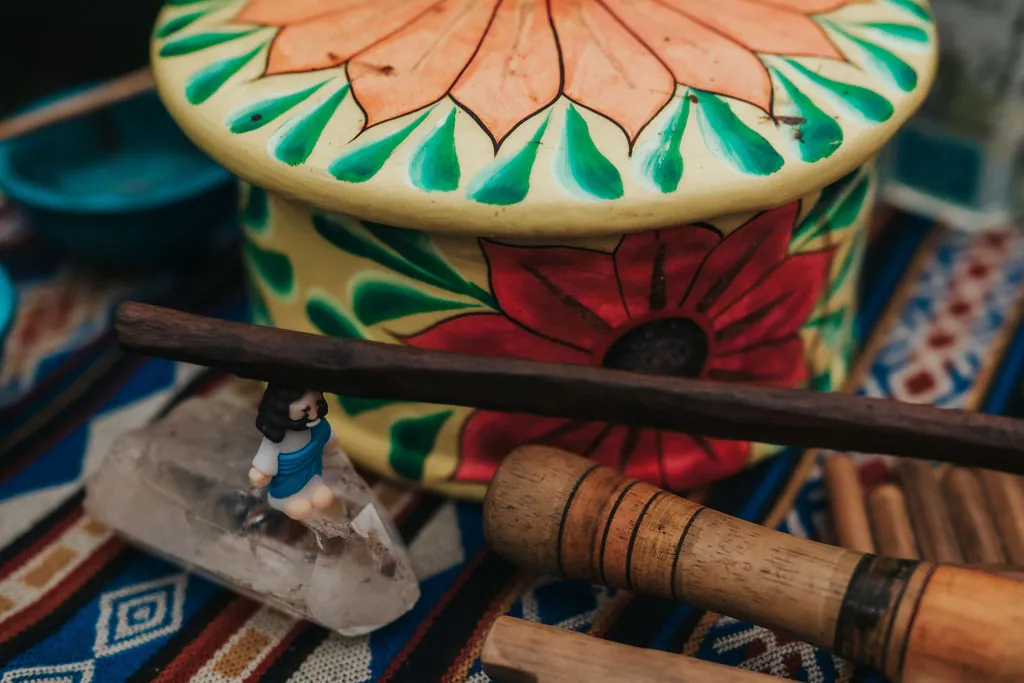
At Lunita Jungle Retreat in the Riviera Maya, sacred medicine ceremonies are held with reverence, not as recreation, but as guided rites for healing, connection, and spiritual growth. Whether you're a retreat leader looking to include sacred medicine in a program or a seeker feeling the call, this is what that work involves, which medicines are offered, and how Lunita holds it safely and ethically.
The ancestral roots of sacred medicine
From the Amazon to the deserts of northern Mexico, sacred plant (and toad) medicines have long been considered "teachers" by Indigenous communities, spiritual allies, each with its own spirit and purpose. Worked with under experienced facilitation, they're traditionally used to help release emotional blockages, tend ancestral wounds, expand consciousness, and restore alignment of body, mind, and soul. Lunita collaborates only with medicine carriers who walk this path with integrity and deep respect.
The medicines offered at Lunita
- Sacred mushrooms (psilocybin), "the little teachers," guiding gentle emotional insight and heart-opening clarity in music-supported journeys.
- Ayahuasca, the "vine of the soul," an Amazonian brew for deep emotional release and reconnection, guided with traditional song.
- Bufo alvarius (5-MeO-DMT), the Sonoran Desert toad medicine, a short, intense experience of ego dissolution held in complete presence and safety.
- Peyote (Hikuri), a grounding "grandfather" medicine, held in the Wixárika tradition through prayer, song, and connection to the Earth.
Kambo is also available as an optional add-on. The medicines sit in different legal places: psilocybin and ayahuasca occupy a tolerated grey area in Mexico, peyote is protected specifically for Indigenous traditional use, and kambo isn't a scheduled substance. Lunita works within traditional, culturally respectful frameworks. This is not legal advice.
What a ceremony involves
Each ceremony is prepared with care and grounded in respect for lineage and for each participant's well-being, held in protected spaces like the open-air meditation area or the fire circle. A ceremony may include an opening circle and intention-setting, the medicine journey, musical or energetic support, and gentle integration. No two are alike; each is shaped by the group, the medicine, and the container held together.
Safety, preparation, and integration
Well-being comes first: pre-ceremony preparation, trauma-informed guidance, a health intake, and aftercare and integration are built in. This is never a single event, it's part of a longer journey. Retreat leaders choose Lunita for exactly this: access to trusted facilitators, coordination of private or group ceremonies, integration support, and a serene jungle setting.
Who carries the ayahuasca ceremonies at Lunita?
If you have been searching for an authentic indigenous facilitator to sit with, you already know the difference it makes who holds the night. Ayahuasca is not a substance you simply take; it is a medicine that is prayed over, sung to, and held by someone whose people have carried this work for generations. That search, for a real lineage rather than a borrowed aesthetic, is what brings many seekers to Lunita.
At Lunita, the ayahuasca ceremonies are carried by Edgar, a Zapotec ceremony carrier who has held plant medicine for more than twenty years within one of the most respected lineages in Mexico. What a lineage-holder brings cannot be improvised: the icaros and prayers that shape the arc of a night, the steady presence that meets whatever the medicine surfaces, and a way of reading the room that only decades of ceremony can teach. The songs are not decoration. They are the map, and Edgar knows the terrain.
Because the container matters as much as the medicine, ceremonies are kept small and personal, so that Edgar can hold each person rather than a crowd. You can read more about how we choose and honor the people who hold ceremony on our facilitators page, and if you are new to the vine, our ayahuasca guide walks through what the work asks of you and how integration continues after the night ends. When you feel the call to sit with an indigenous lineage-holder, reach out to us and we will talk through whether this is the right time for you.