Our relationship with food often mirrors our relationship with life, when we rush, numb, or disconnect, our eating follows. A healing food retreat in Mexico is about more than diet: it is a place to nourish, rebalance and rest while you wake up to your body's messages on every level. Here's what it offers. (See why Lunita.)
Is this a raw food retreat?
Unlike a diet or detox plan, a nutrition retreat invites you to slow down and listen deeply, to let go of guilt, judgment, or confusion around food and rediscover what it means to truly nourish yourself. At Lunita, that means mindful, plant-based meals made with care, intentional living, and an eco-conscious, nature-immersed space.
Reconnection, not restriction
This isn't about weight, rules, or restriction, it's about a kinder, more intuitive relationship with food and yourself. It offers general wellness inspiration; for personalized dietary or medical needs, consult a qualified nutritionist or doctor. Explore a personal retreat or book a discovery call. Wikipedia's page on intuitive eating outlines that approach and the research behind it, which is close to the spirit of the week here.
More on coming here: our jungle retreats.
What the table looks like at Lunita
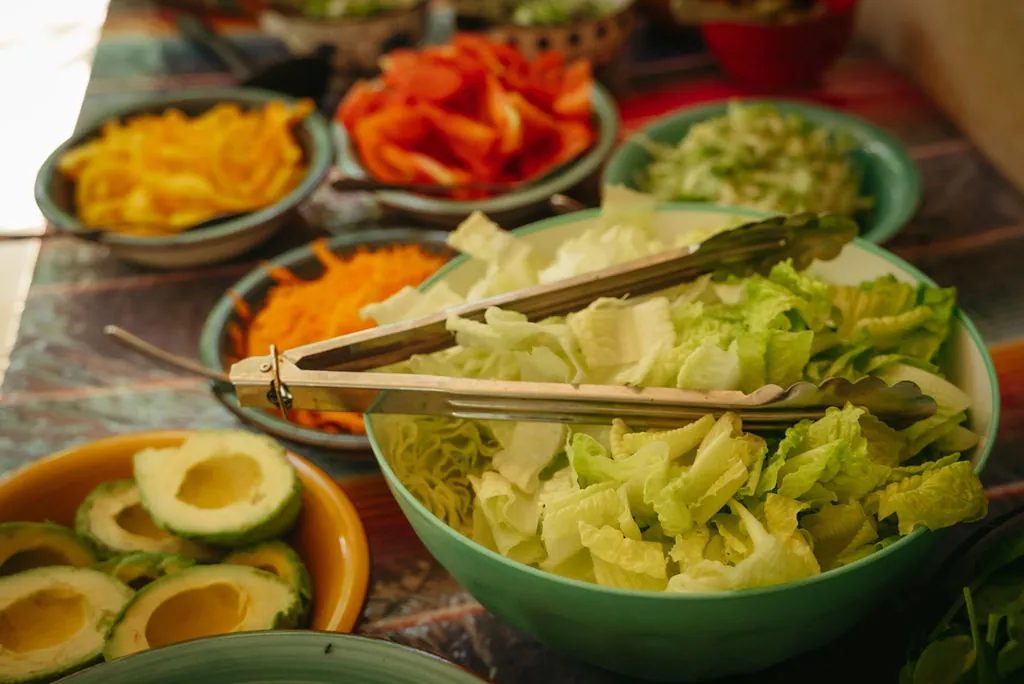
One long table, meals cooked on site, and nobody eating alone unless they choose to. Breakfast is fruit from the region, eggs, something warm, and coffee for those who want it. Lunch is the big meal: vegetables, beans, corn in its many forms, fish or chicken where they suit you, and always something raw beside something cooked.
Dinner is lighter and earlier than most guests are used to, because the jungle goes dark early and the body eats differently when it is going to sleep soon. Nobody counts anything. The kitchen cooks from what grows nearby and from what the people at the table have said they need.
Between meals there is fruit and water and not much else, which is the quiet lesson of the week: the snacking most of us do is about the day, not the hunger.
How does a nutrition retreat change how you eat at home?
Mostly by slowing the meal down. A week of eating at a table, without a screen, with the food in front of you and people beside you, resets the pace more than any rule about ingredients could. Guests report noticing when they are full, which sounds small and is not.
The second change is the shopping list. A kitchen that builds a week from vegetables, beans, corn, fruit and one protein shows that a plate does not need to be complicated to be complete. Ask the cook anything; the recipes are not secret.
What does not change is the guilt, unless you let it go here. That is the part of the week the facilitators work on, in the movement sessions and the circles, because the relationship with food is almost never about the food.
Who a nutrition retreat suits
It suits someone who eats well on paper and badly in practice: standing up, in the car, at the desk, late. It suits someone who has tried every plan and wants to try none. It suits someone recovering from a period when food became a battleground and wants it to be a table again.
It suits a personal retreat best, because the days can bend to one person's needs, and it sits well inside a longer reset alongside movement, the cenote-fed pool and the temazcal. Lunita holds at most twenty guests across eight cabanas and a mini apartment, forty minutes from Cancun airport, so the kitchen is cooking for names and not for numbers. Food is one piece of a larger design, and our guide to building a retreat itinerary shows how to start from the true purpose and leave room for integration.