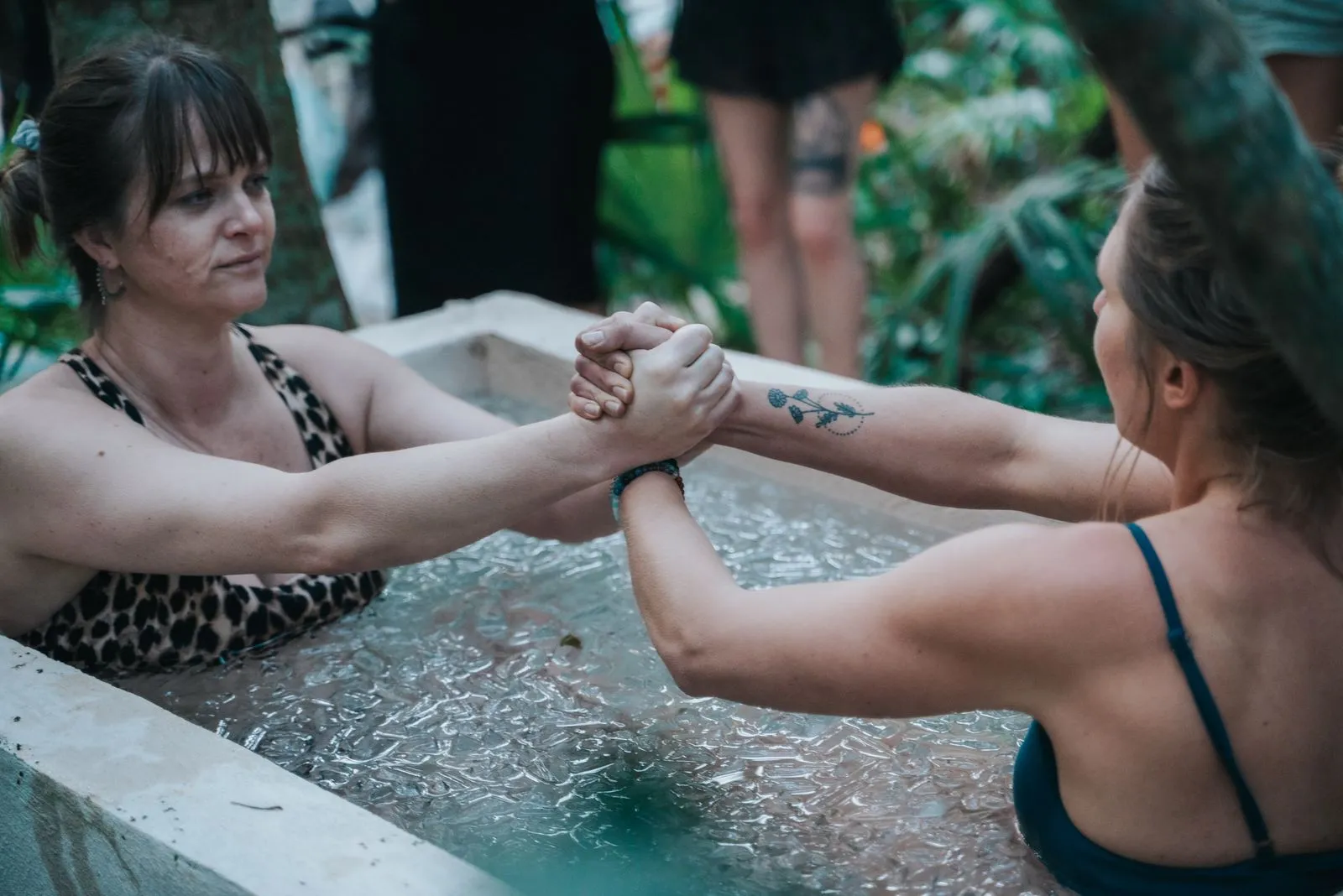
A breathwork and ceremony retreat is a stay where guided breathing is held as ritual rather than technique, with the ceremony around it doing half the work. Some places ask you to slow down the moment you arrive, the jungle does that. Humidity softens the edges, birdsong replaces mental noise, and the breath becomes something you can feel again. That's part of why a breathwork and ceremony retreat in Mexico can be so profound: it's not only stepping away from routine, but entering a space where body, land, and intentional ritual work together. Here's what makes it different and what breathwork actually supports. (It pairs naturally with cacao, sound healing, and temazcal.)
Why it feels different in Mexico
Mexico has long called people toward healing and reconnection with nature, but not every destination offers the same experience. What changes it is the quality of presence around you: the land, the pace of the days, the reverence brought to ceremony, and the care with which facilitators create safety. When breathwork is practiced in a nature-immersive environment, the nervous system often responds differently, with fewer signals of urgency and a more natural exhale.
What breathwork actually supports
People sometimes arrive expecting breathwork to feel instantly blissful. Sometimes it does; sometimes it's tender or confronting. The breath is honest, it brings forward what the mind has been managing. In a retreat, it's used to support emotional release, nervous-system regulation, body awareness, and clarity. But it's not one method: some styles are activating and cathartic, others slow and restorative, and the right approach depends on the person, the intention, and the support available.
The role of ceremony
Ceremony is often misunderstood as performance. In a genuine retreat it's a way of bringing consciousness to experience, entered with respect, intention, and humility. Breath moves emotion and insight; ceremony frames that movement, marking a beginning, supporting release, or honoring grief. A well-held container doesn't force intensity for its own sake: it respects pacing, offers integration, and understands that deep healing is measured by how safely a person can receive what arises, not by how dramatic a session looks.
Why does the retreat center setting matter for breathwork?
This pairing is the core of our spiritual awakening retreats.
For many, breathwork and ceremony are sought during seasons of transition, grief, burnout, relationship shifts, creative exhaustion, or the quiet sense that something inside needs care. For retreat leaders, these practices often form the heart of a transformational program, but they need the right environment to be held well, which is exactly what a private jungle sanctuary near Puerto Morelos provides.
What a breathwork and ceremony day looks like
The breath session is in the morning, in the glass shala, after a light breakfast and before the heat. It runs an hour to ninety minutes with rest at the end, and the group does not talk much afterward. The middle of the day is the cenote-fed pool, the cabana, or a walk on the paths.
Ceremony comes after dark: cacao, sound, a fire, or temazcal, held by the person who carries it. Breath in the morning and ceremony at night is a deliberate order. The breath opens something, the day lets it settle, and the ceremony gives it a shape before sleep.
What to bring to a breathwork retreat, and what to leave
Loose clothes you can breathe in and a warm layer, because the body cools after a session. A swimsuit, a journal, and shoes for muddy paths. Mats, bolsters and blankets are in the shala already.
Leave behind the expectation of a particular experience. Breath sessions differ from one day to the next in the same person. Bring the list of medications and anything in your history the facilitator should know, and say it before the first session, not after. That same slow settling is what daily yoga and meditation in the shala build across a stay, a morning rhythm that leaves the body receptive by the time breath and ceremony begin.