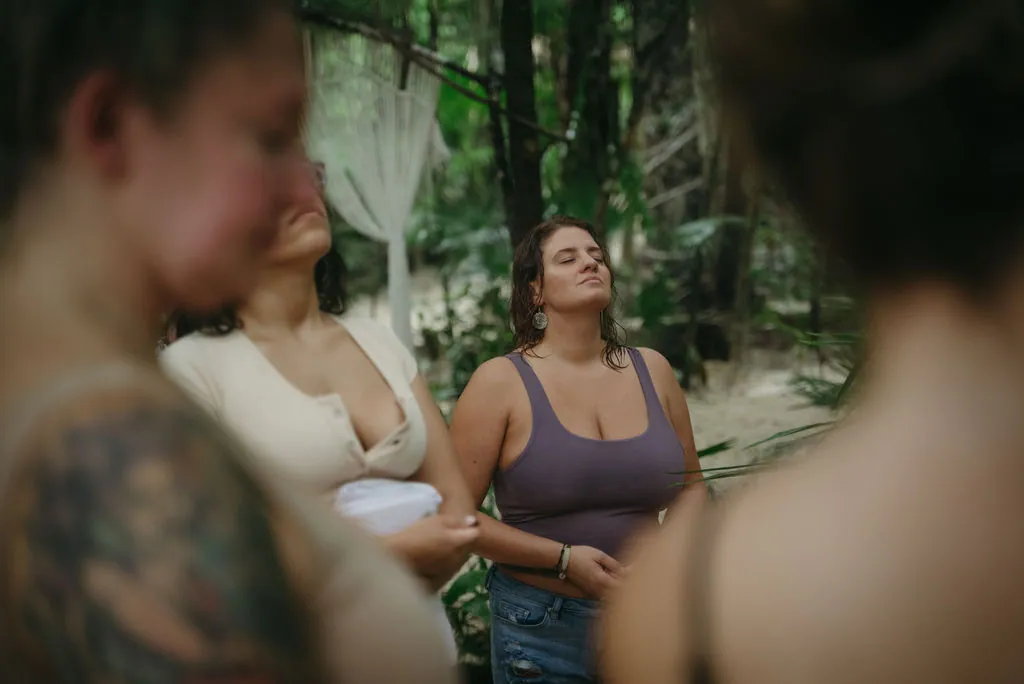
More than ever, companies recognize that performance, creativity, and leadership don't thrive under pressure alone, they flourish when people feel inspired, connected, and aligned with purpose. As stress, burnout, and disconnection reach global levels, forward-thinking organizations are embracing a new strategy: the corporate retreat. Here are the benefits. (See why Lunita.)
What a corporate retreat delivers
Done well, a retreat builds trust and communication, reduces stress and burnout, sparks creativity, realigns teams with shared vision, and strengthens culture. These aren't soft extras, they directly shape performance and retention. In a disconnected world, creating real space for a team to reconnect with purpose is a genuine strategic investment.
Aligning business with heart
The most powerful corporate retreats align outcomes with humanity, held in nature, woven with movement, reflection, and connection, so people return clearer and more committed. Lunita's corporate arm, Team Circle, designs team retreats in two tracks, Raíz for traditional, in-person companies and Archipelago for distributed and remote teams, so the experience fits how your team actually works. Explore hosting at Lunita or book a discovery call.
The one question that sorts the options
Will the team be honest with each other, or only present in the same place? A retreat that produces the first is worth the days; one that produces only the second was a nicer meeting. Mindfulness formats for corporate teams earn their keep when they clear the space for the first, not when they add a class to the agenda.
Sort every proposed benefit by that question. Trust, communication, realignment: each one is a form of honesty. Creativity follows it; it does not precede it.
For the sessions a team actually does across those days, our guide to corporate retreat activities in Mexico says what each one is for.
What to be skeptical of
Benefits promised by the end of the week. We distrust the word transformation, and we watch instead for the smaller thing: a leader who listens through a whole silence, two colleagues who say the true sentence.
Agendas with no unclaimed afternoon. Nature only does its work if the team is allowed to be in it.
For the version where the setting is the method rather than the backdrop, see our corporate nature retreats page.
And venues with a conference room and a view. Here the center is off grid and solar powered at Km 17 of the Ruta de los Cenotes, and the office does not follow the team in because the week is built that way, not because the signal fails.
What three days look like for a team
The first day is arrival and a meal at one table, and the only agenda item is that nobody opens a laptop before dinner. The drive from Cancun airport takes about forty minutes, and the shift starts on the road, as the signal thins and the trees close in.
The second day carries the work: a facilitated session in the glass shala in the morning, an unclaimed afternoon by the cenote-fed pool, and something in the evening that is not a meeting, a temazcal for those who want it or a fire for everyone. The third day is where the honest sentences tend to arrive, once people have slept twice in the same quiet.
How do you measure whether a retreat worked?
Not by the survey on the last morning, which measures the pool. Look at the month after: who speaks in the meeting who did not before, which decision that was stuck gets made, whether the two people who were not talking are talking. Those are the benefits a retreat produces, and they show up late and quietly.
Set the question before the team arrives. A leadership group that names one thing it wants to be true afterwards can check it; one that wants everything checks nothing. Lunita holds at most twenty across eight cabanas and a mini apartment, and the property is exclusive to one team at a time.