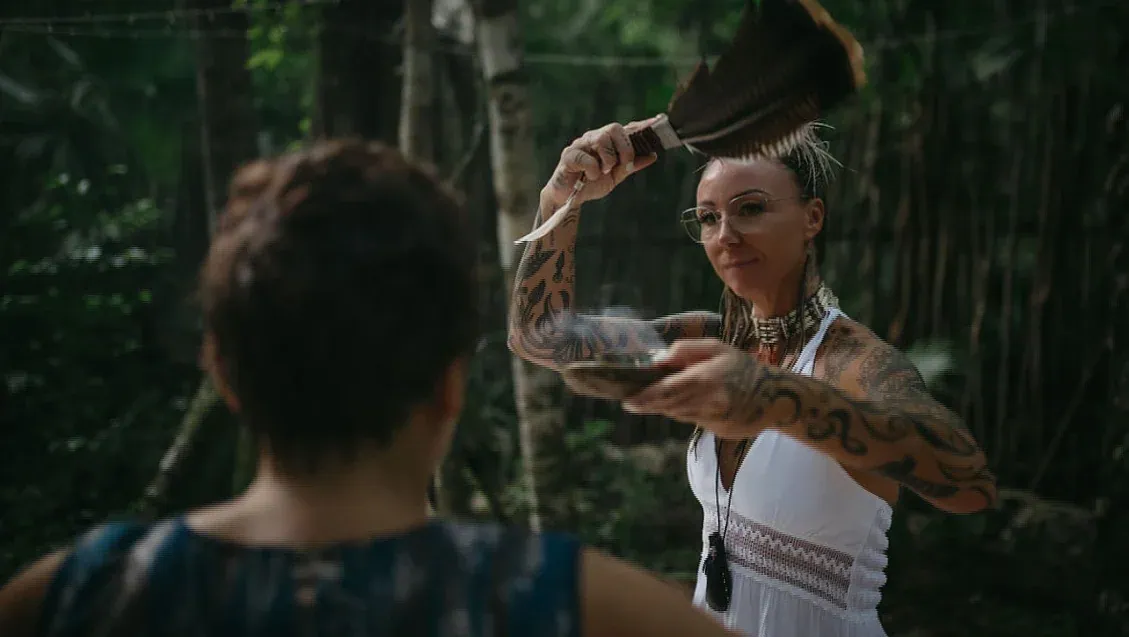
A plant medicine retreat is a structured stay, usually three to seven days, built around ceremonies with traditional medicines like ayahuasca, peyote, bufo, or sacred mushrooms.
It is not a wellness holiday with a ceremony added on the third night. It is not a clinic either. The medicine is the centre of it, and everything else, the food, the silence, the people holding the space, the days on either side, exists to make that work safely.
People arrive at this search from very different places. Some have been reading for two years. Some had a conversation last week that would not leave them alone. This is written for both.
What actually happens on one
Most of a plant medicine retreat is not ceremony.
There is preparation before you arrive, usually a dieta, meaning some weeks off alcohol, stimulants, heavy food, and certain medications. There is an intake conversation, and a good centre will use it to tell some people no.
Then there are the quiet days. Ceremonies are typically held at night and spaced apart, and the hours between them are where most of the work lands. Sharing circles. Long stretches of nothing. Bad sleep, sometimes. Food you did not have to think about.
And then there is after, which almost nobody prepares for properly.
A retreat that gives you four ceremonies in five days is selling volume, not depth. That is worth knowing before you compare two schedules and pick the fuller one.
The medicines
Different medicines do genuinely different things, and the choice matters more than most first timers expect.
Ayahuasca comes from the Amazon, a brew of vine and leaf, held in ceremony through the night. Long, physical, often difficult. People come to it carrying something specific.
Peyote is the Mexican one, a desert cactus held in the Wixárika tradition, in a fire ceremony that runs until dawn. Slower and more communal than ayahuasca. In Mexico it is legally protected for Indigenous traditional use, which is why it is led by Wixárika carriers or not at all.
Bufo, also called 5-MeO-DMT, is the short one. Minutes, not hours. It is also the most intense thing on this list, and the least suited to somebody trying a medicine for the first time.
Sacred mushrooms carry the Mazatec lineage of the Sierra, the tradition María Sabina came from. Gentler than the others and closer to something conversational.
Kambo is not psychoactive at all. It is a frog secretion, applied to the skin, used traditionally as a physical reset. Held honestly, it is a traditional practice, not a medical detox, and anyone describing it as one has told you something about themselves.
Choosing between these is not a menu decision. Any centre worth attending will ask what you are bringing before it tells you what to take.
Where the law sits
This is the part most sites skip, so here it is plainly.
Psilocybin and ayahuasca sit in a tolerated grey area in Mexico. Peyote is specifically protected for Indigenous traditional use. Kambo is not a scheduled substance. None of that is the same as being legal in the way a yoga class is legal, and nobody should tell you otherwise.
Centres operating with integrity work inside traditional and culturally respectful frameworks and are straightforward about where the lines are. This is not legal advice, and anywhere that gives you legal advice in a sales conversation is the wrong place.
What a well held ceremony looks like
This is the thing to actually evaluate, and it has very little to do with photographs.
- Somebody screened you, and meant it. Health conditions, medications, psychiatric history. A centre that takes anyone who pays is not screening.
- The lineage is real and it is named. Ayahuasca comes from the Amazon. Peyote is Wixárika. Mushrooms are Mazatec. Anywhere blending these into one undifferentiated ceremony has left tradition behind.
- The group is small enough to be seen in. Twenty people with two facilitators is a different night from six people with two.
- There is a plan for the hard hours. Ask what happens if someone is struggling at three in the morning. The answer tells you almost everything.
- Integration is offered, not implied. Anyone can say the word.
- Nobody is promising you an outcome. These medicines are not treatments and the honest centres will not pretend they are.
Where in Mexico
Most of this happens along two corridors: the Riviera Maya on the Caribbean side, and the Pacific coast around Oaxaca and Puerto Vallarta.
On the Caribbean side, Tulum is the name everybody knows, and it carries the crowds and the prices that come with the name. The quieter option is the jungle north of it, inland from Puerto Morelos, where the Ruta de los Cenotes runs into real forest and the nearest road noise is a long way off.
Lunita is on that road, at kilometre 17, about forty minutes from Cancún airport and roughly an hour and a half north of Tulum. Five thousand square metres built inside more than eighty thousand of preserved jungle. Eight cabanas and a small apartment, twenty guests at most. Solar powered, cenote-fed water, and a private cenote about ten minutes away.
Integration, which is the part that decides everything
The ceremony is not the retreat. What you do with it is.
The window afterwards, roughly the first month, is when whatever opened is most available and most fragile. Sharing circles, one to one conversation, journaling, movement, and time in nature all belong in that window. So does a plan for the Tuesday three weeks later when it has gone quiet again.
A centre that has nothing to say about the month after your flight home has thought about half the problem.
How to choose one
If you take one thing from this page, take these questions. Ask them of any centre, including this one.
- Who holds the ceremony, what lineage do they carry, and how long have they done it?
- What does your screening actually ask, and who have you turned away?
- How many people are in the room, and how many facilitators?
- What happens if I have a hard night?
- What does integration mean here, specifically, after I leave?
- What is included in the price, and what is not?
A centre that answers all six without hesitating is a different proposition from one that answers with photographs of the pool.
Our ceremonies page lays out each medicine we work with and how each ceremony is held.
And if you would rather build the whole journey around you, that is what a personal retreat is for.