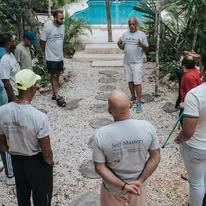
Hosting a retreat in Mexico is not just about choosing a beautiful location. It's about creating the right container for transformation, safety, connection, and flow, a retreat experience that truly works. Here's a practical guide for facilitators. (See the complete planning guide.)
Build the container, not just the trip
A retreat that works rests on thoughtful program design, reliable logistics, emotional safety, good pacing, and integration support, all held together so participants feel cared for. The location sets the stage, but the container is what lets real transformation happen.
Logistics include the terms nobody enjoys reading, and the questions to ask about a cancellation policy are worth settling before you sign.
Where first-time leaders get stuck
The teaching is rarely the hard part. The walls are under-pricing out of fear, over-promising to fill seats, choosing a venue that leaves you to run everything yourself, and trying to be teacher, host, cook, and operations manager at once. Price the retreat from the bottom up, then check it against the top down: if the two numbers are far apart, the fix is usually fewer seats and a shorter retreat, not a lower price. Eight to twelve guests is a healthy circle, and six to twelve months of lead time for a first retreat is normal, because selling the seats almost always takes longer than a first-time leader expects.
Mind the invisible architecture
The most overlooked part is the unseen: safety, pacing, transitions, and the operational reliability that lets people feel held. Get that right, ideally with a venue that holds your work, and the rest flows. Explore hosting at Lunita or book a discovery call.
What the venue provides, item by item
At Lunita, hosting means the property is yours for the dates. Eight cabanas and a mini apartment for at most twenty guests. The glass shala for practice. The Crystal Shala for ceremony and sound. A cenote-fed pool, and a private cenote about ten minutes away.
Meals are cooked on site by the kitchen team, and the on-site manager has lived on the land since it was built. Power is solar, water comes from an underground cenote, and the jungle around the 5,000 built square meters is more than 80,000 square meters of preserved forest.
Ceremonies, when your program includes them, are held by their own carriers, in their own lineages, and are never required of a guest. Ayahuasca is guided only by Edgar, a Zapotec facilitator with more than twenty years of practice, while temazcal, fire, and meditation are held by Esperanza and Edgar together. What a venue provides beyond that list is a question to ask, not to assume.
The questions to ask before you book
What exactly is included at the quoted price, and what is billed separately, item by item. Who is on site during the retreat, by name. Who cooks, and how dietary needs are handled.
What the deposit covers, when it is due, and what each side can cancel. Whether another group can be on the property at the same time. How guests get from the airport and who arranges it.
And the one most leaders forget: what happens when a guest needs to leave early, or needs a doctor. A venue that answers all of these in writing is a partner. One that answers half is a conversation you still need to have.
For the venue-selection side, start with how to choose a retreat venue in Mexico, and for the operational layer, see retreat production services that hold the whole.