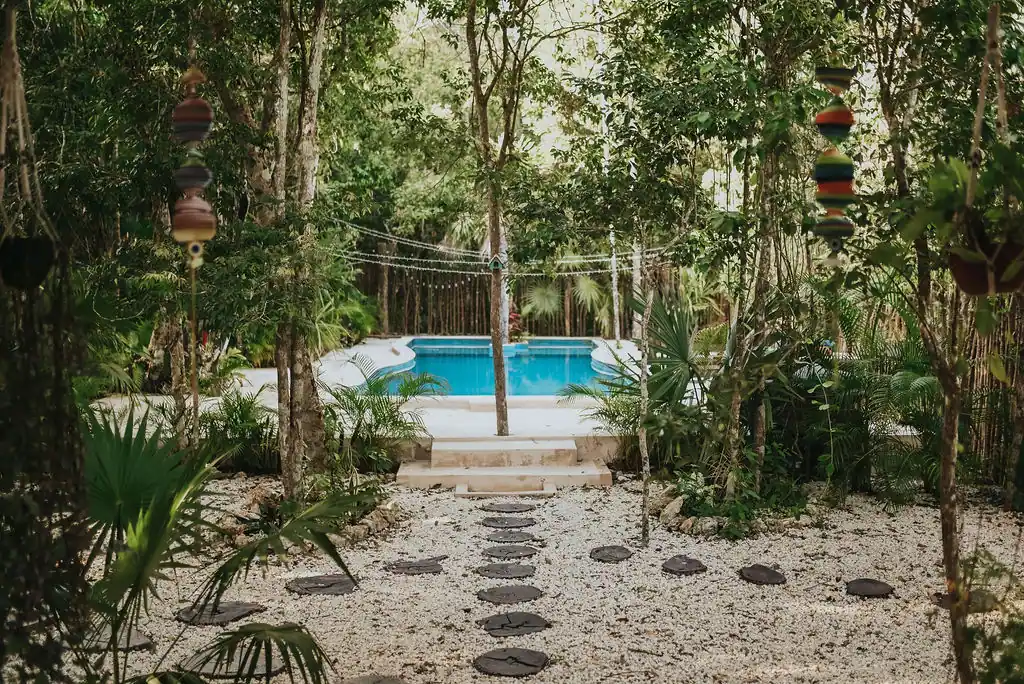
Close your eyes and imagine warm sun filtering through palm leaves, tropical birdsong in the distance, and your body flowing through sun salutations on a jungle platform. That's a tropical yoga retreat is a journey of connection, balance and deep restoration rather than a vacation. At Lunita in the Riviera Maya, you'll find the blend of serenity, warmth, and soul-nourishing energy a tropical setting offers. Here's why climate and setting matter. (For the full picture, see the jungle yoga retreat.)
What a tropical setting changes
When you practice in a tropical environment, you don't just leave your routine behind, you step into a natural rhythm that supports healing from the inside out. Warmth loosens the body and deepens the breath; the sensory richness of the jungle pulls attention out of the head and into the present; and the slower, light-measured pace of the day lets the nervous system genuinely rest.
Paradise with depth
A tropical yoga retreat is more than a pretty backdrop. At Lunita the warmth pairs with substance, temazcal, cacao, cenote time, and supported integration, so paradise becomes a container for real restoration rather than just a getaway.
What the days look like
Practice comes early, before the heat, in the octagonal glass shala with canopy on every side. Breakfast follows, and nobody hurries it.
The middle of the day belongs to water. The cenote-fed pool is steps from the cabanas, and a private cenote sits about ten minutes away. Afternoons are for rest, a session if you want one, or nothing.
A second practice or a stillness session closes the day. Nights are dark and loud with the jungle, and most guests sleep longer than they do at home. Eight cabanas and a mini apartment hold at most twenty guests, so a class is never a crowd.
How to choose one, honestly
Tropical retreats split into two kinds. Beach side means a hotel with a yoga slot: class on the sand, then the resort. Jungle side means a center built for practice, where the setting does part of the work. Both are real; they produce different weeks.
Ask who teaches and how many students share the shala. Ask what the days hold besides class. A retreat that lists twelve activities a day is a timetable, not a rest. If you are the one leading the group rather than joining it, the same questions carry into choosing a yoga retreat for your group.
Lunita is the jungle side, at Km 17 of the Ruta de los Cenotes outside Puerto Morelos, forty minutes from Cancun airport and about twenty from the sea.
What to pack for a tropical yoga retreat
Light, breathable layers for practice, because the shala is warm even at dawn. One warm layer for the nights after rain. A swimsuit that will be worn daily, a rash guard if your skin burns, and sandals or shoes that can get muddy on the paths.
Mats and props are in the shala, so leave yours at home unless you cannot practice without it. Bring reef-safe sunscreen, a hat, and insect repellent. The wifi works across the property, so the phone can come; what you do with it is up to you.
When is the best season for a tropical yoga retreat in Mexico?
The dry months from November to April are the most comfortable: warm days, cooler nights, little rain, and a shala that is pleasant at any hour. It is also the busy season, so retreats fill earlier.
The green season that follows is hotter and wetter. The jungle is at its loudest, afternoon rain is common, and mornings are still fine for practice. Some guests prefer it for the quiet and the price. Either way the class happens; rain in the canopy simply becomes part of the sound.