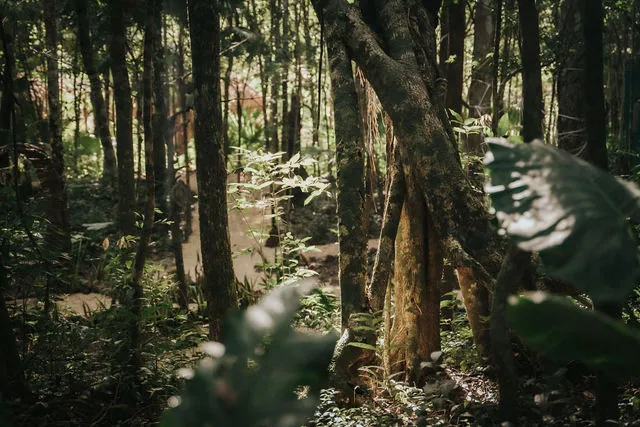
There's a moment that happens for many people after the first night in the jungle, the phone is quiet, the body finally exhales, and you begin to notice what your mind has been speaking over for months: the tight jaw, the held breath, the fatigue sleep hasn't touched. That's often where real healing begins, not with a breakthrough, but with listening. A somatic healing retreat in the jungle offers a safe, natural container where the body becomes the place healing is guided and allowed to unfold at its own pace.
Why the body changes the healing process
Somatic healing works through the body, not just through insight, you can understand your patterns intellectually and still feel stuck in them, because stress, grief, and survival responses live below language. They show up as hypervigilance, numbness, chronic tension, or the inability to rest even when life looks stable. The goal isn't to force catharsis but to build enough safety for the nervous system to soften, through breathwork, mindful movement, bodywork, sound, and guided awareness. Environment matters: the body responds to context before instruction.
What makes a jungle somatic retreat different
The jungle doesn't heal you by itself, but it changes the conditions. Nature immersion reduces the constant alertness many people carry; instead of traffic and screens there's birdsong, filtered light, and the living rhythm of the land, inviting the body out of defense. A strong somatic retreat also carries spacious structure rather than over-scheduling: movement in the morning, nourishing meals, body-based sessions, rest, ceremony, and time in meditation. The point isn't to fill every hour, it's enough support that the body no longer has to guard.
What healing can look like in practice
People often arrive believing they need to fix themselves; what they usually need is a place to stop performing wellness and tell the truth through the body. That may emerge in breathwork as an armored chest opens, in bodywork as old tension unwinds, or in the temazcal where heat and shared presence invite surrender. Outcomes vary, a profound shift for some, better sleep and clearer boundaries for others. Both matter. And deep healing usually continues after you return home.
For retreat leaders, setting shapes the work
If you guide yoga, trauma-informed workshops, or nervous-system education, you know participant transformation depends on more than your curriculum, the venue becomes part of the facilitation. A center with private cabanas, ceremonial space, a yoga shala, and strong onsite support lets leaders focus on guests instead of logistics. Still, discernment matters: look for a venue that understands pace, privacy, trauma awareness, and cultural respect.