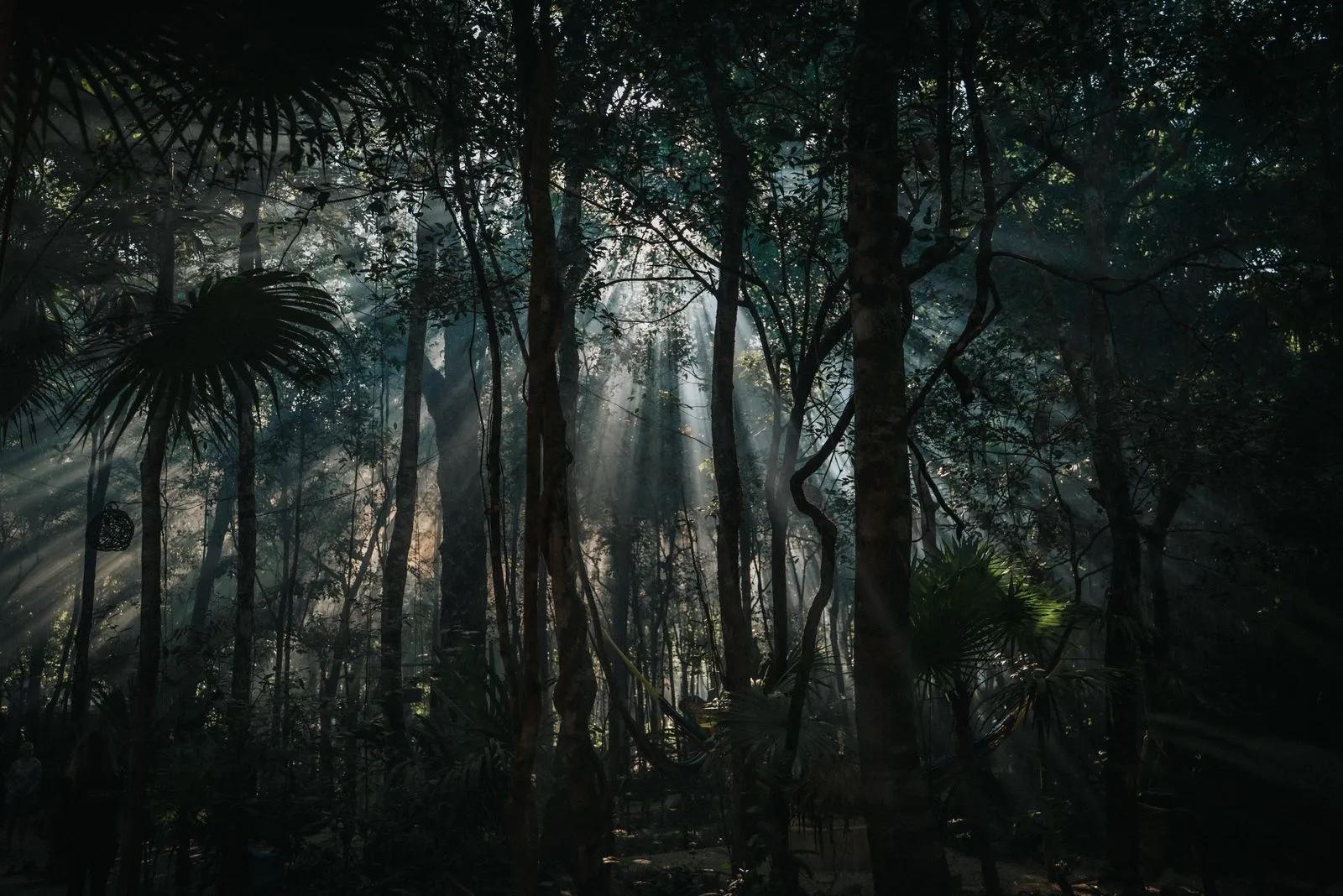
In a time when the world feels increasingly disconnected, the need for sacred, conscious spaces has never been more present. For retreat leaders, the setting isn't just a backdrop, it's integral to the transformation. The Sanctuary Eco Retreat isn't a concept or trend; it's a living reality at Lunita Jungle Retreat in the Riviera Maya. Here's what that means for your next retreat. (Explore hosting at Lunita.)
An eco-conscious, soul-rooted sanctuary
Lunita is an eco-conscious sanctuary about 40 minutes from Cancún International Airport, a place where Earth, Spirit, and human intention converge. Far beyond conventional venues, it embodies sustainability, inclusivity, and healing in how it's built and held. For a retreat rooted in nature, that integrity is felt by everyone who arrives.
Why it serves transformational work
What a sanctuary like this can hold, retreat by retreat, is in our guide to wellness retreats in Mexico.
When the land is genuinely respected, guests sense it, and the setting itself becomes part of the medicine, regulating the nervous system and deepening the work. Leaders host with private cabanas, a yoga shala, temazcal, a private cenote about 10 minutes away, and strong support, all in an eco-rooted container. Book a discovery call to plan your retreat.
What the eco choices mean for a hosted group
Power is solar, stored in five batteries on site, and it runs the whole property, lights, fans, the kitchen and the wifi. What it does not run is a generator, so there is no hum under the jungle at night and no diesel on the air in the morning. A leader who has held circles next to a generator will know what that silence is worth.
Water comes from the cenote beneath the land, and the sanitation is a biodigester that feeds the soil. Practically, this means a group of twenty can stay a week and leave the land as it found it, which is a claim that can be checked by walking the property.
The trees are the third thing. More than five thousand were planted and none were cut for the build, so the cabanas sit under a canopy rather than in a clearing, and the shade does the cooling.
How do you hold a retreat lightly on this land?
The team asks for a few things and does the rest. Guests are asked not to bring single use plastic, to use the soaps provided in the bathrooms, since the water returns to the ground, and to keep to the paths after dark.
The kitchen buys from the region and cooks to the group's menu without waste, and dietary lists go to chef Umberto before arrival. Ceremony materials, copal, herbs and fire, are local by nature.
A tree planting is offered to every hosted retreat, and most leaders make it the closing ritual. It is small, it takes twenty minutes, and it is the only thing a group leaves behind. Leaders who return the next season walk their guests past the tree from the last one, and that is usually the moment the word sanctuary stops sounding like a brochure.