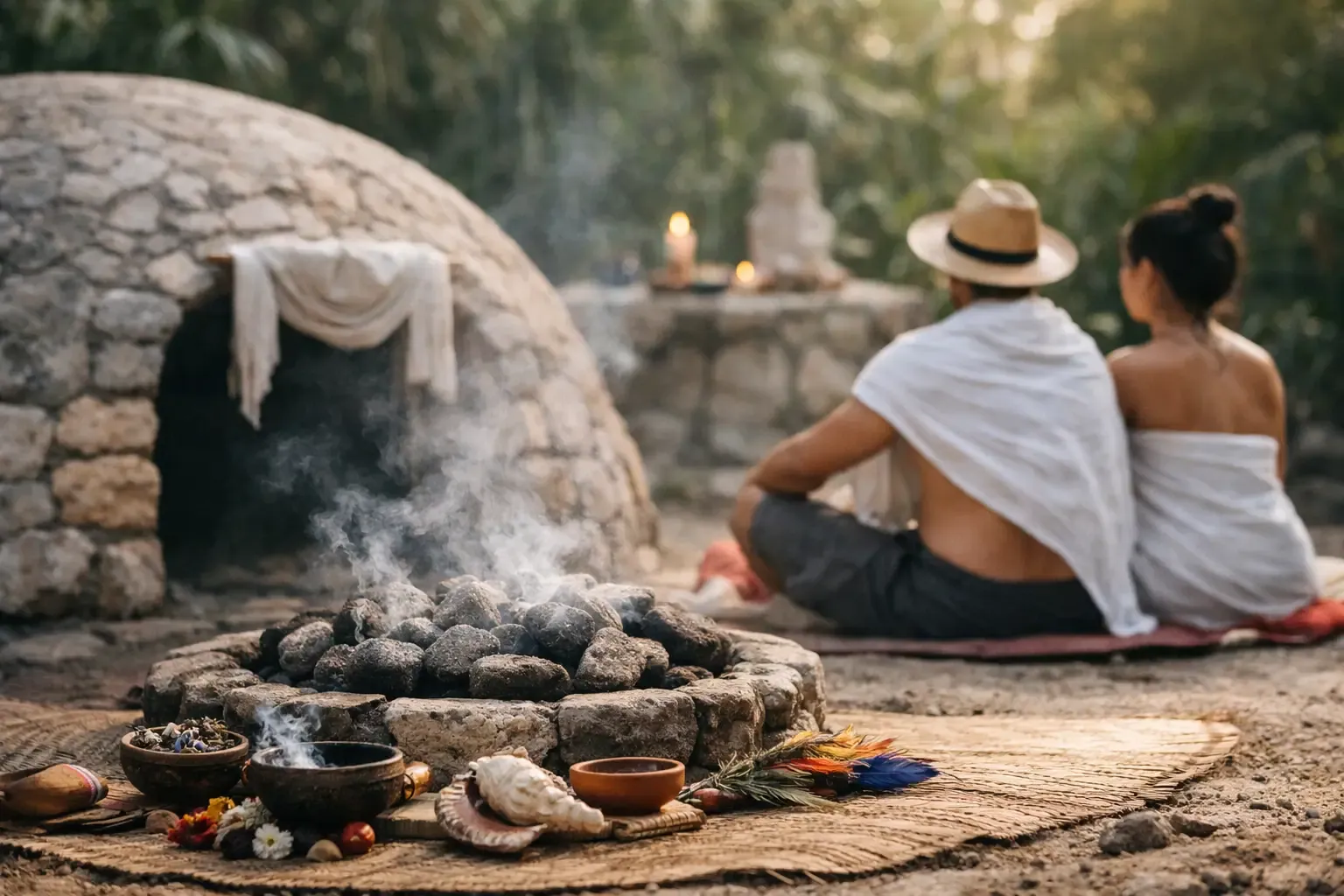
The moment you stand outside a temazcal in Mexico, you can feel this isn't a spa treatment, the air is quieter, and the stones, fire, and prayers ask for one simple thing: respect. Good etiquette isn't about performing spirituality; it's about entering humbly, listening carefully, and honoring a practice that carries cultural and sacred meaning. This guide covers what to do before, during, and after a ceremony, what to wear, how to behave, and the cultural care that matters most. (New to the practice? Start with what a temazcal ceremony is.)
First, the word itself: temazcal is pronounced teh-mahs-KAHL, with the stress on the last syllable, from the Nahuatl temazcalli, house of heat.
Why etiquette matters
A temazcal is guided within a specific ceremonial container, and each container has its own rhythm and boundaries. Etiquette protects that container, it helps the group feel safe, supports the person leading, and lets you receive the ceremony more fully, because when you're not worrying about doing something wrong, you can soften into presence. There's a practical side too: heat, darkness, steam, and emotional openness mean clear behavior matters for comfort and safety as much as for reverence.
Before you attend
The most respectful thing you can do starts beforehand: ask questions. Find out whether the ceremony is rooted in a specific tradition, how physically intense it will be, what to wear, and whether to bring water or a towel. If you have heart conditions, respiratory concerns, are pregnant, feel claustrophobic, or have any condition affected by intense heat, speak up in advance, silence isn't bravery here (our temazcal safety guide covers the health side). Avoid alcohol, recreational substances, and heavy meals; most facilitators recommend arriving hydrated and eating lightly a few hours earlier.
What to wear and bring
Simple, modest, comfortable clothing is best, a swimsuit or lightweight cotton in some lodges, more coverage in others; choose what you can sweat in comfortably and that respects the tone of the space. Leave strong perfumes behind (scent amplifies in a closed lodge) and remove jewelry, especially metal, which heats up. Bring only what's been requested, typically a towel, water for afterward, and a change of clothes. Phones stay away unless you've been explicitly told otherwise.
During the ceremony
Arrive fully, on time, grounded, not rushing from the last activity; ceremonial spaces respond to the energy people bring in. Greet the facilitator warmly and listen closely to any opening explanation, where most etiquette questions get answered. Enter low and slowly (the bow as you enter can be an act of humility), settle where you're guided, and avoid stepping over others. Then let the leader set the pace: don't talk over prayers, crack jokes to ease discomfort, or whisper side conversations. If sharing is invited, speak simply and honestly; if it isn't, stay with yourself. When the heat intensifies after water hits the stones, stay calm and alert the facilitator the way they've instructed, there's no shame in needing support, only in disrupting the group.
Photography and cultural respect
This part is simple: don't photograph or film a ceremony unless clearly invited, and be discerning even then, sacred spaces aren't content first. The same goes for language afterward: you can be deeply moved without treating the ceremony as an exotic thrill or claiming expertise in a tradition you've briefly encountered. Cultural respect also means noticing who's guiding the ceremony and whether the setting feels rooted and accountable, not every temazcal offered to tourists carries the same depth, so discernment is part of respectful participation. Photography has its place at Lunita, just not inside the dome, and our photography and tai chi incubator is where that craft gets the attention ceremony gets.
What not to do, and what to do after
A few behaviors always land poorly: arriving intoxicated, interrupting the leader once things are underway, touching the stones uninvited, or dramatizing the heat in a way that pulls focus. Don't force yourself past your limit to prove something. Afterward, the ceremony often feels tender and open, give yourself time, follow any guidance on hydration, rest, and food, and thank the leader and the space sincerely; presence is enough. In a heart-led setting like Lunita, the full range of after-feelings, clear and energized, or raw and quiet, is understood as part of the process. When you're ready, explore a personal retreat or read about temazcal in the Riviera Maya.
For the ceremony itself, round by round, see our temazcal guide.