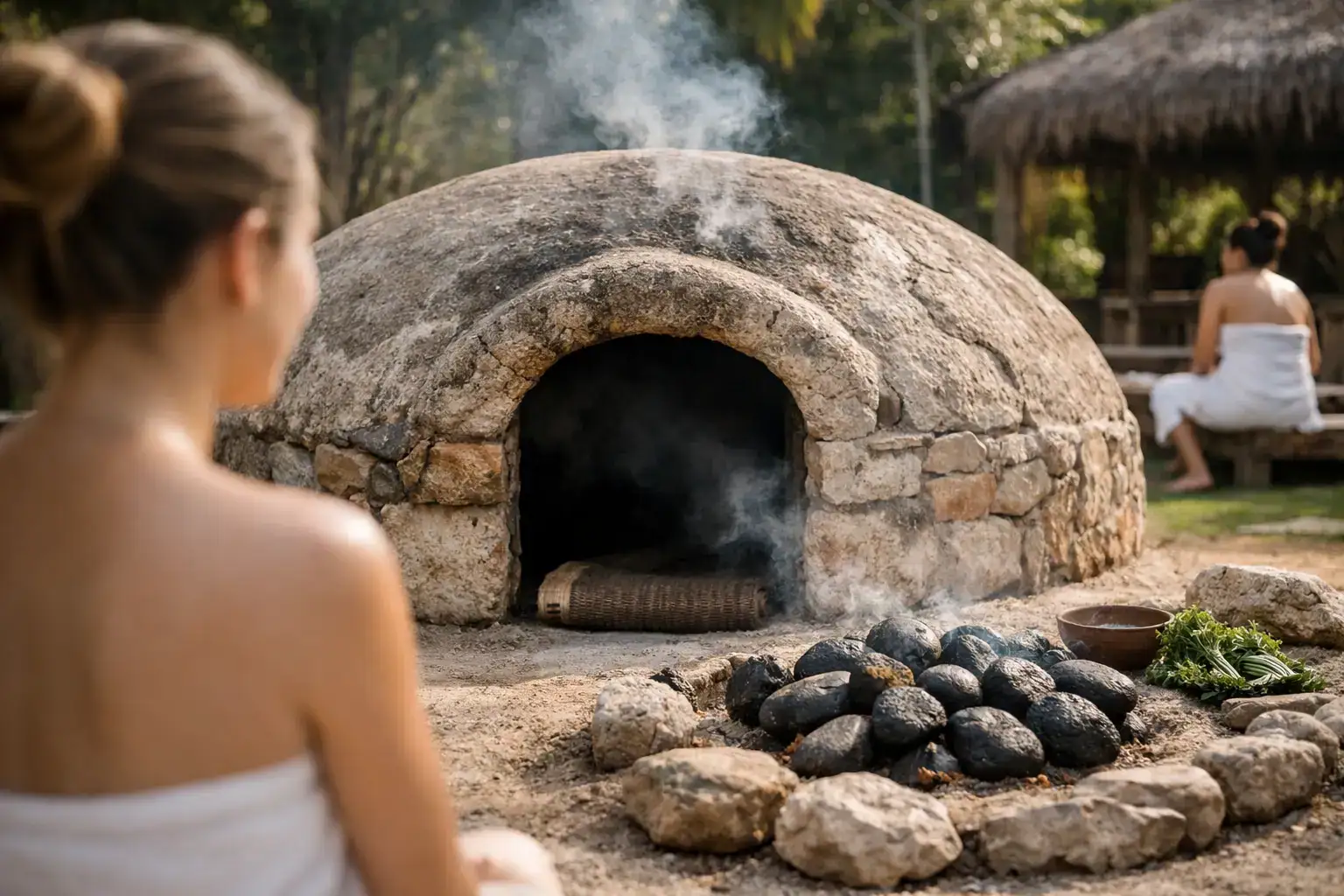
Is a Temazcal Safe for Beginners?
- Lorenza Rossi
- 6 hours ago
- 6 min read
You hear the door close, the stones begin to radiate heat, and the sounds outside soften into the background. For many first-time guests, the question arrives before the ceremony does: is a temazcal safe for beginners? The honest answer is yes, often it can be - when the space is guided with care, the pace is respectful, and your body is treated as a partner rather than something to push past.
A temazcal is not just a sweat lodge experience in the casual sense. It is a traditional ceremony with deep Indigenous roots in Mesoamerica, often held for purification, prayer, emotional release, and reconnection. That means safety is not only about temperature. It is also about the integrity of the guide, the condition of the structure, the rhythm of the ceremony, and whether participants are invited to listen to their own limits.
Is a temazcal safe for beginners when it is guided well?
For most healthy adults, a beginner-friendly temazcal can be a safe and deeply meaningful experience. The key phrase is beginner-friendly. Not every ceremony is designed the same way. Some are intense, long, and physically demanding. Others are held with gentleness, spacious pacing, and clear support for first-timers.
A well-held temazcal does not treat endurance as a badge of honor. It welcomes communication. It explains what to expect before the ceremony begins. It offers options if someone needs a slower approach, a position closer to the door, or the freedom to step out when needed. In a nurturing setting, safety comes from preparation and presence as much as from tradition itself.
This matters because beginners often assume they must tolerate discomfort in silence. In truth, a respectful guide wants to know how you are doing. The ceremony may ask for openness, but it should never require you to override your body’s warning signs.
What makes a temazcal feel intense for first-timers
Heat is the most obvious factor, but it is not the only one. A temazcal combines warmth, darkness, steam, close quarters, and ceremonial energy. For some people, that feels womb-like and grounding. For others, especially on a first visit, it can feel vulnerable or unfamiliar.
The body may respond to the heat with heavy sweating, a racing heartbeat, lightheadedness, or waves of emotion. None of those responses automatically mean something is wrong. They do mean the experience is powerful and should be approached with respect.
There is also the inner element. Ceremony can bring quiet feelings to the surface. Grief, gratitude, restlessness, fear, and relief may all move through in the same hour. For beginners, emotional intensity can be more surprising than physical heat. A skilled space holder understands both dimensions and knows how to support them.
Who should be cautious before joining a temazcal
Even if the answer to is a temazcal safe for beginners is often yes, there are real cases where caution matters. If you are pregnant, have cardiovascular concerns, uncontrolled high or low blood pressure, a seizure disorder, respiratory conditions that worsen in heat or steam, or any medical issue affected by intense heat, it is wise to speak with a qualified healthcare professional first.
The same goes for anyone taking medications that affect hydration, blood pressure, or temperature regulation. If you have a history of panic attacks, claustrophobia, or trauma responses in enclosed spaces, a temazcal may still be possible, but the support and setup matter greatly. You deserve a conversation beforehand, not a one-size-fits-all invitation.
Alcohol, recreational drugs, and severe dehydration are clear reasons to skip a ceremony. Fasting too hard beforehand can also make the experience harder than it needs to be. A temazcal is not safer because it is spiritual. It is safer when spirit and practical care are held together.
Signs of a safe temazcal experience for beginners
If you are choosing a retreat center, facilitator, or ceremonial setting, look for warmth in both senses of the word. The environment should feel reverent, but it should also feel organized. You want a guide who honors tradition and can also answer practical questions clearly.
A safer beginner experience usually includes a conversation before entering, clear hydration guidance, support around what to wear and bring, and consent-based communication throughout the process. It should be easy to ask questions without feeling embarrassed. It should be clear that stepping out is allowed if needed.
The physical setup matters too. The structure should be maintained properly. The heat should be managed intentionally, not dramatically. The group size should allow people enough space to sit comfortably and move if needed. If the energy of the invitation feels performative, extreme, or shaming around limits, that is not a small red flag.
At Lunita Jungle Retreat Center, the temazcal experience is held within a larger container of care, where nature, ceremony, and guest support are designed to work together. That kind of environment can make all the difference for someone entering for the first time.
How to prepare if this is your first temazcal
Preparation shapes the experience more than many people realize. Come hydrated, but do not overdo it right before the ceremony. Eat lightly a few hours beforehand so your body has energy without feeling heavy. Choose simple, comfortable clothing according to the guidance you are given, and leave yourself enough unhurried time to arrive grounded.
It also helps to prepare your expectations. A first temazcal does not need to be dramatic to be meaningful. Some people have tears. Some have visions. Some simply sweat, breathe, and feel calmer afterward. Measuring your ceremony against someone else’s story can pull you out of your own process.
A gentle intention is often enough. You might enter with a prayer for clarity, release, rest, forgiveness, or gratitude. The point is not to manufacture a breakthrough. It is to meet the moment honestly.
During the ceremony, listen to your body
Beginners are often told to surrender, and there is truth in that. But surrender is not the same as ignoring your limits. In a safe temazcal, listening inward is part of the ceremony.
If you feel dizzy, numb, panicked, or unable to regulate your breathing, say something. If the heat feels manageable but strong, grounding through slower breaths can help. If emotions rise, let them move without assuming they need to become a performance. Sometimes the deepest work is quiet.
There can also be different rounds within a ceremony, with moments when more heat or steam is added. That means your experience may change from one phase to the next. You do not need to decide in advance that you will stay for everything. You only need to stay present to what is true in your body.
After the temazcal: where safety continues
The ceremony does not end the second you step outside. Integration is part of safety too. After intense heat, your body may need water, rest, fresh air, and stillness. Give yourself time before jumping into conversation, phone use, or activity.
Emotionally, you may feel clear and energized, or tender and inward. Both can be normal. Some people want solitude. Others want gentle community. A thoughtful retreat setting allows space for both.
This is one reason temazcal can be so supportive in a healing environment. When the ceremony is woven into a larger rhythm of nourishment, rest, and care, the body does not have to process everything alone.
So, is a temazcal safe for beginners?
Yes, for many people it is - but not because it is automatically safe in every setting. It becomes safer when the ceremony is led by experienced hands, when your health history is respected, and when you are given full permission to honor your own pace.
For beginners, the best temazcal is rarely the most extreme one. It is the one that helps you feel held by the space, informed about the process, and connected to your own wisdom. Heat can cleanse, prayer can soften, and community can support, but none of that requires forcing yourself beyond what is right for you.
If you are feeling called to your first temazcal, let curiosity lead, not pressure. Ask questions. Share your concerns. Choose a setting where reverence and responsibility live side by side. When that foundation is in place, a first temazcal can be less about proving something and more about remembering that healing often begins where safety is felt.


Comments