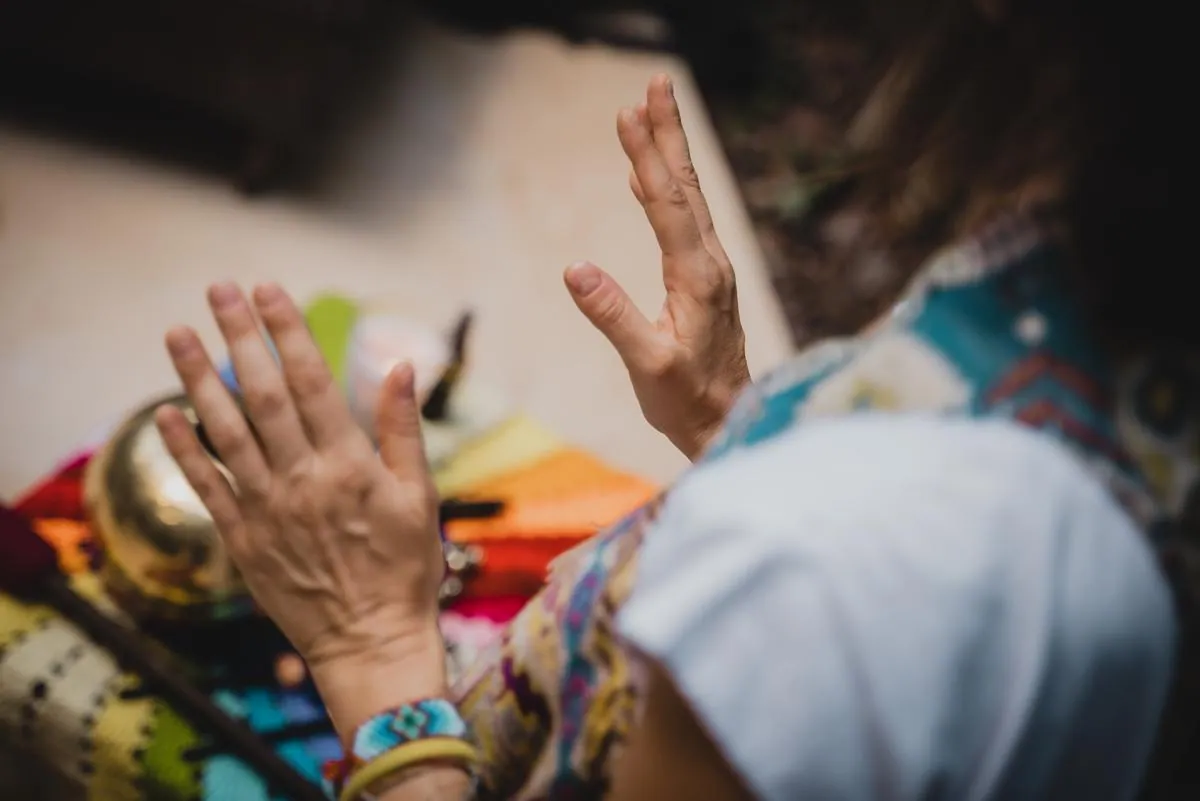
A Shakti healing ceremony is a sacred journey into feminine essence and empowerment. Shakti, the divine feminine energy of creation, power, and life force in Hindu and Tantric thought, is honored here through movement, breath, sound, and intention. Here's what it offers. (See the Shiva ceremony for the masculine counterpart.)
What is shakti healing?
The ceremony invites participants to reconnect with vitality, creativity, and inner power, the living feminine energy that daily life can dull. Through embodiment, breath, and sound, it offers a felt sense of aliveness and empowerment. It's a non-explicit, energy-focused experience, held in the safety of Lunita's jungle.
Held with respect
This ceremony is inspired by the concept of Shakti, offered in a contemporary form rather than claimed as an ancient initiatory lineage, we name its roots with reverence. It pairs beautifully with energy work and the sacred feminine path. Book a discovery call to learn more.
More on coming here: our jungle retreats.
What happens before and after the Shakti ceremony
You arrive at the shala with nothing in your hands. Mats and cushions are set in a circle, the facilitator explains what will happen in plain words, and asks whether anyone has a body or a history that needs a lighter touch. That question is not a formality; the ceremony bends to the answer.
The ceremony itself moves through breath, sound and movement, and closes in stillness. There is no partner work and no touch beyond a hand on your own heart. Afterward the group rests, and most people go to the cenote-fed pool or to the cabana rather than back into conversation.
The evening that follows is deliberately empty. Dinner is cooked on site, and the night is dark and loud with the jungle. What moved in the ceremony tends to keep moving for a day, so the day after is kept light on purpose.
Who a Shakti ceremony suits
It suits people who feel flat: creative work that has gone gray, a body that has been managed rather than lived in, a voice that has gone quiet at work or at home. Shakti is the word this tradition uses for the energy underneath all of that, and the ceremony is a way of finding out whether it is still there. It always is.
It suits a women's group especially well, and it sits naturally inside a sacred feminine retreat or beside the Temple of Remembrance. It also suits a couple who want to be in the same room while each does their own inner work, and men who came for the Shiva ceremony and stayed for this one.
It does not suit someone who wants to watch. The circle is small, the property holds at most twenty guests, and a person who is only observing changes the room for everyone else. Sitting quietly is welcome; sitting apart is not the same thing.
How the ceremony fits into a stay at Lunita
A single ceremony can be booked inside a personal retreat, scheduled around the other sessions you choose. Most people place it in the middle of the week rather than at the start, once the body has had two or three days of morning practice, rest and sleep, and is ready to be moved.
Retreat leaders hosting a group at Lunita can include it as one evening in a longer program, held by a facilitator who carries it. It pairs with cacao before and sound after. The full service menu holds fifty-eight experiences, and this is one of the ones guests ask about most after they have left.