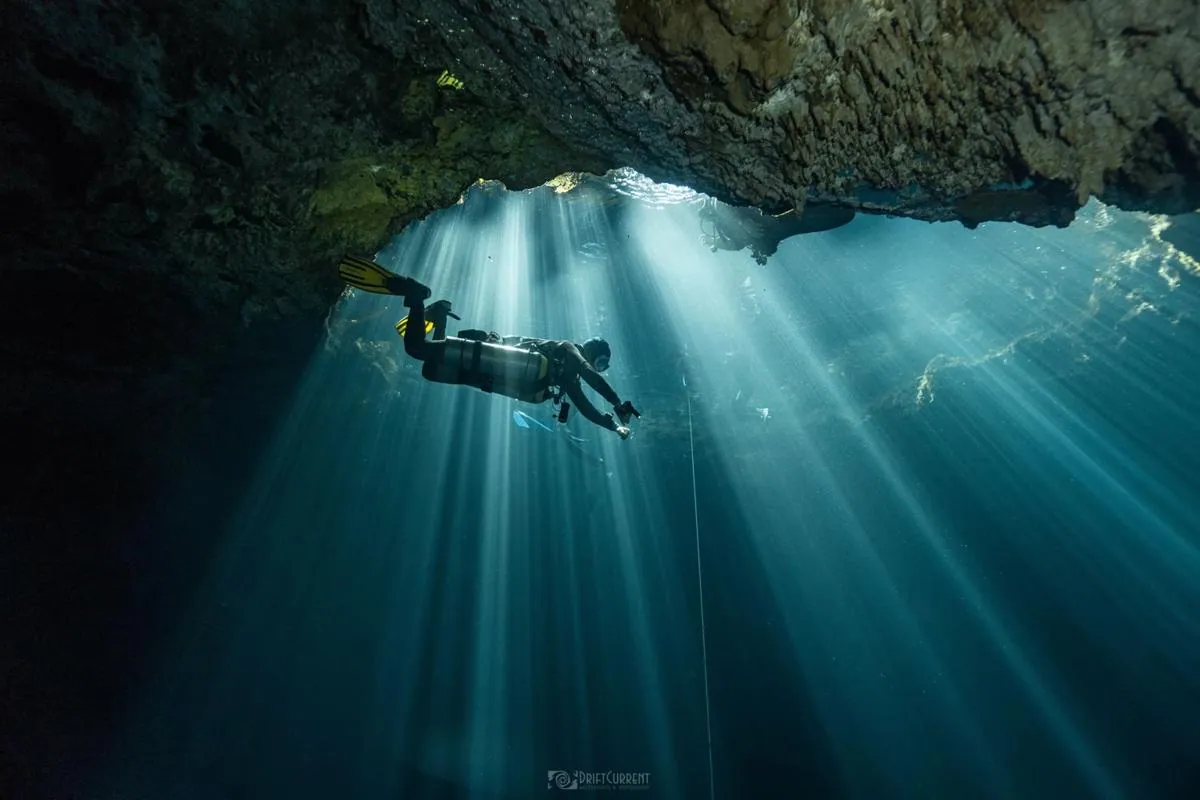
Diving adventures in Puerto Morelos open two extraordinary underwater realms minutes from Lunita: the brilliant Mesoamerican Reef offshore, and, more mystical still, scuba diving in a cenote, the Yucatán's sacred underground freshwater system, where cathedral-like limestone caverns, stalactites, haloclines, and shafts of sunlight create an experience unlike anywhere on Earth. Here's how it works and what each realm offers. (A vivid complement to a retreat's excursions.)
Two aquatic worlds
Reef diving in the Puerto Morelos Reef National Park (part of the Mesoamerican Barrier Reef) sits only 500 to 1,500 m offshore, home to colorful corals, parrotfish, barracuda, sea turtles, and eagle rays. Cenote diving takes you into freshwater caves connected to underground rivers, with crystal-clear water, dramatic limestone formations, and a tranquil silence.
How it works
Ocean dives: short boat rides to reef sites at 10 to 30 m, suited to beginners and advanced divers. Cenote dives: freshwater dives in cavern (overhead) environments where sunlight beams and haloclines create a dreamlike atmosphere, these require open-water certification and a local guide. Throughout, licensed instructors provide both safety and insight into the marine and geological ecosystems.
Why it works
Dual ecosystems within minutes; biodiversity and geology (one of the world's richest reefs alongside ancient cenote formations); and a spiritual dimension, the cenotes' place in Mayan cosmology adding depth to every descent. It's a thrilling counterpoint to the stillness of a retreat, best scheduled on a non-ceremony day so you arrive rested and clear.