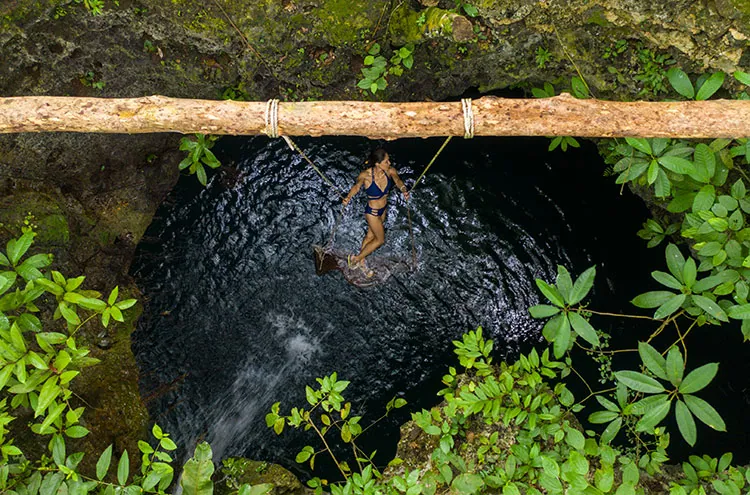
Cenote exploration retreats at Lunita invite you into the pristine waters of ancient sinkholes where every drop holds centuries of history and healing. Set along La Ruta de los Cenotes with exclusive access to a private cenote, Lunita blends meditation, wellness, and Mayan tradition. This guide covers what cenotes are, how they formed, and their spiritual significance. (For the ceremonial side, see the private cenote experience.)
What cenotes are
Cenotes are natural sinkholes formed by the collapse of limestone caves, revealing the underground rivers that run beneath the Yucatán Peninsula, there are no surface rivers here, so for ancient civilizations these were lifelines.
How cenotes formed
Millions of years ago the Yucatán lay beneath an ancient ocean, leaving behind porous limestone of fossilized marine organisms. Around 66 million years ago, the Chicxulub meteorite struck the northern peninsula, an impact that reshaped the planet's climate, contributed to the dinosaurs' extinction, and fractured the limestone bedrock. Over millions of years, rainfall dissolved that rock into caverns and passageways; as their ceilings collapsed, they exposed the crystal-clear pools we call cenotes.
Types of cenotes
Open cenotes resemble natural lakes; semi-open cenotes are partially covered by rock, blending light and shadow; and underground cenotes are hidden in caves, ideal for meditation and ritual.
The spiritual and cultural significance
For the Maya, cenotes were sacred wells of life and portals to Xibalba, central to offerings, purification, and communication with the gods. They remain powerful places of reflection, which is why a cenote sits so naturally within a personal retreat or the integration arc, and why guests find them as moving as they are beautiful.
Cenote visits, private and guided, are listed with everything else bookable on our service menu.
Water holds the body differently when it is warm and still, which is what a watsu or janzu session by the pool is for.
See the land itself: the spaces at Lunita.
What a cenote day looks like on a retreat
The visit sits in the middle of the day, after a morning practice and before the heat peaks. The private cenote is about ten minutes from Lunita by car. It is off the property and, unlike the center, it genuinely has no signal, which is part of why a visit feels like leaving.
A guide walks the group down, explains the water and the light, and stays for the whole visit. The first minutes are usually loud, then the cenote does what cenotes do and the group goes quiet. Some swim, some sit on the rock, some float and look up. Two hours is about right; longer and the cold gets into you.
Back at the center the afternoon is left open on purpose. A swim in the cenote-fed pool, a nap, a late lunch. Groups that want to sit with what came up in the water can do it that evening in circle.
How do you prepare for a cenote visit?
Rinse off before you enter and skip the sunscreen entirely, or use a biodegradable one applied well beforehand. The water is a closed system that feeds the peninsula's drinking supply, and what goes in stays in.
Bring water shoes for the rock, a towel, a dry bag for a change of clothes, and nothing you would mind getting wet. Tell the guide if you are not a confident swimmer; life vests come along on every visit and there is no shame in using one.