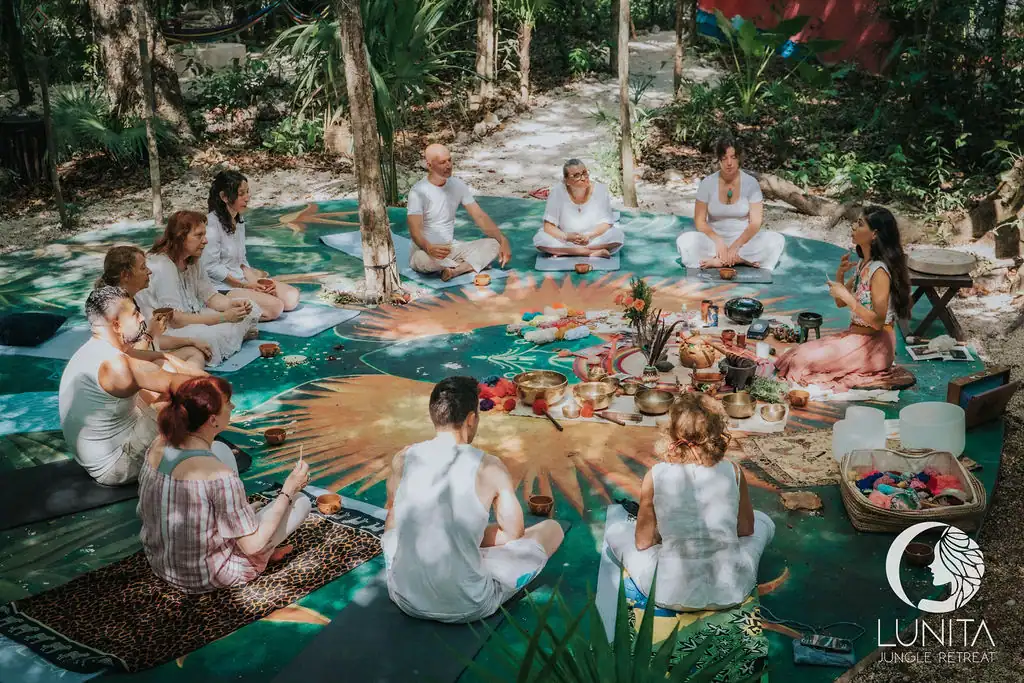
Facebook marketing for retreat leaders is the use of groups, events, and posts on Facebook to reach the people most likely to book a retreat. Facebook gets dismissed as the platform your aunt uses. Meanwhile it quietly holds the two things a retreat leader needs most: groups where people gather around a practice, and an audience old enough to have both the money and the vacation days to actually come.
The reach is harder than it was in 2015. What replaced it is more useful: fewer people seeing your posts, but the right ones, in places where they already trust the room. If you are weighing it against the other platforms, our guides to Instagram for retreat leaders and Pinterest for retreat leaders cover where each one earns its place.
Groups are the real asset
A Facebook group is the closest thing online to the circle you hold in person. Members show up on purpose, conversations last more than a day, and the group notifies people in a way a page never will.
Two paths, and most leaders should walk both.
Belonging to groups. Find where your future guests already gather: yoga teacher communities, breathwork circles, women's wellness groups, expat and travel groups for your region. Then behave like a member rather than a flyer. Answer questions where you actually know something. Most groups let you promote occasionally in a designated thread; earn the right to use it by being useful the rest of the time. Leaders who fill retreats through groups fill them by being the person who answered forty questions before ever mentioning a date.
Running your own. Your own group is the long game and worth starting even small. It is where past participants stay connected, where future ones lurk before they book, and where a retreat announcement lands as news rather than an advertisement. Twenty engaged people beat two thousand silent ones. Give it a clear purpose, ask questions members enjoy answering, and post consistently enough that it does not feel abandoned.
Events do a specific job
The Facebook event is not a booking system, and treating it as one disappoints. What it does well is hold attention across the weeks between someone hearing about a retreat and deciding to come.
Create the event as soon as dates are real. Fill it with the practical detail people actually want: what is included, where it happens, how to get there, what a day looks like, how to enquire. Then post inside it while it runs. Every post reaches people who marked interested, which is the warmest list you have without an email address.
Send personal invitations rather than mass ones. And accept the arithmetic: interested is not booked. Interested is a person to talk to.
What still earns reach
Organic reach on Facebook rewards conversation. The mechanics are unromantic but consistent.
Posts that ask something get answers, and answers get reach. Native video outperforms links, so upload rather than paste a URL. Photos of real people at your real place beat graphics. And the first hour matters more than the rest of the day, so post when your people are awake and be present to reply.
Reels reach beyond your followers in a way nothing else on the platform does, and they do not need to be polished: the walk to the shala, the fire being lit, the cacao being poured. Stories and live sessions work differently, reaching the people who already follow you, which makes them the right tool for the middle of a promotion rather than the top of it.
Post less and reply more. A post with thirty replies you answered outperforms three posts you abandoned.
Turning attention into enquiries
The gap between someone watching and someone writing to you is smaller than most leaders think, and it usually closes with clarity rather than persuasion.
Say what the retreat is, where, when, and how to ask about it, in the post itself. Do not hide the essentials behind a link. Make the next step small and human: a message, a question, a call. Then answer like a person, quickly, with the practical details first.
Where a form is involved, keep it short. Name, dates of interest, one open question about what they are looking for. Every extra field costs you enquiries. And follow up once, kindly, a few days later; most people who go quiet are simply busy, not uninterested.
Testimonials, honestly
Participant words are the most persuasive content you have, and the most easily ruined by over-production.
Ask soon after the retreat, when the feeling is still close. Ask for specifics rather than praise: what surprised them, what shifted, what they would tell someone considering it. Use their words as written, with permission, and pair them with a real photo when they agree.
One honest paragraph from a real person beats a designed graphic of a five star rating. Never fabricate, never edit meaning, and never put ratings markup on the website version.
A simple weekly rhythm
Three or four posts a week is sustainable and sufficient: one that teaches something, one that shows the place or the people, one that invites a conversation, and during a promotion, one that speaks directly to the retreat. Add a reel when you have footage worth using. Reply to everything.
The leaders who fill retreats on Facebook are rarely the most prolific. They are the most present. If you host with us, marketing support for retreat leaders is part of what Lunita brings to the weeks before your dates.