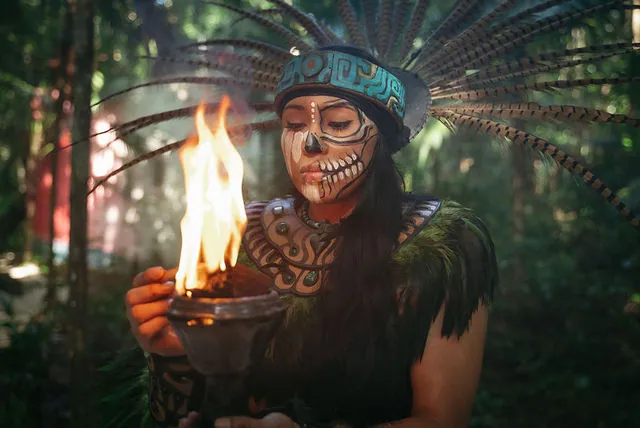
So what is a temazcal ceremony, really? Beneath the words "sweat lodge" and "purification" is something older than any wellness trend: a ceremonial practice rooted in Indigenous Mesoamerican tradition, held with prayer, heat, song, and deep respect for the elements. In many lineages the temazcal is the womb of Mother Earth, you enter the dark, warm origin space to release what you're carrying and remember what's essential. It works because it meets you in the body, not because you think your way through it. (For the practical structure and the four doors, see our full temazcal ceremony guide.)
Why it's a ceremony, not a sauna
Yes, you will sweat, your heart rate may rise, and your senses will sharpen. But the temazcal is built around meaning. The name comes from the Nahuatl temazcalli, "house of steam," and while sweat-bathing exists across many cultures, the temazcal is specifically tied to Mesoamerica. The dome, the four directions, the copal and prayers and song, these aren't decoration layered onto a hot room. They're a working ceremonial system that has held people through transformation for a very long time.
Where it comes from, and why respect matters
Because it's ceremonial, context is everything: who is leading it, what prayers and protocols are followed, whether the land is honored, whether the experience is held as a sacred rite rather than entertainment. "It depends" is an honest answer to many questions, a temazcal in a traditional community can differ greatly from one offered at a wellness venue, and both can be valid when held with integrity, training, and consent. Respect doesn't require you to perform beliefs you don't hold; it asks you to honor the container you've entered. (Practical do's and don'ts live in our temazcal etiquette guide.)
What it can feel like, body, heart, spirit
Most people expect a detox and are surprised by how layered it becomes. Physically, the heat can feel intense; slow nasal breathing and sitting closer to the ground (where the air is cooler) help. Emotionally, the darkness and drumbeat can open a tender place, some cry without knowing why, some feel joy, some meet resistance first and then relief. Spiritually, many describe being stripped down to simple truth: what matters, what hurts, what they're ready to let go of and call in. The trade-off is that intensity is part of the medicine, if you want something purely relaxing, a temazcal isn't the most predictable choice. But met with honesty and respect, it can be profoundly renewing.
Who it's for, and when to pause
A temazcal can support release, clarity, grief processing, emotional reset, and a deeper relationship with body and spirit, and it often creates real cohesion in retreat groups, not forced bonding, but the kind that comes from shared presence. Still, it isn't for everyone at every moment: if you're pregnant, have uncontrolled high blood pressure or cardiovascular concerns, or conditions that make heat risky, it may be wise to skip it or consult a professional first (our temazcal safety guide goes deeper). A trustworthy facilitator never pressures you, the ceremony is an invitation, not a test.
Experiencing temazcal in the Riviera Maya
Here, the ceremony can feel especially alive, copal smoke, wet earth, night air, birds at dusk, less like an activity and more like a conversation with place. If you're choosing where to go, look for a setting that prioritizes safety, consent, and cultural respect over aesthetics: ask who leads, how guests are supported, and what happens if someone needs to step out. At Lunita, temazcal is part of a wider ceremonial container designed for renewal in the jungle, and you can read more about temazcal in the Riviera Maya or the ceremony at Lunita.