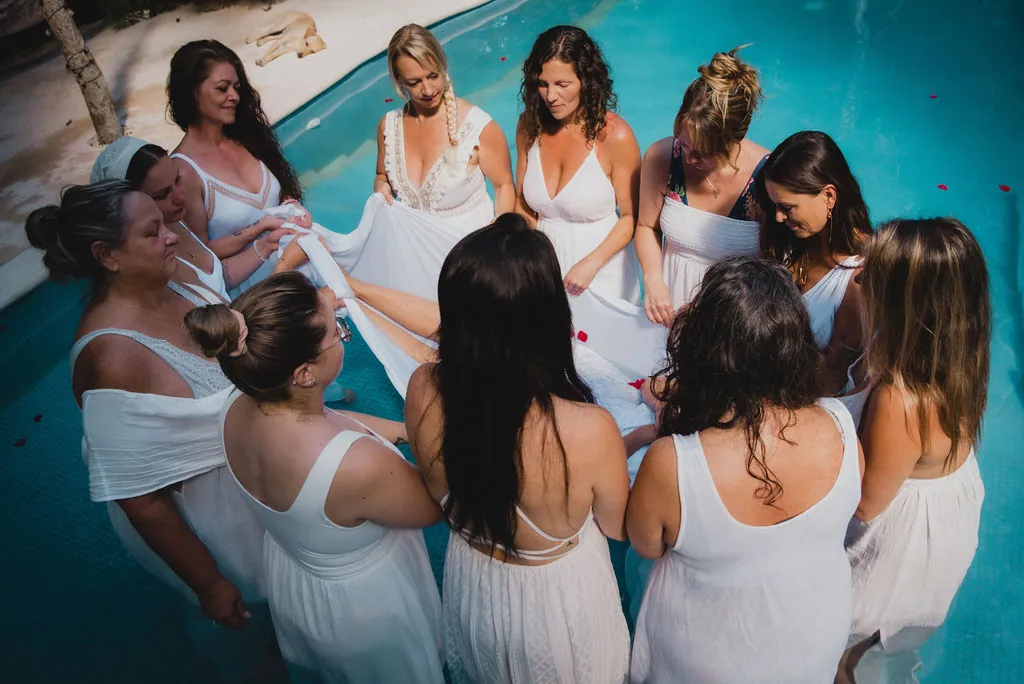
All over the world, women are waking up, some through grief, others through illness, burnout, or heartbreak, and many simply through an inner whisper that says there is more, and I am ready to remember it. The rise of medicine woman retreats answers that call: healing the feminine and reclaiming our power. Here's what they offer. (See spiritual retreats for women.)
What is a sacred feminine retreat?
These retreats create space to slow down, reconnect with body and intuition, and reclaim inner wisdom and authority. The term "medicine woman" evokes the cross-cultural archetype of woman as healer and wise keeper, held here with respect, not borrowed from any single Indigenous tradition. Through reflection, ceremony, embodiment, and community, women remember a wholeness that was never truly lost. Wikipedia's entry on the medicine man and medicine woman traces where the English term comes from and how it has been applied to Indigenous healers.
A return, not a remaking
The work isn't about becoming someone new, it's about returning to who you already are beneath the busyness and conditioning. The Temple of Remembrance and Lunita's jungle hold exactly this kind of remembering. Explore a personal retreat or book a discovery call.
Explore the retreats at Lunita.
What the days hold on a sacred feminine retreat
Mornings begin in circle, usually in the glass shala before the heat, with a check-in that is allowed to take as long as it takes. Movement follows, embodied rather than athletic: hips, breath, sound, the kind of practice that lets what has been held in the body move without being explained first.
The middle of the day is open. Guests take it to the cenote-fed pool, to their cabanas, to a walk under the trees or to a private cenote about ten minutes away. A facilitator is around, not scheduled. Meals are cooked on site and shared at one table, which is where a circle of strangers becomes a circle.
Evenings carry the ceremony: cacao, a fire, a temazcal for those who want the heat, or simply the group sitting in the dark together. Nothing is required. Every woman decides for herself what she enters, and the facilitators say so at the start rather than assuming it is understood.
How do you know a circle is held well?
Ask who holds it and what her training is. Ask what happens when something surfaces at eleven at night, and whether the answer names a person. A circle held well has someone awake for it, not a schedule for it.
Ask how the lineage is handled. A sacred feminine retreat that borrows from a tradition should be able to say which one, who taught them, and what they do not do because it is not theirs to do. Vagueness on that question usually means the practice has been assembled rather than received.
Ask what the days look like on paper. A programme that runs from seven in the morning to ten at night has no room for the remembering the retreat is named for. The work happens in the gaps and in the water, and a good facilitator protects both.
What to bring to a women's circle in the jungle
Loose clothes that move, a shawl or sarong for ceremony, a swimsuit, closed shoes for the paths, and a journal. Anything you might want on an altar: a photograph, a stone, something from someone you are carrying.
Bring your cycle into the conversation. Tell the facilitator where you are in it and whether you are pregnant or trying to be, because the temazcal and some of the movement are adapted for both. Lunita holds at most twenty guests across eight cabanas and a mini apartment, so the circle stays small enough for every woman in it to be seen.