Riviera Maya Spiritual Retreat: What Fits You?
- Nico

- 5 days ago
- 7 min read
Updated: 2 days ago

The first thing you notice in the Riviera Maya is that the land is alive.
Not in a metaphorical, pretty-Instagram way - in a felt way. Heat rises from the jungle floor. Birds call across the canopy. The air has weight. And if you have been carrying too much for too long, your nervous system often responds before your mind can explain why.
That is why people search for a spiritual retreat in Mexico’s Riviera Maya. They are not only looking for a vacation. They are looking for a shift - something that can’t be forced, but can be supported by the right place, the right pace, and the right people.
Why the Riviera Maya can hold deep spiritual work
A “spiritual retreat” can mean many things, from quiet meditation to intense cathartic release, from sacred ceremony to gentle reconnection with your body. In the Riviera Maya, there is an added layer: the region carries centuries of relationship between people and land, ceremony and community, life and death, prayer and the elements.
There are also practical reasons this area works. It is relatively accessible for US travelers through Cancun, so people can arrive without exhausting travel logistics. The climate invites you into a slower rhythm that naturally reduces the impulse to over-schedule. And the landscape gives you variety without requiring constant movement: jungle paths, open sky, cenotes, ocean air, and the kind of night sounds that remind you you’re part of something larger.
Still, the same elements that make the Riviera Maya powerful can also make it overwhelming. Humidity, heat, and sensory intensity can bring emotions to the surface quickly. That is not a problem, but it does mean the container matters. The difference between “transformative” and “too much” is often the quality of support.
What people actually mean by “spiritual retreat”
If you are typing “spiritual retreat Mexico Riviera Maya” into a search bar, you might be in one of three seasons.
Some people are in a season of healing. They are moving through grief, heartbreak, burnout, a life transition, or a long stretch of numbness. They are not looking for performance or perfection - they are looking for safety, tenderness, and experienced guidance.
Others are in a season of awakening. They feel a quiet inner call that won’t go away. They want to deepen practices like meditation, breathwork, yoga, energy work, prayer, or ceremony, and they want to do it in a place that feels spiritually grounded rather than trendy.
And some people are in a season of leadership. They are facilitators, teachers, coaches, or space-holders who want to offer their community a meaningful experience. They are looking for a venue that is beautiful, yes - but also operationally solid, culturally respectful, and able to support a full program without the leader having to manage every detail.
Your season determines what “right fit” looks like.
Choosing the right style of spiritual retreat in the Riviera Maya
A retreat can be beachfront or jungle-based, structured or spacious, quiet or highly programmed.
None of those is inherently better. The question is what your body and spirit are actually asking for.
A beachfront retreat can be regulating for some people. The horizon calms the mind, and the ocean’s constancy can feel like a balm. But beachfront locations often come with more outside stimulation - more noise, more nightlife nearby, more temptation to stay in a “vacation” frequency that can dilute the depth of the work.
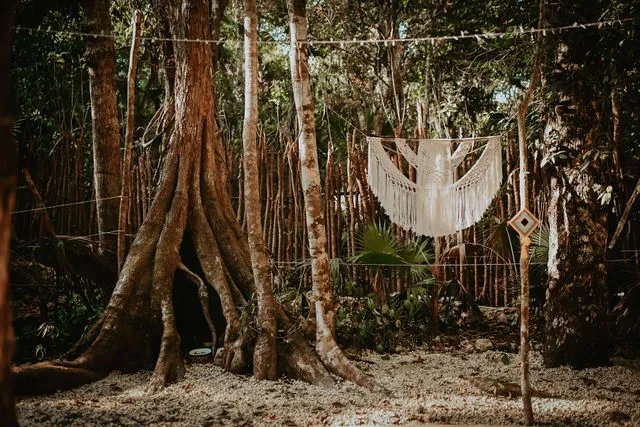
A jungle retreat tends to turn the volume down on the external world and up on the internal one. It can feel more private and more ceremonial, especially when the retreat space is intentionally designed for healing. The trade-off is that nature is not curated.
Bugs exist. Weather shifts. The jungle asks you to be in relationship, not in control.
Structured retreats can be a gift if you are tired of making decisions. When the schedule is thoughtfully built, it creates a rhythm that helps you settle quickly. But if you are already over-managed in daily life, a tightly packed itinerary can feel like pressure rather than support.
More spacious retreats can offer real medicine: time to integrate, nap, journal, walk, and listen. The trade-off is that spaciousness requires self-responsibility. If you tend to dissociate or isolate when things get tender, you may benefit from more guided touchpoints.
The non-negotiables: safety, ethics, and consent
Spiritual work is intimate. It can also be vulnerable. In a retreat setting - especially one involving ceremony, bodywork, breathwork, or altered states - you deserve clear ethics.
Look for facilitators and venues that speak plainly about consent and boundaries. You should know what is optional and what is expected. You should be able to ask questions without being shamed or spiritualized. You should never feel pressured to participate in something that your body says no to.
If plant medicines are involved, be especially discerning. It depends on your health history, your medications, your trauma background, and the experience level of the practitioners. A trustworthy space will screen participants, explain contraindications, and prioritize aftercare and integration. If a retreat sells intensity like a badge of honor, pause. Transformation is not a contest.
Cultural respect matters too. The Riviera Maya is not a theme park for spirituality. Ask yourself whether the retreat honors local lineages, employs local community members fairly, and approaches indigenous traditions with humility rather than appropriation.
What a well-held retreat experience often includes
You do not need a “perfect” retreat. You need a coherent one.
A well-held spiritual retreat usually has a clear arc: arrival and grounding, a middle phase of deepening and release, and a closing phase for integration. The practices can vary widely, but there is a felt sense of being guided somewhere on purpose.
The body is part of this. Even if the retreat is meditation-forward, it helps to include movement, breath, or somatic practices. Many people arrive disconnected from sensation. Reconnection is not always dramatic. Sometimes it looks like sleeping deeply for the first time in months, digesting without tension, or realizing your jaw has been clenched for years.
Food also matters more than most people expect. Nourishment is not only fuel. It is relationship, steadiness, and care. The best retreat kitchens understand how to support different bodies and sensitivities while keeping meals grounded and satisfying.
And then there is the container of community. Even introverts often find that being witnessed gently - without advice or fixing - is part of what heals. A good retreat does not force sharing, but it makes authentic connection possible.
For retreat leaders: what makes a venue truly supportive
If you are a retreat leader bringing a group to the Riviera Maya, you are not only choosing a beautiful place. You are choosing a partner.
Ask about operations before aesthetics. Who is on-site during the retreat? How do arrivals work from Cancun? What happens when someone gets sick, has a panic episode, or needs a last-minute schedule adjustment? Is there a clear service menu for add-ons like bodywork, ceremony, excursions, sound healing, or workshops? Can the venue adapt the program for different group energies without chaos behind the scenes?
Also ask about the spaces themselves. A yoga shala that looks good in photos is not enough. Consider airflow, shade, acoustics, and privacy. Ask whether there are dedicated areas for ceremony, quiet reflection, and one-on-one sessions. If you work with nervous system regulation, you will want spaces that feel held rather than exposed.
Finally, inquire about the human tone. Your participants will feel how staff members speak, how problems are handled, and whether the environment is rooted in real care. Luxury is not only thread count. It is being met with steadiness.
A spiritual retreat Mexico Riviera Maya experience, done with intention
A spiritual retreat in the Riviera Maya can be a turning point. Not because the jungle is magic in a way that bypasses your life, but because it helps you return to what is true. You remember what your body knows. You hear yourself again.
If you are seeking a jungle-based sanctuary that blends ceremony, nature immersion, and high-touch retreat support, Lunita Jungle Retreat Center offers both curated personal healing retreats and a full retreat-hosting platform for leaders - with private cabanas, a yoga shala, a traditional temazcal, and a team that understands how to hold depth with professionalism.
How to know you chose the right retreat
You will not always know from a website. The real question is what happens in your body when you picture yourself there.
Do you feel a softening, even if you are nervous? Do you sense that you would be cared for without being controlled? Do you trust the pacing? Can you imagine yourself resting without guilt?
It can also help to name what you do not want. Some people do not want a party atmosphere. Others do not want a rigid spiritual hierarchy. Some do not want to share accommodations, or they need family-friendly options, or they require trauma-informed facilitation. The Riviera Maya has many offerings, and discernment is part of the practice.
When you speak with a retreat organizer or venue, notice whether they listen. Notice whether they answer the question you asked, or whether they pivot to a sales pitch. A sincere space is not afraid of your clarity.
If you are coming for healing, consider choosing fewer activities with more integration time. If you are coming for awakening, prioritize experienced facilitation over trendy modalities. If you are coming as a leader, prioritize logistics and on-site support so you can stay present with your people.
The land will meet you either way. Your job is to choose a container that makes it easier to receive what you came for.
Let it be simple: a place that feels safe, a rhythm that lets your system settle, and guidance that honors your sovereignty. When those pieces are in place, the Riviera Maya does what it does best - it reminds you that you belong to your life again.


Comments