Why Retreats Are More Important Than Ever in Complex Times
- Lorenza
- Feb 3
- 6 min read

An Introduction to Why This Is the Right Moment
Why retreats are more important than ever is not a marketing question. It is a response to what people are living inside their bodies right now. Global complexity does not slow retreats down. It clarifies their role. When daily life becomes faster, noisier, and more emotionally demanding, the need for intentional spaces of regulation, reflection, and integration becomes essential rather than optional.
Many retreat leaders and participants are asking the same question. With everything happening in the world, is this really the right time to host or attend a retreat. When we look closely at what is unfolding, the answer is clear. Yes, with a shift in perspective.
Why Retreats Are More Important Than Ever in Complex Times
Periods of global instability follow a consistent pattern. Interest in superficial experiences decreases. Demand for meaningful and well structured experiences increases. People do not become unavailable. They become selective.
Those joining retreats today are not seeking escape. They are seeking regulation, clarity, and meaning. This is why the current moment does not reduce the value of retreats. It raises the standard.
Well designed retreats continue to thrive because they respond to a real embodied need. Poorly defined or vague retreats struggle not because people no longer care, but because participants are choosing more consciously.
At Lunita Jungle Retreat Center we see this clearly in the questions people ask before arriving. They want to know who is holding the space, how the environment supports nervous system regulation, and how insights will integrate into daily life. You can explore how Lunita approaches this intentionally on our page about our retreat philosophy.
The Shift From Escape to Integration
Retreats that work today are not promising escape from reality. They are offering support for returning to it with more clarity and steadiness.
This is a significant shift. In the past, many retreats were positioned as a break from life. Today, participants are looking for experiences that help them meet life more skillfully. They want integration, not intensity.
This is why retreats with a clear narrative, grounded facilitation, and thoughtful pacing resonate more deeply. They communicate value rather than urgency. They focus on coherence rather than volume.
If you are a facilitator exploring how to hold this kind of space, our page on hosting a retreat at Lunita outlines how we support leaders in creating safe and meaningful containers.
Why Participants Are More Discerned and Why That Matters
People attending retreats today are not less open. They are more informed. They understand the impact of overstimulation, emotional fatigue, and constant digital input on their nervous systems.
Choosing a retreat has become an act of care rather than indulgence. Participants are investing more intentionally in experiences that offer depth, trust, and regulation.
This discernment benefits both participants and facilitators. Groups may be smaller, but they are often more aligned, present, and ready for meaningful work. This allows retreats to go deeper without pressure or performance.
Nature as an Active Support for Regulation
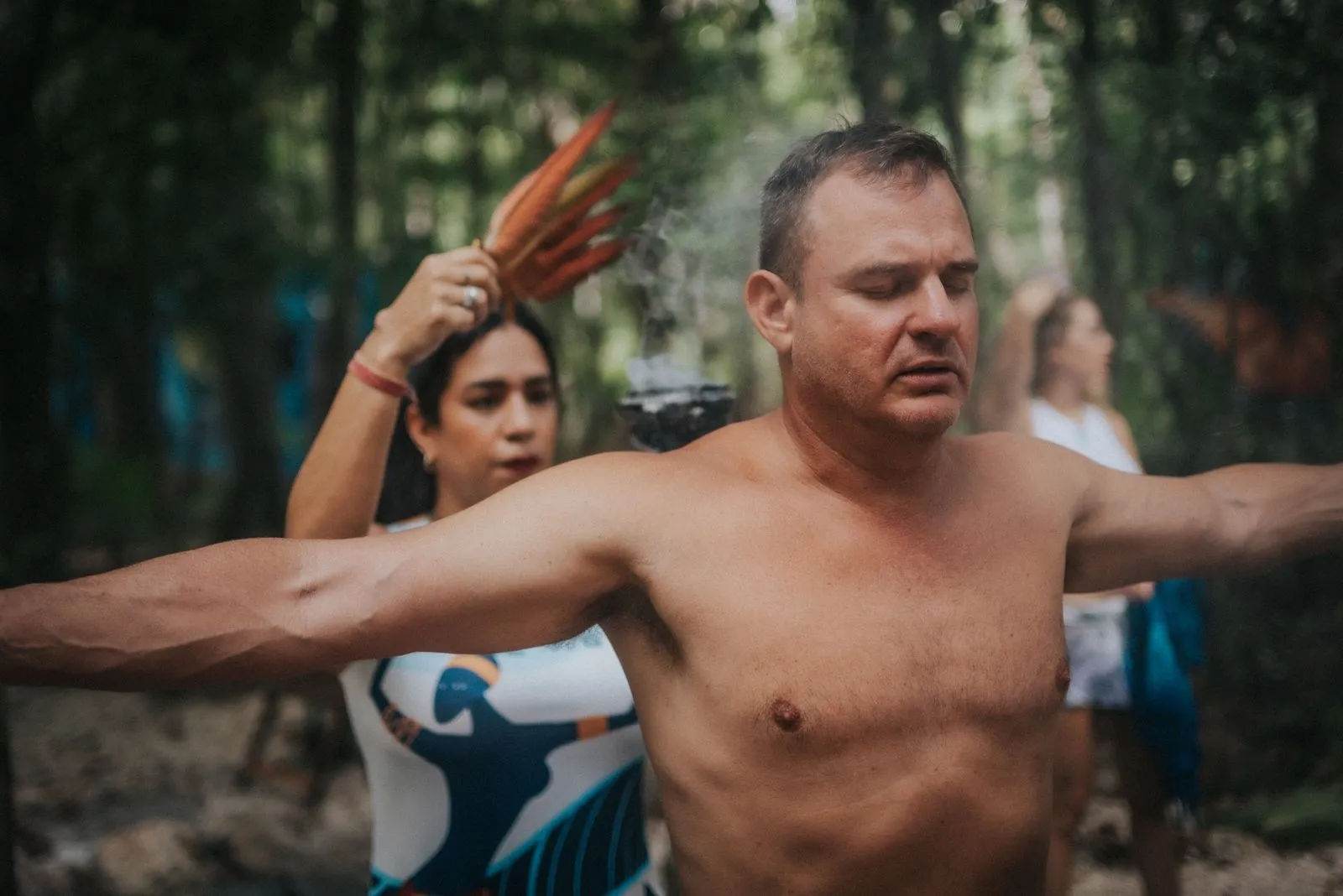
Nature is not a decorative backdrop for retreats. It is an active co regulator. In natural environments, breathing slows, sensory input becomes simpler, and the nervous system begins to settle without effort.
This is why nature based retreats respond so directly to what this moment requires. At Lunita Jungle Retreat Center, the jungle itself supports presence and grounding. Open air spaces, natural light, and quiet rhythms help participants arrive more fully.
You can explore upcoming retreats that embody this approach on our retreats page.
Why This Moment Is Calling Retreats Forward
This is not a contraction. It is a refinement.
People are not disappearing. They are arriving with clearer intentions and higher standards. They are asking better questions and seeking environments they can trust.
Creating or joining a retreat today is not about turning away from the world. It is about meeting it with responsibility, care, and presence. When the outer world becomes more complex, the need for spaces that support integration and grounding becomes essential.
Science Backs It Up 🌿
Research supports why retreats are more important than ever, especially when held in natural and structured environments.
Studies published by the American Psychological Association show that time in natural settings significantly reduces cortisol levels and improves emotional regulation, supporting stress recovery and resilience.
Harvard Health Publishing highlights that retreats combining mindfulness, movement, and reduced digital exposure improve mental clarity and nervous system balance over time.
Research from the University of Michigan demonstrates that nature immersion enhances attention restoration, emotional balance, and cognitive flexibility, all of which are essential in high stress environments.
These findings align directly with what participants report after attending retreats rooted in nature and intentional structure.
People Also Ask About Why Retreats Are More Important Than Ever
Why are retreats becoming more popular now
Retreats are becoming more relevant because people are experiencing chronic stress, emotional fatigue, and overstimulation. Rather than seeking escape, participants look for spaces that support nervous system regulation, clarity, and meaningful integration into daily life.
Are retreats worth it during uncertain times
Yes. During uncertain periods, people invest more intentionally in experiences that offer grounding and support. Well designed retreats provide structure, safety, and presence, helping participants return to life with greater steadiness and resilience.
What makes a retreat meaningful today
A meaningful retreat today has a clear intention, grounded facilitation, supportive environment, and integration focus. It responds to real embodied needs rather than trends and prioritizes regulation, trust, and depth over intensity.
Why Lunita Jungle Retreat Reflects This Moment
At Lunita Jungle Retreat Center, we see this refinement happening daily. People arrive with awareness. They choose intentionally. The work goes deeper because the container supports it.
If this moment is asking something of you, whether as a participant or a facilitator, a retreat may be the place where that question can finally be listened to.
You are invited to explore what becomes possible when complexity is met with presence rather than urgency.
Frequently Asked Questions About Retreats in Complex Times
Why are retreats more important than ever today
Retreats are more important than ever because modern life places constant demands on attention, emotions, and the nervous system. Retreats provide structured environments where people can slow down, regulate stress, and reconnect with meaning. This is especially valuable during periods of global instability and uncertainty.
Are retreats still relevant when people feel busy or overwhelmed
Yes. Feeling busy or overwhelmed is often a sign that regulation and rest are needed. Retreats are designed to remove daily distractions and create space for clarity and restoration. Participants often report returning home with improved focus, emotional balance, and decision making.
Do people still invest in retreats during uncertain times
People do invest, but more intentionally. Rather than impulsive bookings, participants choose retreats that feel aligned, well facilitated, and trustworthy. This shift favors high quality retreats that communicate clear value and purpose.
How do retreats help with nervous system regulation
Retreats support nervous system regulation through consistent rhythms, reduced stimulation, nature exposure, and practices like mindfulness and movement. Over several days, the body has time to settle, allowing deeper emotional and mental integration.
What role does nature play in effective retreats
Nature supports regulation by reducing sensory overload and encouraging presence. Natural environments help breathing slow, attention stabilize, and stress hormones decrease. This makes nature based retreats especially effective for integration and emotional balance.
Are retreats only for people in crisis
No. Retreats are valuable for anyone seeking clarity, growth, or reconnection. Many participants attend retreats not because something is wrong, but because they want to live with more intention, balance, and awareness.
How do retreats differ from vacations
Vacations focus on rest and entertainment. Retreats focus on intentional structure, facilitation, and integration. While both can be restorative, retreats are designed to support emotional, mental, and sometimes spiritual growth in a guided environment.
Is this a good time to host a retreat
For facilitators with clear vision and grounded intention, this is an excellent time. Participants are seeking meaningful containers rather than volume based experiences. Well designed retreats often attract deeply aligned groups even when numbers are smaller.


Comments