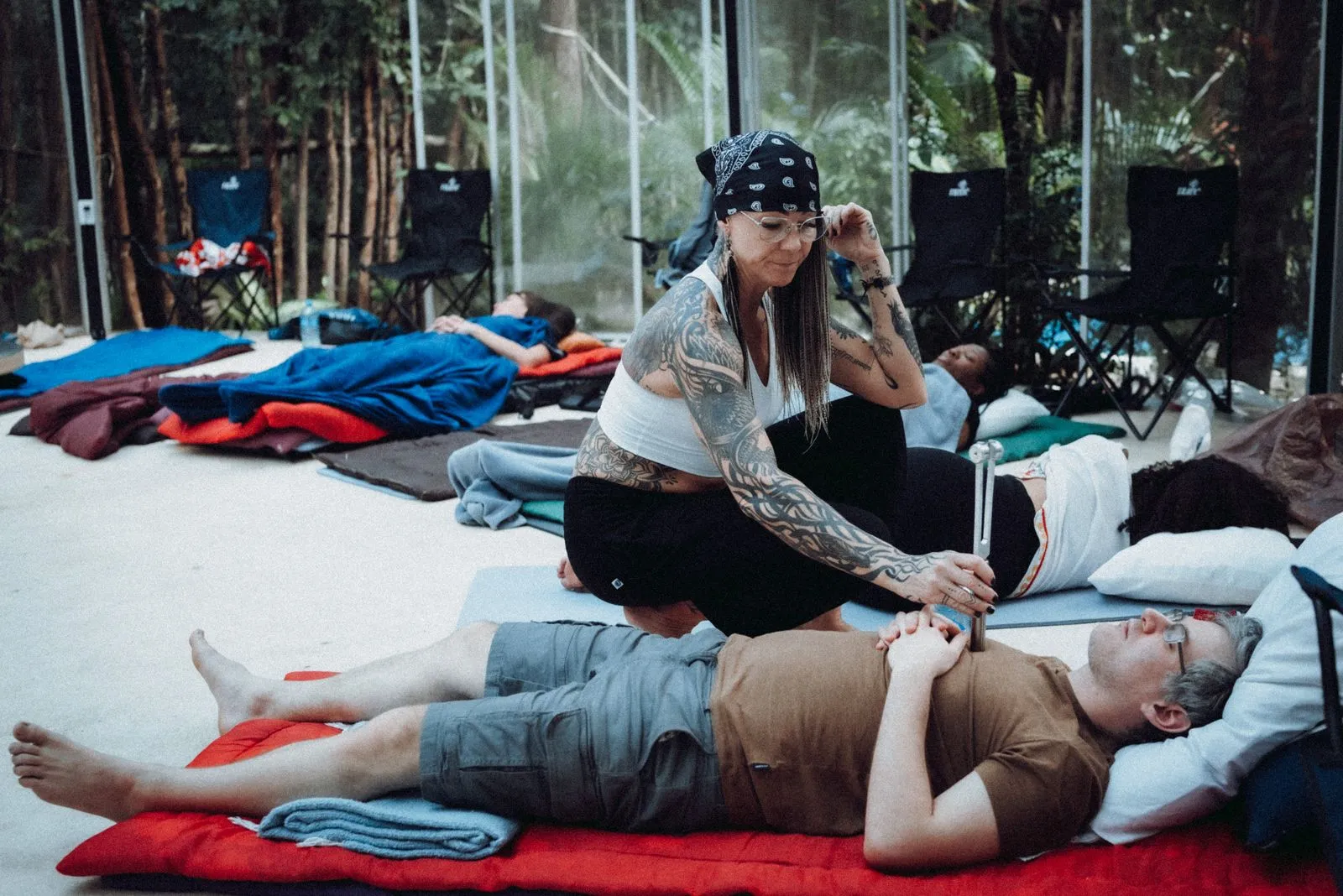
If you've felt stretched thin and crave real time for yourself, you're not alone, with stress and burnout so widespread, more people are seeking ways to unplug and heal. Mexico has become a leading destination for meditation and yoga retreats, drawing wellness seekers to the lush Mayan rainforest and coastal jungle for deep rest. Here's your complete guide to a jungle meditation and yoga retreat. (Lunita anchors both practices into every day.)
Why a jungle retreat matters
A jungle retreat in Mexico isn't just scenic, the environment does part of the work. Away from screens and traffic, surrounded by birdsong and filtered light, the nervous system finally settles, and meditation and yoga land more deeply. That's the difference between a vacation and a genuine reset.
Yoga and meditation together
The two practices amplify each other: yoga opens the body and creates access, while meditation gives that openness somewhere to settle. Woven with temazcal, sound healing, and nourishing food, they form a steady daily rhythm from morning movement to evening stillness.
Planning your retreat
The one question that sorts the options
Is the retreat built around the practice, or is the practice an item on a holiday? Ask it and the options sort themselves. A hotel with a morning class is a holiday. A center whose days are shaped around the shala, the sitting and the rest between them is a retreat.
The jungle side of the Cancun region is where the second kind lives. Lunita sits at Km 17 of the Ruta de los Cenotes, forty minutes from the airport, with a glass shala for movement and the Crystal Shala for stillness.
What to be skeptical of
Schedules that stack six sessions a day. Meditation needs the gap after yoga, and yoga needs the sleep before it. A retreat that fills the gaps has removed the practice.
Promises about what you will feel by the last day. We distrust them. What guests report is smaller and lasts longer: a sitting that held, a breath that reached the floor of the ribs.
And teachers nobody will name. Ask who holds the practice and how many students share the room.
Whether you want a self-paced personal retreat or a hosted program, the best first step is a conversation about what you're looking for. Book a discovery call to shape the right fit.
How long should a meditation and yoga retreat be?
Five nights is the honest minimum for both practices to take. The first day is travel and arrival, the second is the body catching up, and only on the third does a sitting hold on its own. A week gives four or five of those days.
Three nights works for a person with an existing practice who wants to renew it rather than begin it. A fortnight is rare and rarely needed; most guests find that after seven or eight days the practice has become the day, and the rest is repetition.
What to bring for practice in the jungle
Mats, blocks, cushions and blankets are in the shala already, so pack for the climate rather than the class. Two or three sets of light clothes that dry fast, a long layer for the dawn sitting, and a swimsuit for the cenote-fed pool between sessions.
Bring a notebook and a book you do not need to finish. Leave the practice apps at home; the day has a shape already, and the wifi across the property is for the people who need it, not a reason to check the timer. The gentlest example is facial yoga as a mindful practice, slow movements, breath, and touch for the face and neck, approached for relaxation rather than as anything cosmetic.