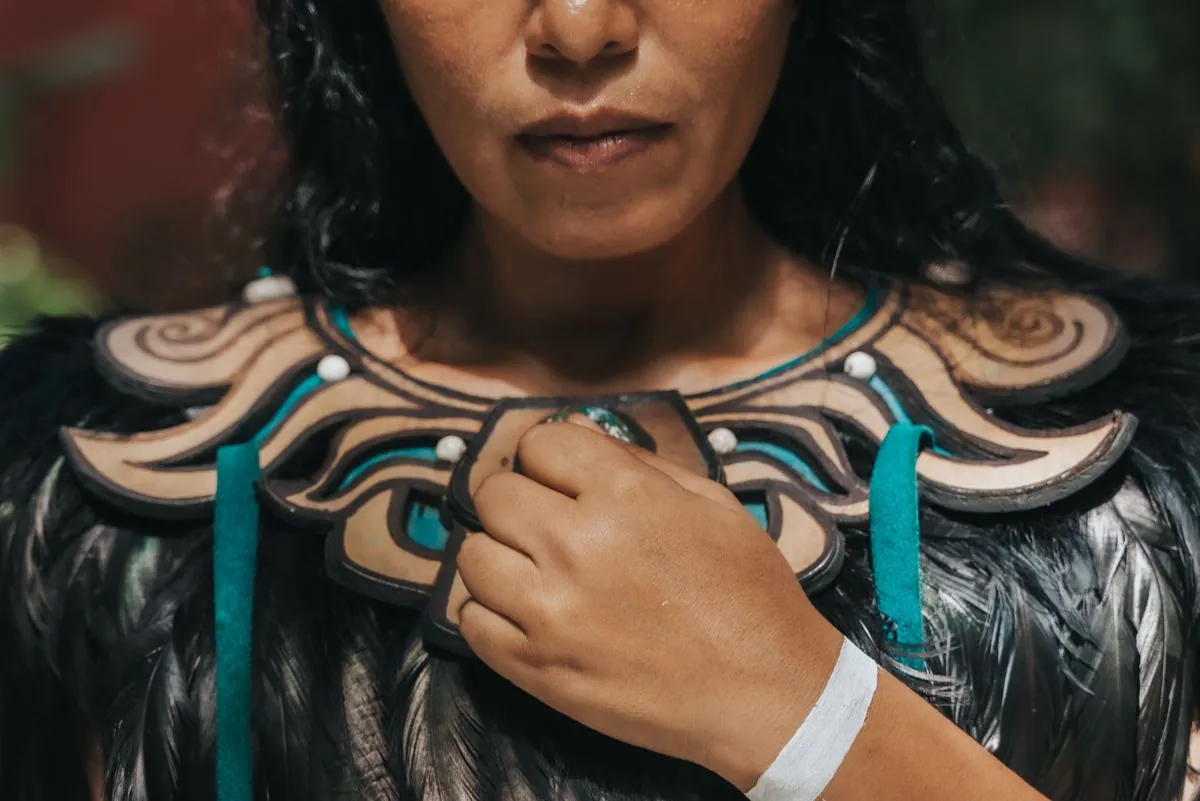
Every personal retreat at Lunita carries a rhythm, and at its center beats ceremony. Here, ceremony isn't performance, it's a return to harmony, whether you're entering the temazcal, sharing cacao, sitting in a sound journey, or working with sacred medicine. This is a look at the ceremonies woven into a personal retreat, and the principles that hold them: safety, sovereignty, and spirit.
Why ceremony matters
To live ceremonially is to live awake. Within a personal retreat, ceremonies mark transitions and offer symbolic release, integrating emotion, physiology, and spirit. They're woven in through dialogue and intention, never imposed, and you choose which rituals resonate.
The temazcal, rebirth through the elements
The temazcal, or traditional sweat lodge, symbolizes the womb of Mother Earth. Inside the clay dome, guided by sacred song and steam, participants release what they've been carrying, a true ceremony of rebirth that merges physiology with prayer.
Cacao, opening the heart
Cacao, the ancient "food of the gods," gently opens the emotional heart. Pure cacao is prepared with prayer and served in circle as music, meditation, and gratitude unfold.
Sound journeys, the frequency of healing
Sound ceremonies use gongs, bowls, flutes, and drums to guide the mind into deep, meditative rest. In the jungle's still air, vibration becomes its own kind of medicine.
Sacred medicines, the spirit of responsibility
Some personal retreats include sacred-medicine work, peyote, bufo alvarius, ayahuasca, and psilocybin, always approached with reverence, ethics, screening, and integration. Lunita partners only with facilitators holding proper lineage and safety training. Crucially, sacred medicines are never required for healing: in a custom retreat, participation arises only from consent and readiness.
Integration, the gentle echo of ceremony
After the songs fade, integration begins. Facilitators guide reflection through journaling, sharing, and rest, helping you embody what surfaced, and carry it into daily life. Ceremony, here, is a prayer made visible: you don't simply attend one, you remember one that was waiting within you.