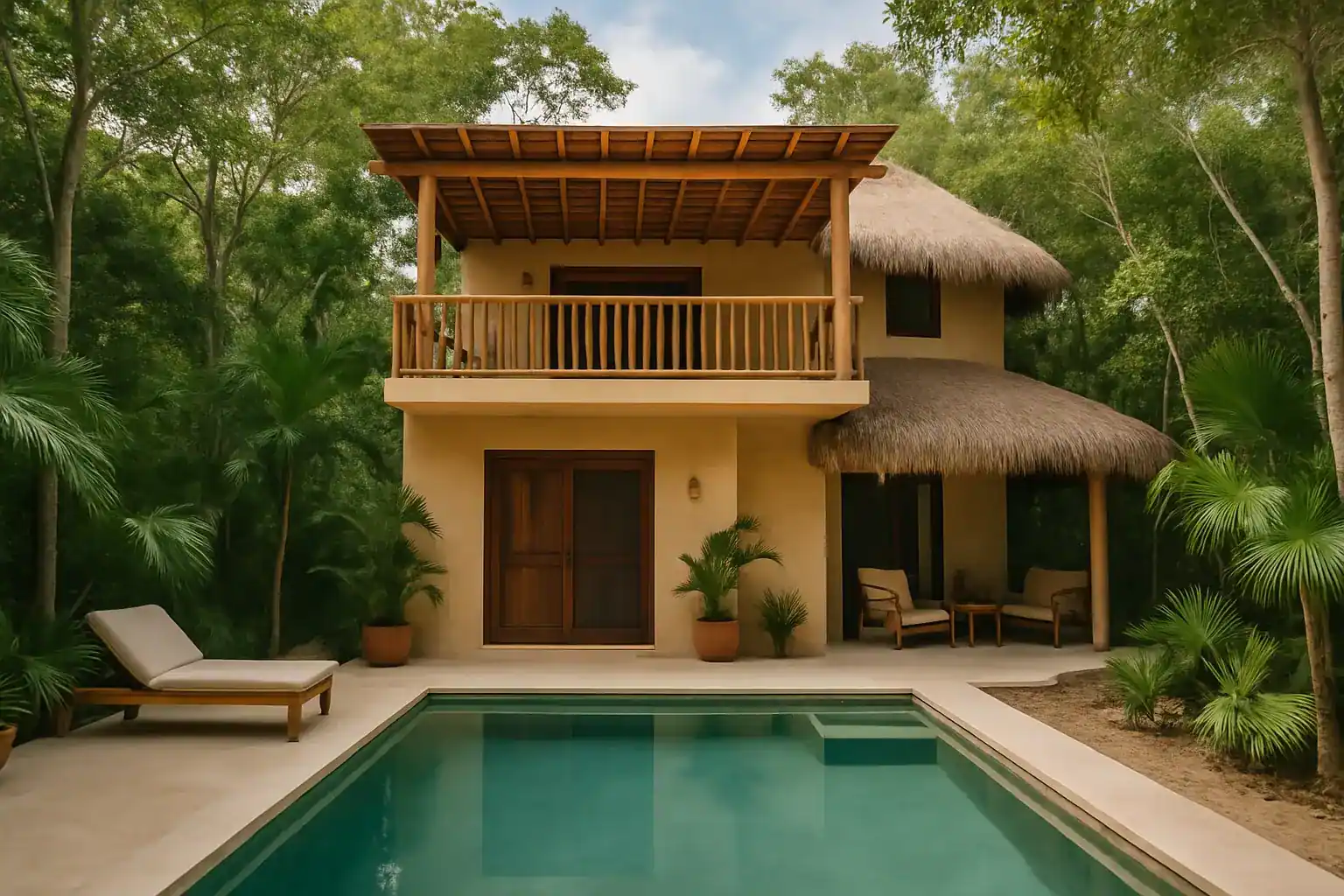
Lunita Jungle Retreat Riviera Maya, Explained
- Nico

- Feb 12
- 6 min read
Updated: Feb 13
You can feel the Riviera Maya change the moment you leave the highway and the jungle closes in. The air gets thicker and sweeter. The light turns dappled. Your nervous system - so used to screens, schedules, and city edges - starts to soften before you even set your bag down.
That is the heart of a lunita jungle retreat riviera maya experience: not just a vacation in nature, but a carefully held container where the land, the design, and the human support all work together. People come for different reasons - to host a retreat, to heal after a hard season, to reconnect as a couple, to bring a team back into alignment - but they often describe the same feeling when they leave: something inside finally had room to breathe.
What a jungle retreat in the Riviera Maya really offers
A lot of places in the Riviera Maya are built around access - proximity to beaches, nightlife, excursions, and quick entertainment. A jungle retreat is built around something else entirely: depth.
In the jungle, the pace is honest. Mornings are guided by birds and sunlight, not alarms. Evenings are shaped by candlelight and conversation, not checkout times and crowded lobbies. When a space is intentionally created for retreat, it supports a different kind of attention - the kind that makes meditation feel natural, that helps food taste more alive, and that makes you realize how long you have been holding your breath.
That said, “jungle” is not automatically synonymous with “easy.” It depends on what you want. Some guests crave rustic simplicity and want to unplug completely. Others need comfort, privacy, and a sense of being held in practical ways. The best retreats balance both: wild nature without chaos, sacredness without confusion, and a schedule that supports transformation without forcing it.
The difference between a venue and a sanctuary
Many retreat centers rent you a space and step back. That can work if you are a seasoned leader with a large team, a production system, and clear vendor relationships. But if you are holding people through emotional work, trauma-informed practices, somatic release, or ceremonial processes, the environment needs to do more than look pretty.
A sanctuary is different. It is designed to feel safe before anyone says a word.
Safety is not just about locks and lighting, although those matter. It is also about energetic boundaries, respectful staff presence, and spaces that invite regulation - shaded areas to rest, quiet corners for tears, pathways that feel contained rather than exposed. When the container is strong, participants go deeper with less pushing. Leaders can facilitate without constantly managing logistics. Couples can soften without having to perform.
Spaces that support ceremony, movement, and rest
The Riviera Maya has a long lineage of ritual and relationship with the land. When a retreat honors that lineage with respect, it changes the tone of everything - especially when ceremonial spaces are built with intention.
A traditional temazcal, for example, is not a “spa amenity.” It is a ceremony of heat, prayer, and purification. It can be tender, challenging, profoundly healing, and it is not for everyone at every moment. The right approach includes clear preparation, experienced guidance, hydration support, and permission to opt out. If you are hosting a group, it also means understanding who should not participate due to medical considerations.
Alongside ceremony, most people need movement that helps energy flow again. A yoga shala or dedicated practice space matters because it gives the body a consistent signal: you are allowed to be here fully. And just as important as movement is rest. Private cabanas or quiet lodging in the jungle are not just about comfort - they create the privacy people need to integrate.
Integration is the part that gets skipped in many retreat itineraries. It is what happens after the breathwork session, after the coaching breakthrough, after the tears in the circle. Without space to integrate, experiences can feel intense but unfinished. With space, the changes become real.
For retreat leaders: what “full support” should actually mean
If you are a retreat leader looking at the Riviera Maya, you are probably weighing a familiar set of questions. Can I trust the food quality? Will the schedule run on time? Is the staff responsive? Can the venue handle special requests without making me the middleman for every detail?
Full support should mean that you are not carrying the retreat alone.
Practically, that looks like pre-retreat planning that clarifies your vision, group needs, and flow. It includes lodging coordination, dietary support, and an onsite team that understands retreat rhythm - when to be invisible, when to step in, and how to protect the container. It also includes a service menu that makes it easy to add experiences without scrambling: bodywork, workshops, ceremonies, cultural tours, cenote explorations, and other offerings that complement your program.
There is a trade-off here. A highly supported venue may have clear parameters, recommended schedules, and curated partners - which can feel less “anything goes” than renting a house and hiring vendors independently. But that structure is often what allows the retreat to feel smooth, professional, and emotionally safe for your participants.
If your brand is built on transformation, your operations need to match that level of care.
For personal guests: what healing can look like here
Not everyone arrives with a group. Many people come to the Riviera Maya because something in them is asking for change, but they do not want to figure it out alone.
A personal healing retreat can be quiet and deeply customized. It might include a mix of bodywork, somatic sessions, meditation, gentle movement, ceremonial work, and time in nature. For some, the medicine is finally sleeping without guilt. For others, it is being witnessed through grief, or remembering how to feel pleasure in the body again.
Couples and families often need a slightly different container. Couples may want reconnection without pressure - space to talk, to be guided, and to rest together. Families might want nature immersion that is grounding rather than overstimulating, with enough support that parents can also receive care. The best experiences are not overpacked. They honor the truth that healing happens in the quiet moments too: walking under the trees, sharing a simple meal, listening to the night sounds.
Nourishment as part of the medicine
Food is not an accessory at a retreat. It is part of the nervous system work.
When meals are prepared with care, timing, and attention to dietary needs, guests feel safe. Their bodies can actually receive the practices being offered. When food is chaotic, heavy, or inconsistent, the body braces - and even the most beautiful workshop can land poorly.
In a well-run retreat center, nourishment is integrated into the rhythm of the day. You can feel it in how breakfast sets the tone, how lunch supports energy without crashing, how dinner brings people back to the heart. It is not just “healthy.” It is supportive, grounding, and thoughtfully made.
Cultural connection and nature experiences without rushing
The Riviera Maya is not a theme park, even though it is often marketed like one. Cenotes, local traditions, and the land itself deserve reverence. A retreat that includes cultural tours or nature excursions should feel paced and respectful, not like a checklist.
This is where it helps to work with a team that knows the area well and can curate experiences that match your intention. Sometimes the most impactful day is not the one with the most activity - it is the one where you have enough time to float in fresh water, sit in silence afterward, and let the body register what just happened.
Who this kind of retreat is best for (and who should choose differently)
A jungle-based, spiritually grounded retreat in the Riviera Maya tends to serve people who want depth, not distraction. If you are ready to trade constant stimulation for presence, you will likely thrive.
If you need nightlife, shopping, or beach access every day, you may feel constrained in the jungle. If you are in a season where silence feels unsafe, you might want a hybrid trip that includes more external activity. And if you have medical needs that require immediate urban access, it is wise to plan carefully and communicate clearly before booking.
The goal is not to force a fit. The goal is to choose the container that will truly support you.
Choosing the right container in the Riviera Maya
If you are exploring options and you want a place that is both sacred and professionally organized, this is where a retreat center like Lunita Jungle Retreat Center stands out. It is designed for transformation - not only through beautiful jungle surroundings, but through intentional spaces, curated experiences, and a hosting model that supports both leaders and guests with high-touch care.
When you are deciding, ask yourself one honest question: do I want a place to stay, or a place that will hold me?
Because the Riviera Maya can offer either. And when you choose the right container, the jungle does what it has always done - it brings you back to what is real, quietly and completely.
Let the land meet you at the pace your heart can trust.


Comments