


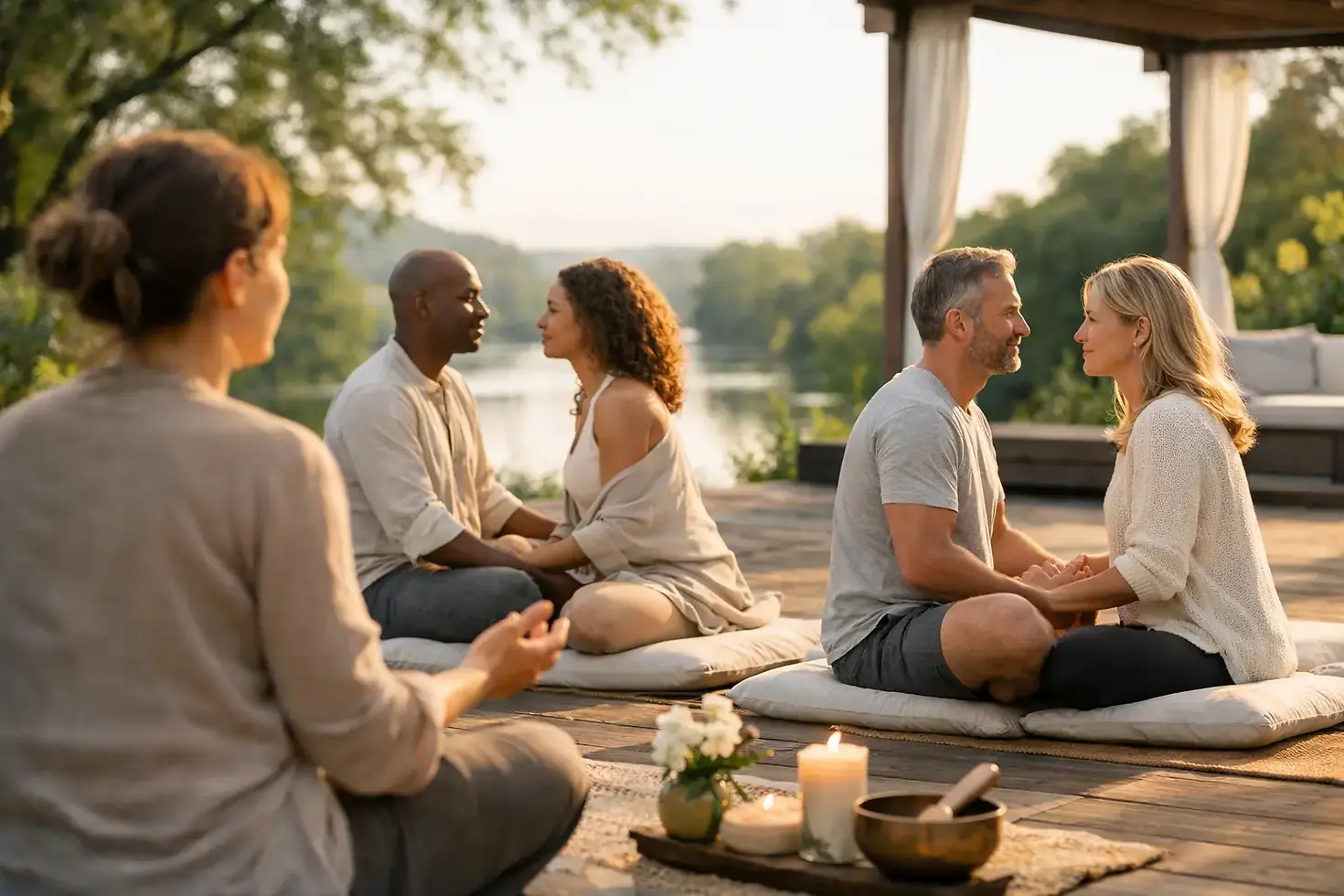
How to Run a Couples Retreat That Heals
- Lorenza Rossi
- 4 days ago
- 6 min read
A couples retreat can change a relationship in a single weekend - or leave people feeling exposed, rushed, and more disconnected than when they arrived. The difference usually comes down to design. If you are learning how to run a couples retreat, your first task is not choosing activities. It is creating a safe, intentional container where connection can deepen without pressure.
Couples do not come to retreat simply to communicate better. They come carrying real tenderness: old resentments, longing for intimacy, grief after a hard season, questions about commitment, desire, parenting, trust, and the quiet ache of feeling side by side but far apart. A strong retreat honors that complexity. It offers structure without rigidity, healing without performance, and enough spaciousness for each pair to find their own rhythm.
Start with the true purpose of the retreat
Before you plan a single session, get clear about what the retreat is for. "Couples retreat" can mean many things. One program may focus on relationship repair after conflict. Another may center on sensual reconnection, premarital preparation, spiritual intimacy, or nervous system healing for couples who have been living in survival mode. If you try to serve all of those needs at once, the experience often becomes diluted.
A better approach is to choose one central transformation and let everything else support it. Maybe your retreat helps couples slow down and reconnect emotionally. Maybe it is designed for conscious communication and conflict repair. Maybe it invites partners to remember play, softness, and shared ritual. When the purpose is clear, the schedule, facilitation style, and setting become much easier to shape.
This is also where honesty matters. A retreat is not therapy unless it is being led by licensed clinicians in that scope. It is not a cure for crisis. It can be deeply healing, but it should be framed with integrity. Couples need to know whether they are entering a restorative experience, an educational one, a ceremonial one, or a clinically informed intensive.
How to run a couples retreat with emotional safety
The most beautiful venue and most thoughtful programming will fall flat if couples do not feel safe. Emotional safety is the ground beneath everything else.
That begins before arrival. Your intake process should help you understand who the retreat is for, what each couple hopes for, and whether the experience is an appropriate fit. Ask about relationship stage, major goals, emotional triggers, and any active concerns such as recent infidelity, acute trauma, substance issues, or domestic instability. Some situations need more private support than a group retreat can offer.
Once couples arrive, set clear agreements. Confidentiality, consent, respectful language, and the right to pass are essential. No one should be pressured to share publicly, engage in touch, or participate in an exercise that feels beyond their capacity. In relationship work, pacing is everything. A retreat should open doors, not force them.
It also helps to design for co-regulation, not constant intensity. If every session asks couples to excavate pain, the nervous system never has time to settle. Balance vulnerable conversations with grounding practices such as breathwork, time in nature, gentle movement, nourishing meals, silence, or sound healing. Often, the most meaningful breakthroughs happen after the body softens.
Choose a setting that supports the work
Environment is not a backdrop. It is part of the facilitation.
Couples need privacy, comfort, and beauty, but they also need a place that invites presence. A retreat held in a noisy hotel conference room creates one kind of energy. A nature-immersive sanctuary creates another. When people wake to birdsong, walk beneath trees, share meals outdoors, and step away from the usual demands of life, their attention begins to return to what matters.
That said, the right setting depends on your intention. If your retreat is highly therapeutic and emotionally intense, choose a venue with private accommodations, quiet areas for reflection, and staff who understand the sensitivity of the experience. If your retreat includes ceremony, select a space that can hold that work with cultural respect and grounded guidance. If your focus is lightness and reconnection, outdoor adventures and playful shared experiences may matter as much as workshop rooms.
A place like Lunita Jungle Retreat Center, with both natural immersion and structured retreat support, works well when you want couples to feel held by the land while still receiving thoughtful hospitality. That combination matters more than many hosts realize.
Build a flow, not just an itinerary
One of the biggest mistakes new retreat leaders make is filling the schedule with too much content. Couples retreats need rhythm. The arc of the experience should help people arrive, open, deepen, integrate, and return home with something they can actually carry into daily life.
The first day is for landing. Keep it simple. Let couples settle into the space, exhale from travel, and orient to the group. Opening circles, gentle connection exercises, and a clear welcome create trust. This is not the moment for the most vulnerable material.
The middle of the retreat is where deeper work can happen. This may include guided communication practices, partner reflection prompts, workshops on attachment or conflict patterns, embodiment practices, relationship rituals, or facilitated conversations around intimacy, forgiveness, or shared vision. Even here, less is often more. One well-led exercise can do more than five rushed ones.
The final phase should focus on integration. Couples need help translating retreat insight into ordinary life. What will they practice at home? What conversation still needs time? What support do they need when old patterns return? Without integration, even powerful moments can fade quickly once people reenter work, parenting, and digital distraction.
Design experiences that engage both heart and body
If you want to know how to run a couples retreat that truly stays with people, remember this: relationships do not heal through talking alone.
Conversation matters, of course. But couples also reconnect through shared sensory experience. A candlelit dinner after a hard session can soften defenses. A partner breathwork practice can reveal how much has gone unsaid. Time in water, guided movement, massage, music, or a simple gratitude ritual under the night sky can help partners feel each other again beyond their usual roles.
This is where retreat design becomes an art. Some couples are ready for deep emotional inquiry. Others need joy first. Some need rest before they can be present. Others are hungry for structure and want clear tools they can use immediately. A good program weaves insight with embodiment so the retreat feels lived, not just discussed.
Be thoughtful with ceremony as well. Sacred elements can be powerful in couples work, but they should never be added as aesthetic touches. If you include ritual, make sure it is grounded, well held, and aligned with your training and the cultural context of the place.
Know the trade-offs between private and group formats
Not every couples retreat should look the same. Group retreats offer community, normalization, and shared learning. Many couples find relief in realizing they are not the only ones navigating distance, resentment, or miscommunication. Group energy can also bring warmth, accountability, and hope.
Private retreats, on the other hand, allow for more tailoring and discretion. They work well for couples with complex histories, public-facing roles, or very specific goals. They also create more room for personalized pacing.
There is no universal best choice. It depends on the couples you serve, the depth of the work, and your facilitation skills. Some leaders even blend both by offering group sessions alongside optional private support. That model can be especially effective, though it requires a strong team and clear boundaries.
Support the details with as much care as the healing
A retreat can feel spiritually rich and still fail because the logistics were careless. Hungry people do not regulate well. Couples will not feel relaxed if transportation is confusing, the rooms lack privacy, or the schedule changes without communication.
Operational care is part of the container. Make the arrival process easy. Offer nourishing meals that match the energy of the program. Build in enough downtime for rest and private connection. Have a plan for emotional support if someone becomes overwhelmed. Make sure your team understands both hospitality and discretion.
The quieter details matter, too. Lighting, music, pacing between sessions, room temperature, the way tea is offered after an opening circle - these things signal to couples that they can let go a little more. Healing often begins when people feel cared for in ways they did not have to ask for.
Help couples leave with practices, not just memories
A retreat is a threshold, not an escape hatch. The real question is what remains once the bags are unpacked and real life resumes.
Give couples simple, realistic takeaways. A weekly check-in ritual. A repair practice for conflict. A shared morning breath. A technology-free meal. A journaling prompt they return to every month. If the practices are too ambitious, they will disappear within a week. If they are grounded and meaningful, they can become part of the relationship itself.
You may also want to offer post-retreat support, whether that means follow-up calls, integration resources, or referrals for continued work. Couples often need help bridging the space between retreat insight and long-term change.
Running a couples retreat is, at its heart, an act of stewardship. You are not there to manufacture transformation or force closeness on a timeline. You are there to create the conditions where honesty, tenderness, and reconnection can emerge. When the space is intentional, the pacing is wise, and the care is real, couples can remember something essential: love does not only need effort. Sometimes it needs a sanctuary.


Comments