Choosing a Spiritual Retreat in Mexico
- Nico

- Feb 19
- 6 min read
Updated: Feb 23

You can feel it the moment your city nervous system meets Mexico’s slower rhythm - the air gets warmer, the light gets softer, and your body starts telling the truth.
That’s why a spiritual retreat in Mexico can be so much more than a getaway. Mexico holds lineages of ceremony, devotion, earth-based ritual, and community that many travelers can sense even if they cannot name it. But that same depth is exactly why choosing the right retreat matters. When you are seeking real healing, “pretty” is not enough. You want a place that feels safe, grounded, and honest - and a program that respects both your inner process and the land holding it.
What you’re really asking for when you book a spiritual retreat
Most people think they’re shopping for yoga classes, a beautiful room, and a schedule that looks balanced. Underneath, you’re usually asking a quieter set of questions.
Will I be held if something opens? Will I be pressured into anything? Will there be space to rest, or will I be performing wellness from sunrise to sunset? Will the facilitators be skilled enough to work with real emotions - grief, anger, numbness, longing - not just good vibes?
A strong retreat container can be gentle and still have structure. It can be mystical and still professional. The best ones are clear about what they offer, what they do not offer, and how they keep people safe while doing heart work.
Why Mexico is uniquely powerful for spiritual work
Mexico is not one “vibe.” The country is vast, culturally layered, and spiritually diverse. A retreat in Baja is not the same as a retreat in Oaxaca. And the energy of the Riviera Maya carries its own particular imprint - jungle, cenotes, the Caribbean, and a living relationship with Mayan cosmology.
For many guests, Mexico offers a rare combination: accessibility from the US, a felt sense of ancient presence, and landscapes that naturally shift your state. Ocean air can soothe. Jungle can amplify. Desert can clarify. What matters is choosing a setting that matches your intention, not just your Instagram.
If your goal is deep nervous system unwinding, coastal or jungle environments can be supportive because they invite you back into your senses. If your goal is discernment and a “clean slate,” the simplicity of desert terrain can be profound. If your goal is cultural immersion, regions with strong artisan or ceremonial communities can widen your perspective in a way that feels both humbling and enlivening.
The three main types of spiritual retreat in Mexico
Not every retreat is built for the same kind of transformation, and it helps to name the differences before you book.
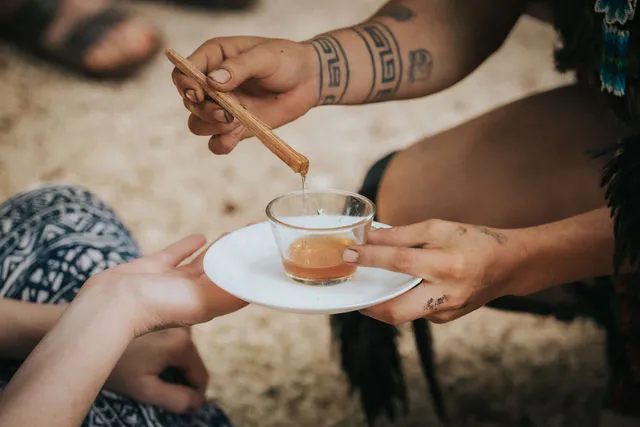
A ceremony-forward retreat centers ritual as the spine of the experience. You might see temazcal, prayers, chanting, offerings, cacao, or sound work woven through the schedule. These retreats can be deeply moving, but they also require excellent facilitation, clear consent, and a grounded integration plan.
A therapeutic wellness retreat is often quieter and more individualized. Think somatic work, bodywork, trauma-informed coaching, breathwork, and spacious rest. These retreats can be life-changing for people who want depth without intensity, or who need support regulating rather than “breaking open.”
A retreat-hosting venue experience is different again - it’s where leaders bring their community, and the venue provides the container, logistics, and often an optional menu of add-on experiences. The best venues are not just pretty properties. They understand timing, group dynamics, dietary needs, and what it takes to keep the leader supported so participants can drop in.
What to look for in a retreat container (beyond the marketing)
A beautiful website can’t tell you whether a space is actually held with integrity. A few grounded checkpoints can.
Start with clarity. The retreat should state who it is for, what it includes, and what the daily rhythm looks like. If everything is vague - “transformational journey,” “powerful activations,” “life upgrade” - but nothing is specific, you’re being asked to trust a fantasy.
Look for consent culture. Are ceremonies optional? Are there ways to opt out without shame? Is there space to slow down, to take a walk, to sit alone? Real healing is not forced. It’s invited.
Ask about facilitator training and support. You do not need a wall of certifications, but you do want people who can track emotional intensity, set boundaries, and recognize when someone needs extra care. If the retreat includes breathwork, plant medicines, or other altered-state practices, the safety standards should be even clearer.
And consider integration. The most honest retreats acknowledge the tender part: you will go home. A retreat that includes reflection time, gentle coaching, or post-retreat touchpoints often lands more sustainably than one that sends you back to life with a high and a hug.
How the land shapes the work
There’s a reason nature-based retreats tend to go deeper than hotel ballroom wellness weekends. The body responds to living systems.
In the jungle, your senses come online quickly. You hear more. You smell rain before it arrives. You notice how your own internal weather changes. For some people, that amplifies emotion. For others, it brings relief because the mind stops being the loudest thing in the room.
In water-rich regions like the Riviera Maya, cenotes and the sea often become part of the spiritual arc. Water can help soften defenses and support grief work, forgiveness, and renewal. But it also asks for respect - for safety, for boundaries, for the local ecosystems, and for the cultural stories that surround these places.
A mature retreat does not treat the land as a backdrop. It relates to it. It teaches guests to move slowly, to listen, and to leave lighter than they arrived.
Ceremony and cultural respect - what’s ethical, what’s not
Many travelers are drawn to temazcal and other Indigenous-rooted traditions. That longing can be sincere - and it still deserves discernment.
Ethical retreats are transparent about who is leading a ceremony, what lineage they are connected to, and what is being honored. They avoid performative “shaman” branding and don’t treat sacred ritual like entertainment.
It’s also wise to notice how a retreat speaks about Mexico itself. Is local culture treated as a decorative accessory, or is there real relationship - fair pay, local partnerships, community benefit, and humility?
A respectful retreat doesn’t promise you someone else’s identity. It offers you a chance to meet yourself more truthfully, while honoring the people and place that make that meeting possible.
For retreat leaders: the difference between a venue and a partner
If you’re hosting your own program, you already know this: the land holds the magic, but operations determine whether your group can actually relax.
A venue that is a true partner will have systems for transportation coordination, rooming, dietary communication, on-site support, and contingency planning. They’ll understand that you’re carrying the emotional field of your group and shouldn’t also be troubleshooting towels and timing.
Ask how staffing works during the retreat week. Ask how they handle last-minute needs. Ask whether they can build custom menus and coordinate add-on services without fragmenting the guest experience. And ask what the space is designed for - because a yoga shala built as an afterthought feels very different from a ceremonial space built with intention.
If you’re looking for that kind of high-touch support in a jungle setting near Cancun, Lunita Jungle Retreat Center is built as a retreat container first - with private cabanas, a dedicated Yoga Shala, a traditional temazcal, and an in-house team that supports both hosted retreats and guided personal healing stays.
Practical considerations that affect your nervous system
Spiritual work is embodied. If the basics are shaky, your body won’t settle enough to go deep.
Location and transit matter more than people admit. A retreat can be “only 30 miles” from the airport and still feel exhausting if the directions are unclear or arrivals are unmanaged. Ask what support exists from touchdown to check-in.
Food is not a side detail. Nourishment is part of the medicine, especially if you’re doing emotional processing. See whether meals are made on-site, how allergies are handled, and whether the kitchen can support different needs without making people feel complicated.
Privacy and pacing matter too. Shared rooms can be beautiful for bonding, but not everyone heals well in constant togetherness. If you’re more sensitive, or if you’re coming in tender, a private cabin or quiet corner can be the difference between a breakthrough and burnout.
And finally, look at the schedule honestly. Some people thrive with a full arc of practice, ceremony, and workshops. Others need wide open afternoons. Neither is “better.” The right retreat is the one that matches your capacity right now.
A simple way to choose the right retreat for you
Before you book, take ten quiet minutes and answer two questions.
First: What do I need most - initiation, restoration, or reconnection? Initiation asks for intensity and change. Restoration asks for safety and rest. Reconnection asks for community and belonging. Your answer points you toward the right style of program.
Second: What am I willing to be responsible for? If you want to fully let go, choose a retreat with strong support and clear logistics. If you enjoy autonomy, you may prefer a lighter structure with more personal freedom.
When those two answers are clear, the right retreat tends to feel obvious. Your body will soften toward it. Your mind won’t have to be convinced.
Let Mexico meet you where you are - not where you think you should be. The most beautiful retreats are the ones that ask less performance of you and offer more truth. And when you find that kind of container, you don’t just return home rested. You return home more yourself.


Comments