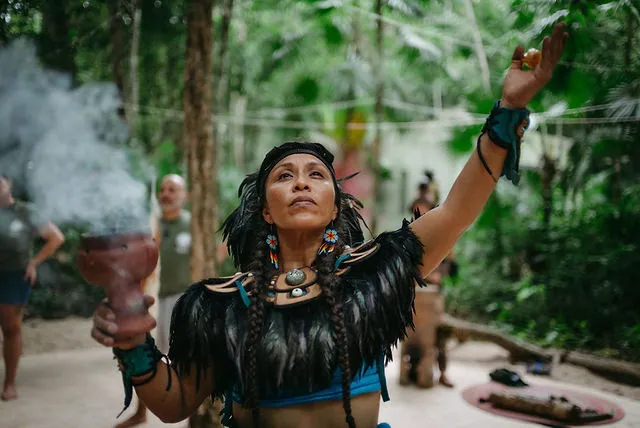
The temazcal is the ceremony guests ask about most and the one hardest to imagine from outside: a low dome of stone and earth, volcanic rocks glowing in the dark, heat, herbs, song, and a door that opens between rounds. It is also, by a wide margin, the experience our guests name afterward as the one that changed their week. This is the whole of it, start to finish, so you can walk in knowing what the darkness holds.
What a temazcal is
Temazcal comes from the Nahuatl temazcalli, house of heat, and the ceremony predates the Spanish arrival by many centuries. It is often described as a Mexican sweat lodge, which is physically accurate and spiritually thin: in the traditions that hold it, the dome is a womb, the darkness is the time before birth, and a ceremony is a passage through difficulty back out the low door into the light, in a real sense born again. It was and is used for purification, for marking transitions, and for the kind of prayer that needs the body involved.
The structure, round by round
A ceremony runs in rounds, most commonly four, each with its own intention in the tradition, and each following the same rhythm: heated volcanic stones, the abuelitas, the grandmothers, are carried in and placed in the central pit, the door closes, water and herbs go on the stones, and the dome fills with heat, steam and song. A round lasts roughly fifteen to twenty minutes. Between rounds the door opens, cooler air comes in, water is passed, and anyone who needs to step out steps out. The heat builds across the rounds; so does something less describable, which is why the fourth round is the one people talk about.
What it feels like, honestly
Hot, dark, and close, and then, for most people, something turns. Two things help when the heat peaks, and both are worth knowing before the door shuts: slow nasal breathing, and sitting lower, because the air nearest the ground is the coolest air in the dome. The first round is the body objecting. The second is the mind bargaining. Somewhere in the third the objections run out, the songs are doing something, and people report a strange spaciousness inside the intensity, thoughts gone quiet, tears arriving without stories attached, or simply the most present they have been in years. Coming out the low door into jungle air afterward, skin steaming, is a sensation guests describe years later. Then water, rest, and usually the deepest sleep of the retreat.
Preparation, and what to bring
Eat lightly beforehand and hydrate through the day; arrive with water in you, not just beside you. Wear something light you can sweat in. Leave jewelry off, the stones’ heat finds metal. Menstruation is no barrier and never has been in the tradition; mention it to the facilitators if you would like a seat nearer the door. Bring an intention if one comes naturally, and nothing if it does not; the ceremony does not require your agenda. Most of all, bring the willingness to stay one round longer than comfortable and the self-knowledge to leave when leaving is right, both are respected equally.
Safety, stated plainly
A properly held temazcal is demanding and safe. The door is never sealed, leaving between rounds is always allowed and never shamed, water is present, and the facilitators watch the circle throughout. Tell them beforehand, honestly, about anything they should know: heart conditions, pregnancy, medications, claustrophobia, recent illness. The ceremony has room for adjustments, a seat by the door, fewer rounds, and an honest conversation beforehand is part of how the tradition takes care of people. It is not a medical treatment and no health outcome is promised; what it is, is an experience the body does not forget.
Who holds it, and why that matters
At Lunita the temazcal is led by facilitators who carry the lineage, with the songs, the structure and the respect the ceremony was built with. That matters more than any amenity: the same dome held as a photo opportunity is a sauna with marketing, and held with reverence it is the hour guests measure the rest of their stay against. If you are choosing among retreats, ask who leads the temazcal and what tradition they carry; a specific answer is the good sign.
Where it fits in a retreat
Dates, facilitators and how a ceremony is booked as part of a stay are on our temazcal ceremony page.
Many men meet the sweat lodge first inside one of our spiritual retreats for men, where the fire and the circle do the work together.
For the short version of the same ceremony, round by round in a few minutes' read, see the temazcal explained page.
Temazcal pairs naturally with the region’s other living ceremonies, cacao before, fire after, cenote water always, and the full picture of how they weave together is in our guide to sacred ceremonies in Mexico. For etiquette inside the dome, the small unwritten rules guests worry about, our temazcal etiquette guide answers them one by one. Where the ceremony comes from, and how far back, is told in the history of the temazcal, and first-timers worried about the heat should read is a temazcal safe for beginners. Most stays here include at least one ceremony, and many guests, having sworn one was enough, ask for a second before the week ends.