Spiritual Retreats

Shamanic Energetic Cleansing with the Knife

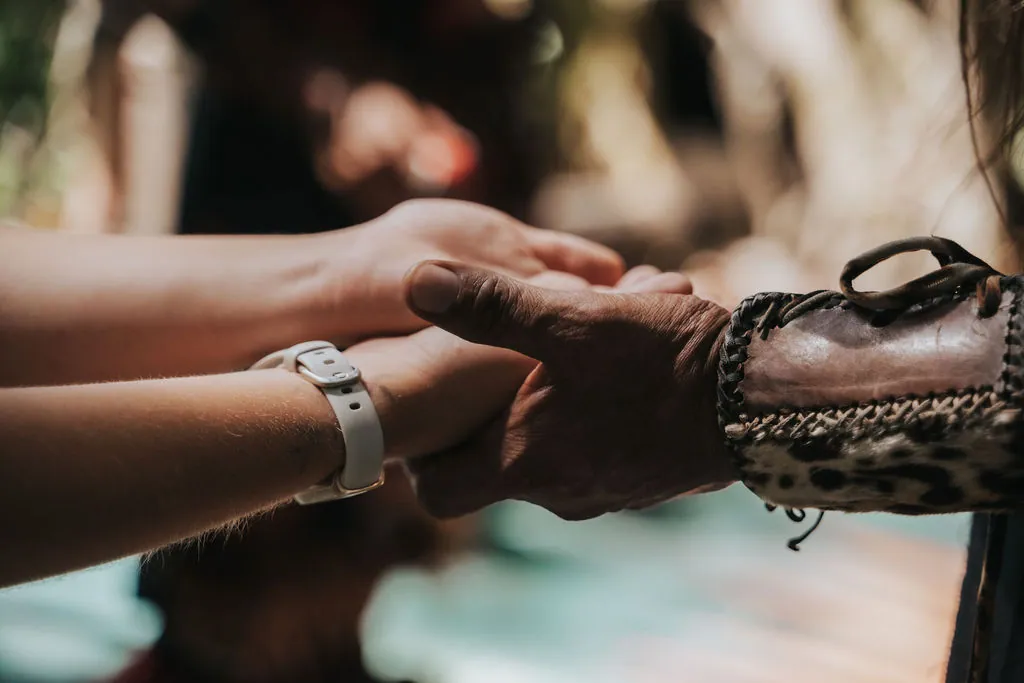
A guest's hands rest in the weathered hands of a leader wearing a leopard-print wrist cuff, Lunita Jungle Retreat

Key facts

What it is
A limpia: the blade is used symbolically, never on the body
Purpose
Release of what feels heavy; intention and renewal
Roots
Folk-healing and shamanic lineages of the Americas, honored not claimed
Framing
A spiritual practice, complementary to medical care

Across the folk-healing traditions of the Americas, cleansing the energetic body has long been a path to renewal. A shamanic energetic cleansing with a knife is a form of limpia that uses a blade symbolically to clear stagnant or heavy energy. At Lunita it's offered with respect for its roots, as a spiritual and symbolic practice. (See temazcal ceremony.)

What happens in a knife limpia?

In this tradition, the practitioner works near the energetic field, the blade is used symbolically, never to cut or harm the body, to help release what feels heavy and restore balance. It's a ceremonial experience centered on intention, release, and renewal, held with care and consent in the jungle.

Held with respect

These practices belong to living folk-healing and shamanic lineages, and Lunita honors that heritage rather than claiming it. It's a spiritual practice, complementary to, not a replacement for, any medical or psychological care. It pairs with somatic release. Explore a personal retreat or book a discovery call.

More on coming here: our jungle retreats.

Before, during and after a cleansing with the knife

Before, there is a short conversation. The practitioner asks what brought you and what you would like to leave behind. You stay dressed, standing or seated, outdoors or in the shala, and you keep your eyes open or closed as you prefer.

During, the work is quick and rhythmic. The blade moves through the air around the body, never against it, often with breath, sometimes with herbs, smoke or a spoken prayer. It is over in the time it takes to make a pot of coffee. People describe a coolness, a lightness in the shoulders, or a sudden wish to sit down.

After, the practitioner usually asks you to rest, drink water and stay off your phone for a while. At Lunita that means the pool, a hammock, or a walk under the trees, and the rest of the day left as it was.

Who asks for it, and when in a stay it lands

Guests ask for it at the start of a retreat, to arrive properly, or at the end, to close something before the drive back to the airport. Retreat leaders sometimes book one for each guest on the first evening, as a way of saying the week has begun.

It suits people who like a short, clear ritual with a beginning and an end. It suits people who find long ceremonies daunting. It also suits the sceptical, who can take it as a piece of living folk custom witnessed at first hand rather than something to believe in.

It sits well the day before a temazcal and well the day after. It is not offered on the same evening as sacred medicine work, when the body has enough to do already, and the team will move it a day if your program is fuller than it looked on paper.

About Lunita

Lunita Jungle Retreat Center is an off grid, solar powered retreat center in preserved jungle at Km 17 of the Ruta de los Cenotes in Puerto Morelos, 40 minutes from Cancun airport. Since opening in 2022 it has hosted more than 120 retreats, with room for up to 20 guests.

In short

Frequently asked questions

What is a shamanic energetic cleansing with a knife?

It's a traditional energetic-cleansing practice (a form of 'limpia') in which a practitioner uses a blade symbolically to clear stagnant or heavy energy from a person's energetic field. Rooted in folk-healing and shamanic traditions of the Americas, it's a spiritual and symbolic practice, not a medical procedure and not physically invasive. At Lunita it's offered with respect for its roots, focused on intention, release, and renewal.

Is it safe, and is it cutting the body?

It doesn't cut or harm the body, the blade is used symbolically, near the energetic field, as part of ritual. It's a gentle, ceremonial experience focused on energetic and emotional release. As with all ceremony at Lunita, it's held with care and consent. It's a spiritual practice, complementary to (not a replacement for) any medical or psychological care.

Is this part of a temazcal ceremony?

They are separate practices and they often sit in the same few days. A temazcal is a sweat lodge, a ceremony of heat, steam and song; a cleansing with the blade is a short energetic practice that can precede or follow it. Some guests take one, some take both, and either stands on its own.

How long does a shamanic cleansing take?

It is short, usually twenty minutes to half an hour, and it is the quiet afterwards that most people remember. It is offered as a single session rather than a course, and it can be added to a personal retreat or held for a group that asks for it.

What should you wear for a knife limpia?

Wear ordinary comfortable clothes, because you stay fully dressed for the whole cleansing. Nothing touches the body, so fabric makes no difference to the practitioner, and the only request is that you remove a hat and anything you would not want smoke near. Bare feet on the ground are welcome if the session is held outdoors at Lunita, but shoes are fine.

Can a limpia with the blade be done for a group?

Yes, one person at a time within a group circle, and it is a common opening for a hosted retreat. Each guest steps forward for a few minutes while the others watch or sit quietly, so a group of twelve takes about an hour. Retreat leaders book it through the Lunita team, who bring the practitioner and set the space.

Where to go next

Keep reading:temazcal ceremony
Go deeper:jungle
Questions first?Book a Call →

Letters from the jungle

Occasional notes on ceremony, stillness, and what's unfolding at Lunita. No noise, no selling.