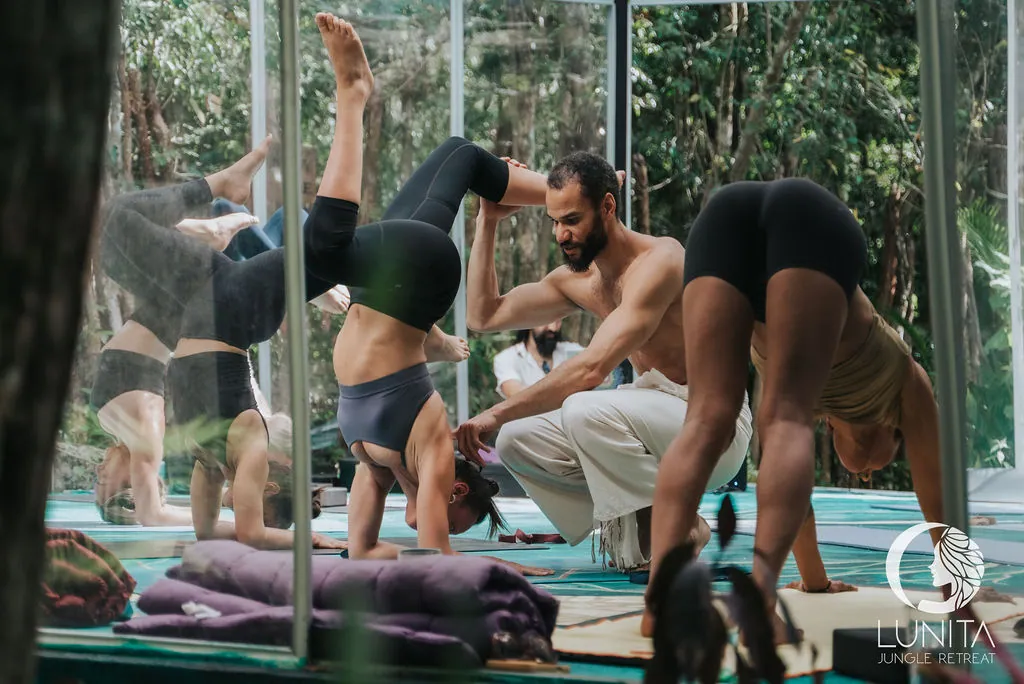
Teaching yoga to couples is not teaching yoga to a room that happens to contain couples. It is a different job, and the couples retreat yoga instructor who thrives at it has skills nobody trains, learned the hard way at retreat after retreat. This is the shorter route.
What does a couples retreat ask of a yoga instructor?
In a normal class, each student negotiates only with themselves. In a couples retreat every mat has a witness, and that changes everything: people perform for their partner, protect their partner, compare themselves to their partner, or quietly compete. Your first skill is reading pairs rather than individuals. Who softens when the other struggles, who stiffens. Which couple arrived mid-argument, which one is here as a last attempt. You do not name any of it; you sequence around it.
Partner practice is a tool, not a theme
The mistake most teachers make is building every session around partner poses. Touch is potent, and potency needs dosing. A structure that works: individual practice in the mornings, when people need to arrive in their own bodies before meeting anyone else’s; partner work in the late afternoon, once the day has softened them; and one deeper shared practice in the middle of the retreat, breath synchronization, supported stillness, or a paired nidra, placed after trust has formed and never on the first day.
Hold the container, not the couples
Things surface at couples retreats: tears in savasana, a couple leaving a session separately, a partner who withdraws for a day. You are the yoga teacher, not the therapist, and the couples who chose a retreat over a counselor’s office know the difference. Your job is a container steady enough that whatever surfaces has room: consistent session times, clear beginnings and endings, and the discipline not to chase what you see. When something needs more than a container, say so plainly and privately, and know before the retreat starts who you would refer to.
Design the days like a wave
Arrival day: individual, grounding, early night. Day two: the restlessness day, keep it physical and simple. The middle: the deep shared practice, the ceremony if there is one, the long free afternoon. The last full day: integration, lighter practice, space to talk. Couples need unstructured time together more than they need another session; the retreats that fail are usually the ones that were full.
The venue does half your teaching
Couples work needs privacy between couples as much as intimacy within them: separate spaces to retreat to, practice rooms that hold sound, somewhere beautiful to be silent together. A shala with jungle on every side does things for a paired practice that a hotel conference room never will, and meals nobody has to cook remove the last domestic script couples carry everywhere. We have hosted more than 120 retreats at Lunita, many of them couples formats, and the pattern is consistent: the venue either carries the atmosphere for you or you spend the retreat generating it yourself.
Fill it honestly
Couples retreats sell on specificity, not on the word love. Name the couple you serve: new parents who have not had a conversation in a year, long partnerships gone quiet, couples in good shape who want to go deeper. One retreat, one couple type, one promise. The teachers whose retreats fill are the ones whose marketing sounds like it was written about one real pair.
If you are ready to bring a group, everything about hosting your retreat at Lunita is laid out for teachers first.
If you are building a couples retreat and looking for a venue that holds this work, Lunita hosts teacher-led retreats year round in the jungle outside Puerto Morelos; our guide to couples retreats in Mexico shows the guest side of the experience, and couples meditation retreats covers the stillness formats that pair with asana.
For the small things you hand people at the end of a week, our yoga lovers gift ideas are written for teachers rather than shoppers.