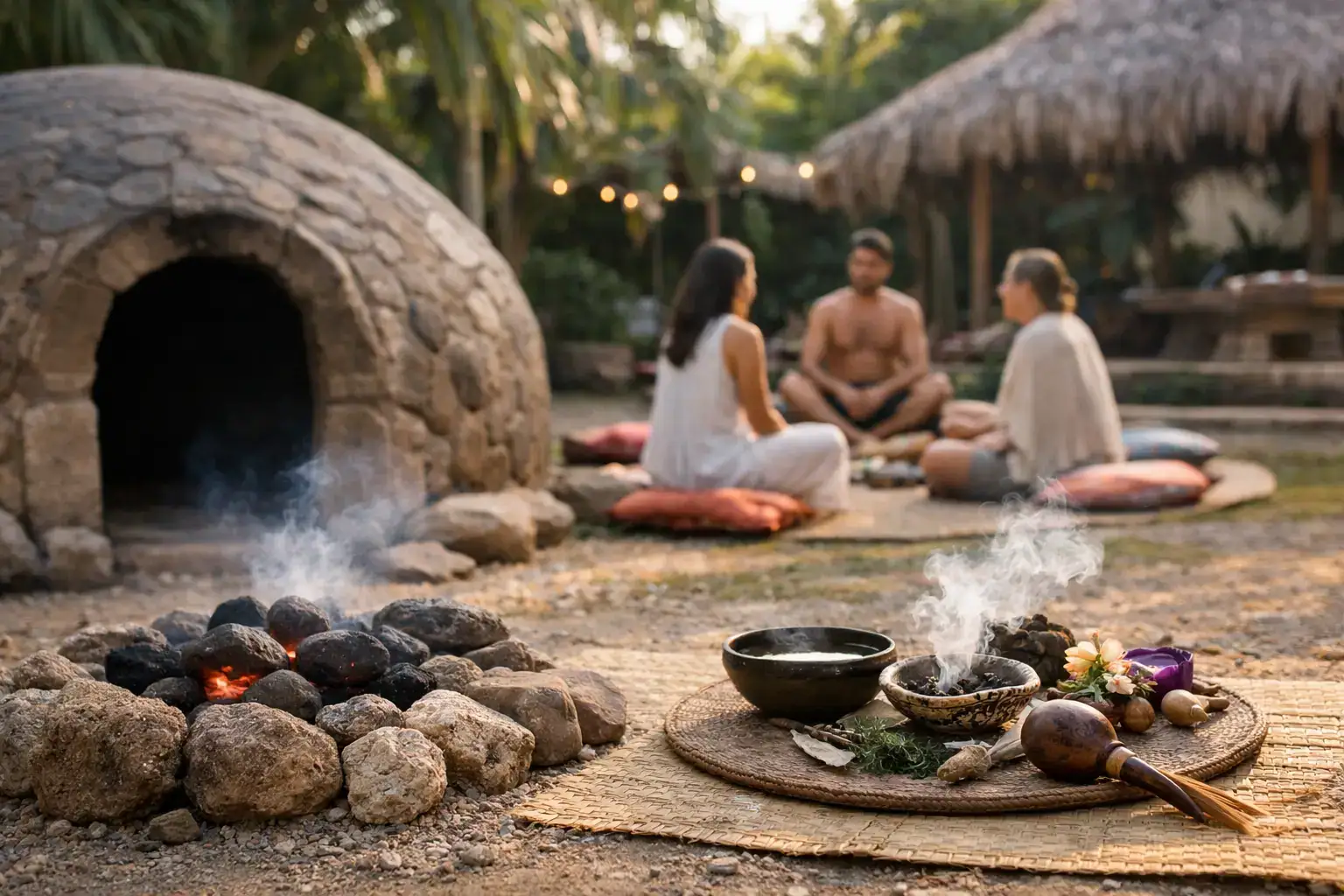
How to Plan a Temazcal Ceremony Retreat
- Lorenza Rossi
- Apr 8
- 6 min read
Updated: Apr 11
The fire is lit long before guests arrive. If you are learning how to plan temazcal ceremony retreat experiences well, that is the first truth to hold. A meaningful temazcal is not a themed wellness add-on. It is a sacred container shaped by lineage, preparation, timing, safety, and the quality of care surrounding the ceremony itself.
For retreat leaders, this matters even more than the setting or the schedule. A temazcal can become one of the most transformative moments of a retreat, but only when it is approached with humility and designed with real support. The most memorable retreats are not the ones that promise intensity. They are the ones that help people feel held before, during, and after they enter the dome.
How to plan a temazcal ceremony retreat with integrity
Begin with the question beneath the logistics: why is the temazcal part of this retreat at all? If the answer is vague, trendy, or mostly aesthetic, pause there. The ceremony should serve a clear purpose within the journey you are offering. It may support release, prayer, grief work, renewal, transition, or community bonding. It may also simply invite participants into a deeper relationship with breath, heat, earth, and intention.
That purpose will shape everything else. A retreat centered on emotional healing needs a different rhythm than one focused on leadership renewal or embodied spiritual practice. The ceremony itself might be similar, yet the preparation, integration, and emotional support around it should be different. Planning with integrity means resisting the urge to make every retreat fit the same mold.
Cultural respect is also essential. A temazcal is not yours to rebrand. If you are not the ceremony holder, do not position yourself as the authority. Work with an experienced, culturally grounded guide and make sure your language honors the tradition instead of flattening it into a generic detox or sweat lodge experience. Guests can feel the difference between a retreat that borrows symbolism and one that enters sacred space with reverence.
Build the retreat around the ceremony, not beside it
One of the most common planning mistakes is treating the temazcal like a single activity on a crowded itinerary. In reality, it affects the nervous system, the body, and the emotional field of the group. It needs space around it.
The day before the ceremony should feel lighter, not packed. If guests arrive overstimulated, underhydrated, or rushed from travel into deep process, the experience can feel harder than it needs to. A gentle landing helps. This may include nourishing meals, orientation, quiet time in nature, intention setting, and clear guidance on what to expect physically and emotionally.
The day of the ceremony also deserves thoughtful pacing. Avoid stacking a temazcal between demanding excursions, intense workshops, or late-night social energy. Heat, prayer, and inward focus ask for presence. When the schedule is too full, people may enter the space fragmented rather than open.
Afterward, leave room for integration. Some guests come out radiant and clear. Others feel tender, quiet, or unexpectedly emotional. Neither response is wrong. A well-planned retreat honors both by allowing for rest, hydration, gentle food, journaling, bodywork, or guided reflection. If you want the ceremony to truly land, do not rush people into the next thing.
Choose the right guide and setting
The right temazcal guide matters as much as the physical structure. Experience is important, but so is presence. You want someone who can hold spiritual depth and practical safety at the same time. That means clear communication, strong boundaries, respect for tradition, and the maturity to work with diverse groups.
Ask how the guide approaches preparation, contraindications, consent, and emotional intensity. Ask what kind of group experience they are best suited for. Some ceremony holders are ideal for intimate, deeply spiritual retreats. Others work well with first-time participants who need more orientation and reassurance. It depends on your audience.
The setting should support the ceremony rather than compete with it. A temazcal held in a natural environment often allows participants to regulate more easily before and after the heat. Access to showers, rest areas, drinking water, and quiet integration space is not a luxury. It is part of the container. At a retreat center such as Lunita Jungle Retreat Center, this kind of flow can be designed more intentionally because the ceremonial space, lodging, nourishment, and support team are all part of one ecosystem.
Screen participants with honesty and care
If you want to know how to plan a temazcal ceremony retreat responsibly, pay close attention to guest readiness. Not every participant should enter the temazcal, and not every participant should enter in the same way.
Health history matters. Heat exposure can be inappropriate for some people, especially those with certain cardiovascular conditions, respiratory concerns, pregnancy, recent illness, or trauma responses that may be intensified in enclosed spaces. This is not about excluding people from healing. It is about creating safety and offering alternatives when needed.
Emotional readiness matters too. A temazcal can stir deep material. That does not mean you should avoid depth, but it does mean you should know your group. If participants are moving through acute crisis, severe dysregulation, or very recent loss, they may need more one-on-one support than a group retreat can offer.
Be transparent in your pre-retreat communication. Let people know what the ceremony involves, how long it may last, what they should bring, and that opting out is allowed. Consent creates trust. People often feel safer going deeper when they know choice remains intact.
Plan the physical details with as much care as the spiritual ones
A heart-led retreat still needs excellent operations. Water, towels, changes of clothes, bathing access, timing, transportation, and food planning all affect the ceremony experience more than many leaders realize.
Hydration should begin well before the ceremony, not only after. Meals should be timed thoughtfully and usually kept lighter beforehand. Guests need clear instructions about clothing, jewelry, menstruation considerations, and what to expect with heat and darkness. If there are language differences between the guide and participants, make sure translation support is in place.
It also helps to decide in advance how the ceremony will be framed within the retreat. Will there be a group altar? Will intentions be spoken aloud or held silently? Will there be music afterward or quiet? Will participants return to private rest or gather in circle? These choices shape the emotional arc. None is universally right, but each should be intentional.
How to plan a temazcal ceremony retreat for different groups
The same ceremony can meet very different communities, but the surrounding design should change. For wellness retreat guests, the emphasis may be on healing, embodiment, and spiritual renewal. For couples or families, safety and relational tenderness may need more attention than intensity. For corporate or leadership groups, the language may focus less on catharsis and more on reflection, clarity, humility, and reconnection.
This is where nuance matters. Not every group wants a highly ceremonial frame, and not every group benefits from a simplified one. Some leaders over-explain and drain the mystery from the experience. Others under-prepare and leave guests anxious. The sweet spot is informed, respectful guidance that leaves room for the sacred to be felt rather than managed.
Make integration part of the retreat design
A powerful temazcal without integration can leave people moved but unanchored. The ceremony opens something. Your retreat should help people listen to what follows.
Integration does not need to be complicated. Often the most supportive elements are simple: a quiet meal, time in the jungle, a sharing circle, gentle movement the next morning, or a one-on-one healing session for those who need more support. What matters is that the retreat does not treat the ceremony as the peak and then emotionally abandon people afterward.
It is also wise to think beyond the final day. Consider what guests will carry home and how you will help them honor that transition. A short closing ritual, reflective prompt, or follow-up message can help them stay connected to the intention they brought into the lodge.
To understand the ceremony itself in depth, explore our guide to the temazcal ceremony experience at Lunita — a sacred journey through the four elements of fire, water, earth, and air.
When a temazcal is held well, people do not just remember the heat. They remember the feeling of being guided with respect, protected by clear structure, and welcomed into something ancient and alive. If you are planning this kind of retreat, let that be your measure of success. Not how dramatic it looked, but how deeply your guests felt safe enough to soften, release, and return to themselves.


Comments