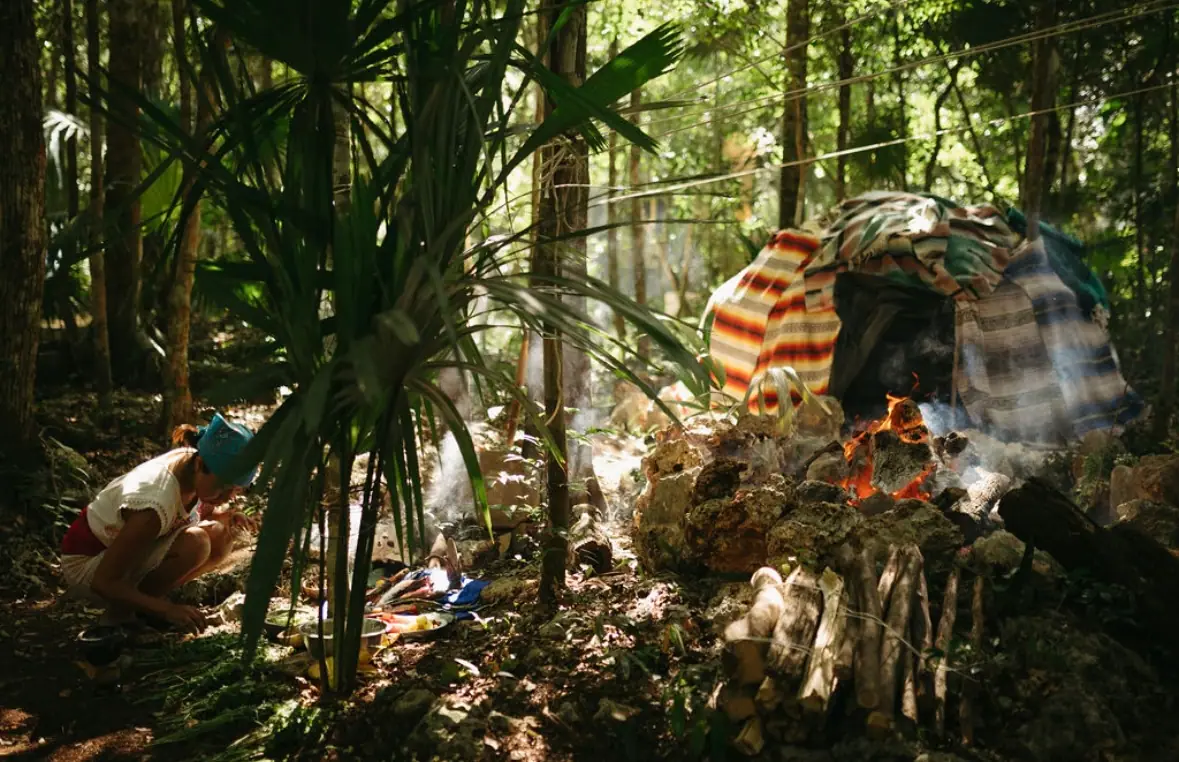
The temazcal, a traditional Mesoamerican sweat lodge, has been a cornerstone of Indigenous cultures in Mexico and Central America for many centuries, offering purification, healing, and a symbolic rebirth. More than a structure, it carries deep spiritual meaning: the four-element "doors," the grandmother stones, the sacred herbs, and the legends behind them. This is the history and symbolism of the temazcal, and what to look for in a retreat center that offers one with integrity. (For the practical ceremony, see what a temazcal is and what to expect.)
A glimpse into temazcal history
The word comes from Nahuatl, temaz (steam) and calli (house), "house of steam." Use of temazcals reaches back many centuries (with archaeological evidence well over two thousand years old), and Aztec, Maya, and Zapotec peoples incorporated them into life for healing and purification, rites of passage and spiritual awakening, post-battle recovery for warriors, and support during childbirth. It is a living tradition, not a relic.
Legend and meaning
In Mesoamerican cosmology the temazcal is often seen as a representation of Mother Earth's womb: entering is a return to the source, and emerging is rebirth and renewal. One Mayan legend tells of Ixchel, goddess of fertility and healing, gifting the temazcal to humankind as a sacred space to cleanse body and spirit. Many traditions hold that the spirits of ancestors and guardian energies dwell within the stones and steam, guiding each person's transformation.
What happens in a temazcal, door by door?
- First door, Earth (North): grounding and stability; connection to the body, the ancestors, and the wisdom of the past.
- Second door, Water (West): emotional release and purification; intuition and the flow of feeling.
- Third door, Air (South): mental clarity and transformation; breath and personal insight.
- Fourth door, Fire (East): the ultimate transformation and rebirth; new beginnings and renewal.
The abuelitas and the sacred herbs
The heated stones at the center, the abuelitas or "grandmother stones," are among the ceremony's most sacred elements, treated as carriers of the earth's and ancestors' wisdom, and as agents of purification as they glow and meet the water. Over them, water infused with sacred herbs creates the steam: copal for energetic cleansing and protection, sage for clearing, rosemary for circulation and focus, eucalyptus for the breath, and lavender for relaxation. For the felt meaning of all this, see what a temazcal really is.
Choosing a retreat center with a temazcal
Not every "temazcal experience" carries the same depth. A center worth choosing offers an authentic, well-held ceremony: experienced facilitators who respect the tradition, a private natural setting, sensible group sizes, clear safety and consent (see our safety guide), and real integration. At Lunita, temazcal is one of the most requested ceremonies, held in a private jungle setting and woven into personal retreats. For the ceremony as we hold it, see temazcal at Lunita; to bring a group, see planning a temazcal retreat.
You can also make it the heart of your own stay: a personal retreat lets you plan the temazcal alongside everything else.